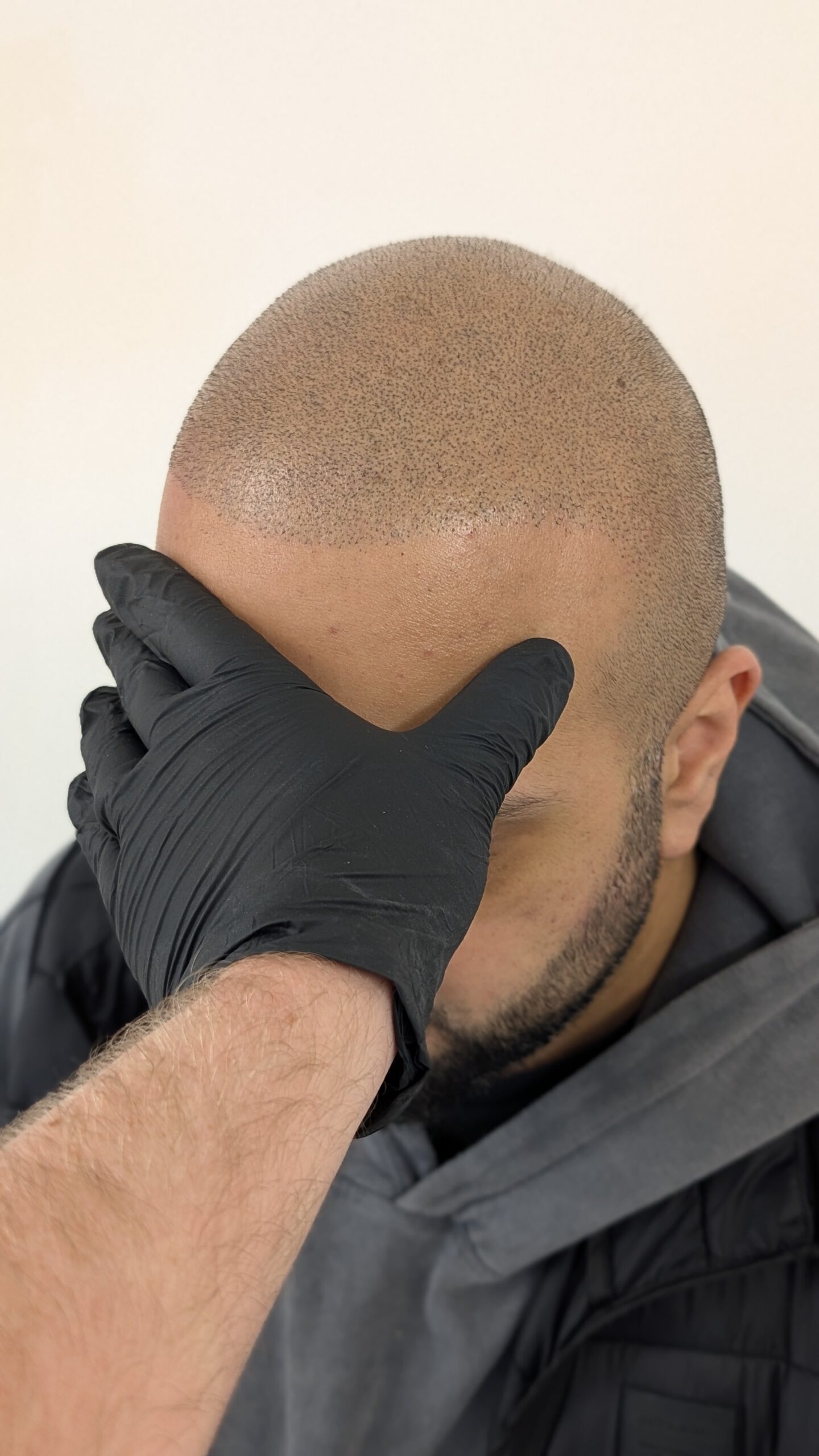

MULTIPLE AWARD WINNING
2000+ HAPPY CUSTOMERS
SCALP MICROPIGMENTATION · LANCASHIRE
Hair loss affects millions of people across the UK, yet for many the emotional impact feels intensely personal. Whether it begins with subtle thinning at the crown, a slowly receding hairline, or more advanced loss, it often changes how people see themselves long before anyone else notices.
Scalp micropigmentation — SMP — is a highly specialised cosmetic treatment that creates the realistic appearance of natural hair follicles using precise pigment placement. Rather than attempting to regrow hair, SMP restores the look of hair density by reducing the contrast between scalp and hair. The result can recreate the appearance of a closely shaved hairstyle, strengthen thinning areas, or camouflage visible scars.
At its core, SMP is about perception. Hair loss becomes more noticeable not simply because hair disappears, but because the scalp becomes more visible — light reflects differently from exposed skin than from hair. SMP recreates the visual signals the eye expects to see when looking at a full head of hair. When performed correctly, it doesn't look like a cosmetic procedure. It simply looks natural.
Precision pigment placement — not tattooing, not surgery
Scalp micropigmentation works by creating thousands of tiny, layered impressions that replicate the appearance of natural hair follicles. These impressions are positioned strategically across the scalp in a pattern that mirrors how hair would naturally grow. The goal is not to create uniform dots but to recreate the subtle irregularity and softness that makes real hair appear natural to the eye.
The process always begins with a consultation. The practitioner assesses your hair loss pattern, skin tone, and goals — because SMP is highly individual. Someone with advanced hair loss recreating a full shaved style requires a completely different approach from someone with longer hair wanting to reduce scalp visibility in thinning areas.
One of the most important elements established during consultation is hairline design. A natural hairline is rarely straight or sharply defined — it contains small irregularities that soften its appearance. Recreating this subtle imperfection is essential. Hairlines that are too sharp, too low, or too symmetrical draw attention rather than blend naturally.
Once treatment begins, pigment impressions are applied gradually over multiple sessions. This layered approach allows the practitioner to assess how the scalp responds and how pigment settles as it heals. Immediately after treatment, impressions may appear darker than the final healed result. Over days and weeks, the pigment softens and blends naturally as the skin recovers.
Pigment selection matters more than most people expect
Choosing the correct shade is not simply a matter of matching hair colour. The practitioner must consider how the pigment will look against your skin tone, how it appears under different lighting conditions, and how it will soften over time. Pigments that are too dark or incorrectly chosen become more noticeable rather than blending naturally.
Because SMP focuses entirely on appearance rather than biology, it offers a predictability that other hair loss treatments cannot match. Hair transplants depend on graft survival. Medications depend on individual response. Scalp micropigmentation, when performed correctly, produces visible results based on careful planning and execution — not biology.
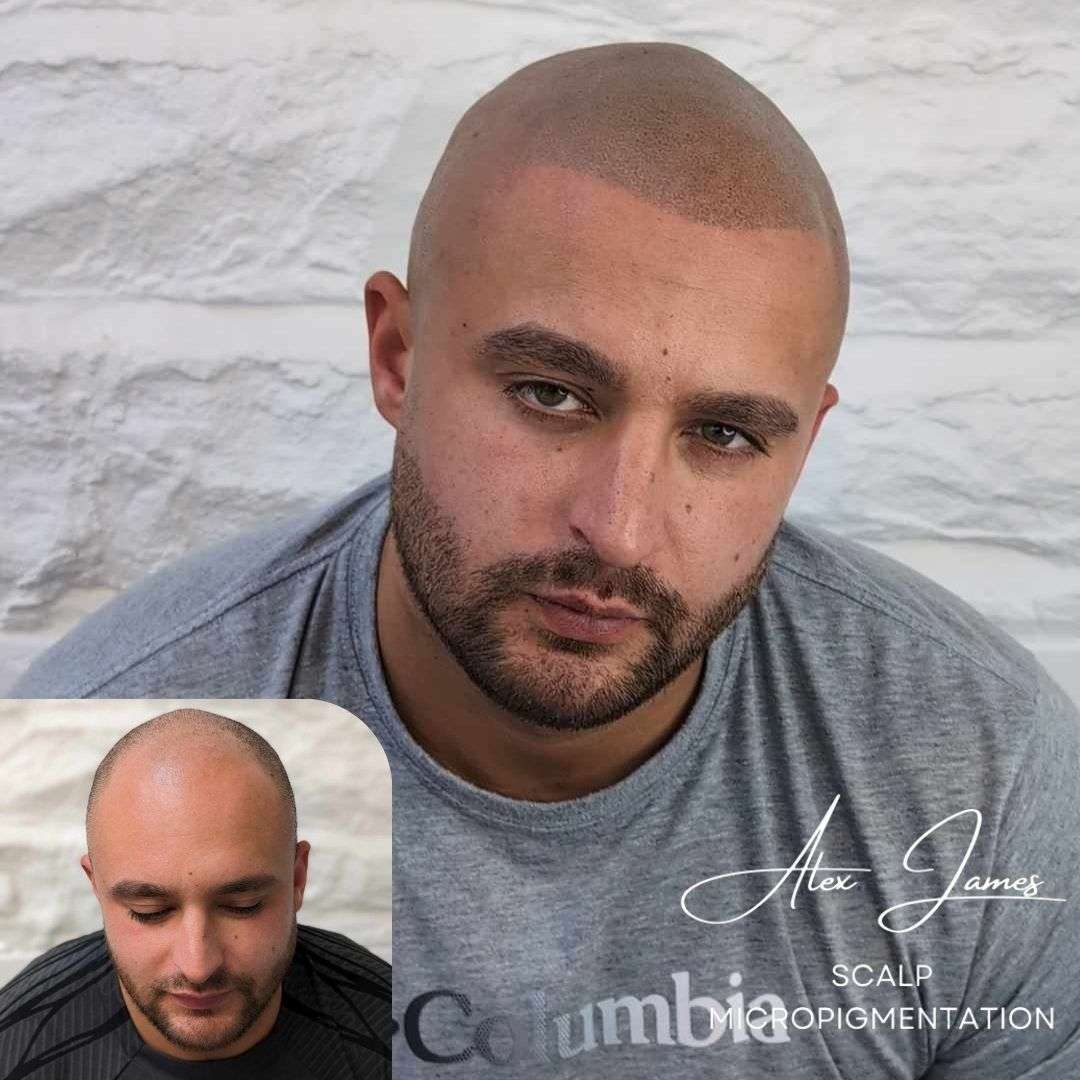

Full head SMP — Alex James clinic, Rossendale
A common comparison — with an important answer
One of the most common questions people ask is whether SMP is simply a form of tattooing. While both involve placing pigment into the skin, scalp micropigmentation is fundamentally different in purpose, technique, and outcome.
The key difference lies in realism. Hair follicles are extremely small, and the impressions created during SMP must reflect this. Each pigment impression is carefully sized and positioned to match the scale and softness of real follicles. Tattoo ink placed too deeply, too darkly, or without variation would not produce the same effect and would appear artificial.
Depth is another important distinction. SMP pigment is placed at a shallower depth than traditional tattoos — this ensures impressions remain soft and natural-looking rather than spreading or blurring. It also allows pigment to fade gradually and evenly, which is essential for maintaining realism over time.
Pigment composition also differs. Traditional tattoo inks are designed for bold, long-lasting artwork and often contain colour blends intended to remain vibrant. SMP pigments are formulated specifically to mimic natural follicle tones and maintain a realistic appearance as they settle and soften.
The most significant difference is intent
Tattooing is meant to be seen as decoration. Scalp micropigmentation is meant to go unnoticed. The best SMP results do not draw attention to themselves — they subtly restore the visual balance of the scalp so that hair loss is no longer the first thing people notice.
This controlled approach is also why SMP requires a different level of restraint than tattooing. Adding too much pigment too quickly makes the result appear harsh or unnatural. Treatments are built gradually, allowing the practitioner to assess how pigment settles before adding more density.
One of the most powerful and underappreciated uses of SMP
While many people associate SMP with fully bald clients recreating a shaved hairstyle, one of its most powerful uses is helping those with thinning hair. For individuals experiencing early to moderate hair loss, SMP can create one of the most subtle yet effective visual improvements possible.
What makes thinning hair so visually prominent is not simply the loss of hair itself — it's the increased contrast between hair and scalp. Scalp micropigmentation works by reducing this contrast. Rather than attempting to replace lost hair, SMP places carefully positioned pigment impressions between existing hair follicles, creating a shadow effect that makes the hair above appear thicker and fuller.
This approach — often called density SMP — works particularly well at the crown, frontal hairline, mid-scalp, and parting lines. Because SMP does not rely on hair growth, its effectiveness does not depend on follicle activity. Even if hair loss continues gradually, SMP maintains the appearance of density by supporting the remaining hair visually.
Another important advantage is compatibility with different hair lengths. Unlike the shaved style approach, density SMP can be performed without requiring clients to shave their head — making it suitable for those who prefer to keep their existing hairstyle while improving its appearance.
SMP also does not interfere with hair follicles — it does not damage existing hair or prevent future growth. It works independently of the hair itself, focusing entirely on how the scalp looks. This independence is one of its key strengths.
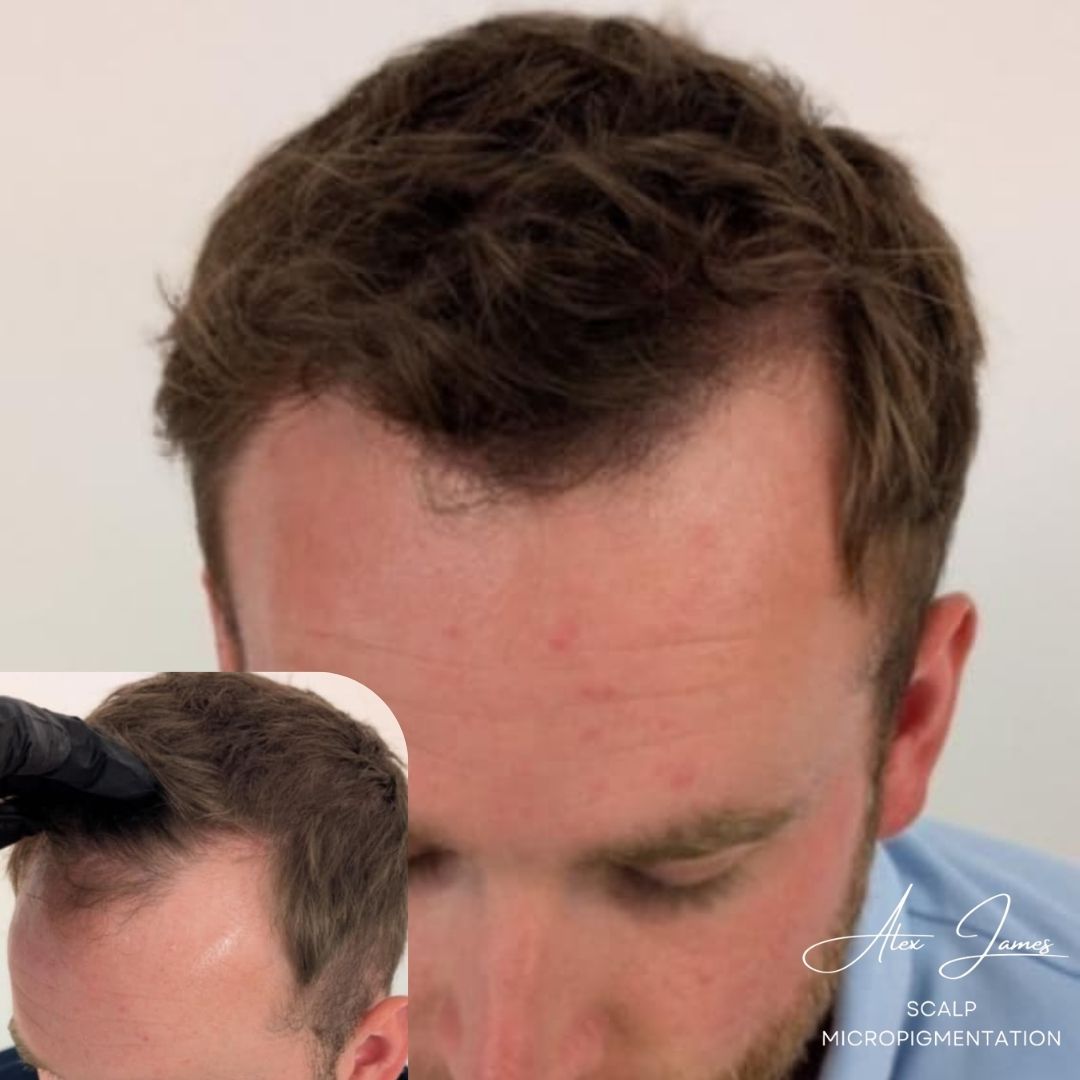

Receding hairline SMP — Alex James clinic, Rossendale
Wondering if SMP is right for your situation?
Alex underwent SMP himself and offers free, no-pressure consultations from the clinic in Rossendale. Come and see the results in person before committing to anything.
WhatsApp Alex for a Free ConsultationFree consultations available · See Alex's own SMP results in person · Currently booking 2–3 weeks ahead
Understanding realism and what influences natural results
When performed correctly, scalp micropigmentation can look extremely realistic. The reason lies in how the human eye perceives hair. Even when hair is shaved very short, follicles remain visible beneath the skin — they create a subtle shadow pattern the brain recognises instantly as natural hair. SMP recreates this exact visual effect.
Realism depends heavily on precision. Each impression must be the correct size, tone, and placement. If impressions are too large, too dark, or too uniform, the result can look artificial. Natural hair follicles vary slightly in appearance, and recreating this variation is essential for a believable outcome.
Hairline design plays an equally important role. A natural hairline is rarely perfectly straight or symmetrical — it contains subtle irregularities and softness. When hairlines are designed too sharply or placed too low, they draw attention. An experienced practitioner designs a hairline that complements facial features and looks appropriate for your age.
Lighting conditions also influence how SMP appears. Natural results should remain believable in different environments — natural daylight, indoor lighting, and photography. When performed correctly, SMP should not suddenly appear obvious under bright lighting. It should maintain its natural effect consistently.
Healing contributes to realism
Immediately after treatment, impressions may appear more defined. As the scalp heals, pigment softens and settles — creating a more natural appearance. This softening is expected and contributes to the final realism. Skin type also influences the final appearance, and experienced practitioners adjust their approach accordingly.
When people see high-quality scalp micropigmentation in person, they are often surprised by how natural it looks. In many cases, others do not realise SMP has been performed unless they are told — they simply perceive a fuller, more defined appearance.
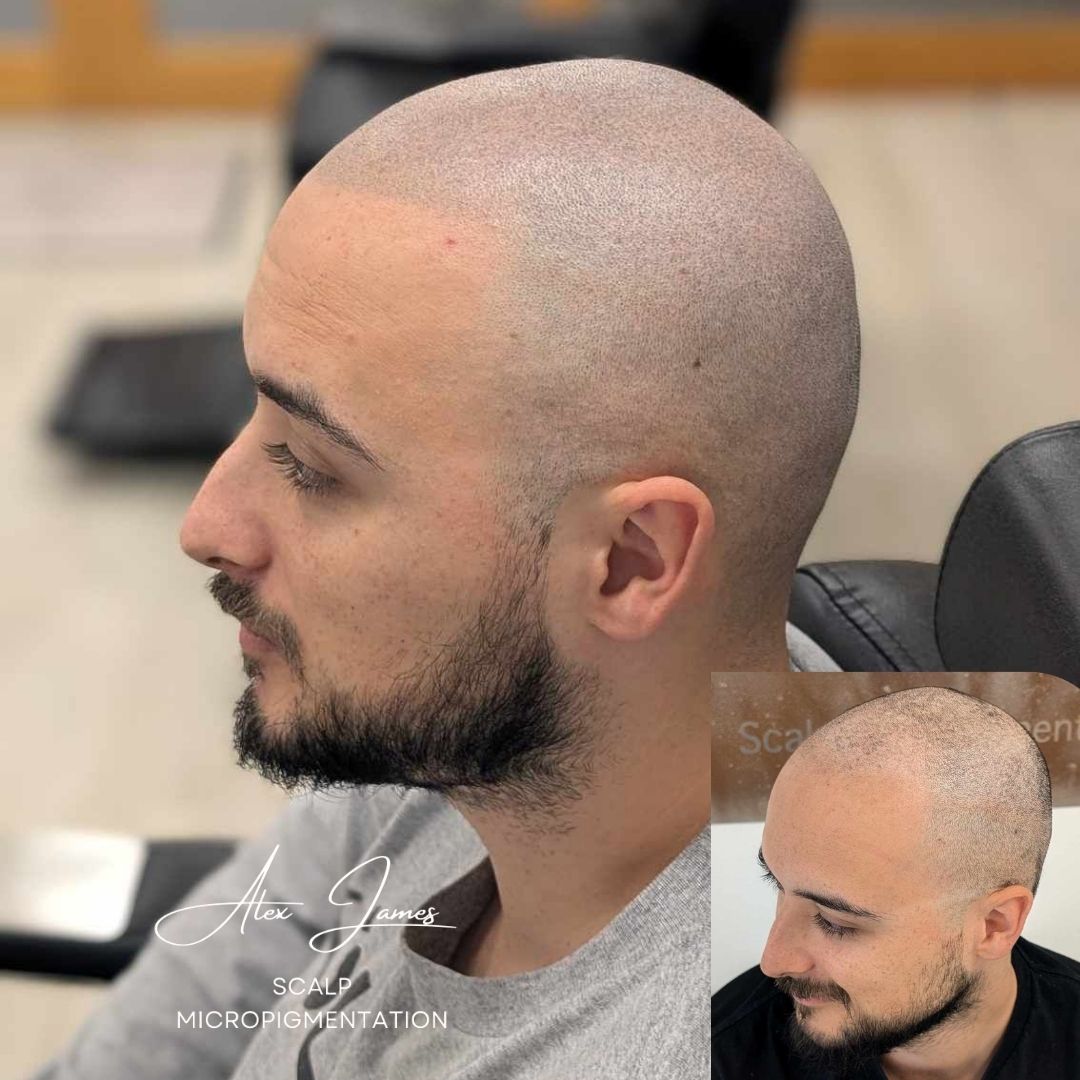

Full head SMP — Alex James clinic, Rossendale
Consultation, sessions, healing and timeline
Scalp micropigmentation is completed over multiple sessions rather than all at once. This layered approach allows pigment to settle naturally and ensures the result develops progressively. Attempting to create full density in a single session could lead to an unnatural appearance.
The first session establishes the structure of the final result. Pigment is applied conservatively, creating a subtle base rather than maximum density. After this session, the scalp enters a healing phase — impressions soften as the skin recovers, which is completely normal and expected.
The second session builds upon the foundation. Additional impressions increase density and refine the appearance. Because the practitioner can see how the scalp responded to the first session, adjustments ensure the result remains natural.
The final session focuses on perfecting the appearance, ensuring consistency across all treated areas, and achieving the intended level of density. By the end of this session, the full visual effect becomes clear.
The gradual process also allows individuals to adjust comfortably to their changing appearance. Because the result develops over several sessions, the transformation feels natural rather than sudden. Following proper aftercare during healing is essential — it ensures pigment heals evenly and maintains its natural look.
Longevity, fading and long-term maintenance
Once fully healed, scalp micropigmentation typically maintains its appearance for several years. The impressions remain stable and continue to create the illusion of hair follicles. It is long-lasting, but not permanently fixed in a way that cannot evolve over time.
SMP does gradually soften over time — this is normal and expected. Factors such as skin type, sun exposure, lifestyle, and natural skin renewal all influence how the pigment ages. Rather than disappearing suddenly, it fades slowly and evenly, allowing the appearance to remain natural throughout its lifespan.
This gradual softening is actually beneficial. It allows the treatment to age with you. Hair loss patterns can continue to change, and having pigment that can be refreshed ensures the result continues to look appropriate and realistic.
Many people choose a maintenance or refresh session at some point. This is not because the treatment has failed — refreshing the impressions restores their original crispness. These sessions are typically far shorter and simpler than the original treatment, and timing is based entirely on personal preference rather than a fixed schedule.
Daily maintenance is minimal. SMP does not require specialised styling or products to maintain its appearance. Protecting the scalp from excessive sun exposure helps preserve the pigment for longer, but beyond that it simply becomes part of your natural look without requiring ongoing effort. For a full guide on maintenance, see our SMP maintenance guide.
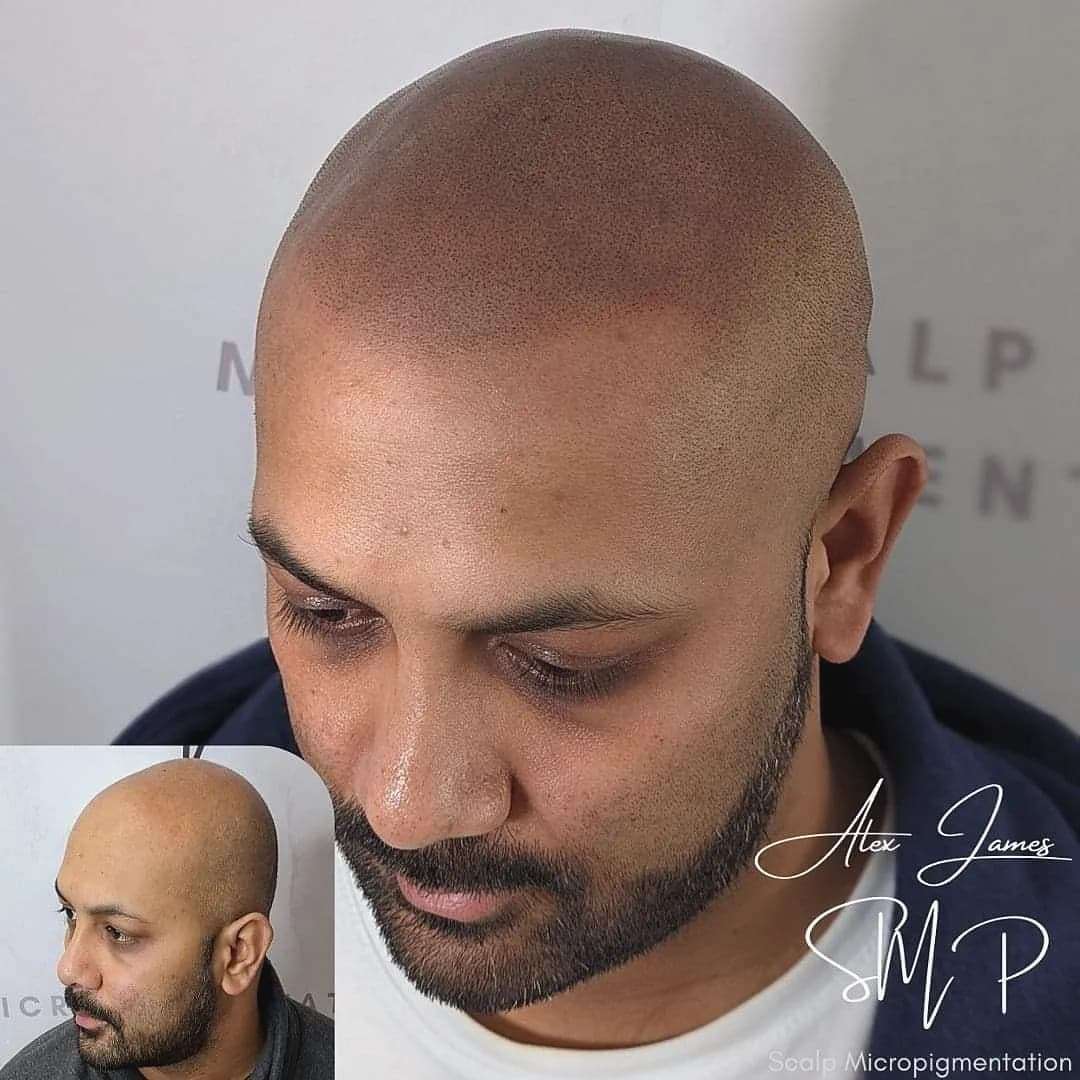

Full head SMP — Alex James clinic, Rossendale
What influences pricing and what to expect
Scalp micropigmentation is a bespoke procedure, tailored specifically to each individual's hair loss pattern, scalp characteristics, and goals. Because of this, the cost is usually based on the size of the area being treated rather than a single fixed price.
Hair loss stage plays a significant role. Early thinning may require density enhancement in targeted areas, whereas advanced hair loss may involve building a complete hairline and restoring the appearance of follicles across the full scalp. Each situation requires a different level of planning and execution.
Practitioner experience also influences cost. SMP is a precision-based treatment performed in a highly visible area, and achieving natural-looking results requires skill, judgement, and restraint. Choosing a clinic based purely on price can lead to disappointing outcomes — poorly performed SMP may appear unnatural or require correction, which ultimately costs more in the long term.
It's also important to understand that SMP is not a recurring monthly cost. Once completed, results remain stable for years with only occasional refresh sessions if desired. This long lifespan contributes significantly to its overall value compared to ongoing treatments requiring continuous financial commitment. For a full cost breakdown and current pricing at Alex James SMP, see the SMP pricing guide.
What to look for and why experience matters
Because SMP produces results based entirely on how accurately pigment is placed, the outcome is directly influenced by the skill of the person performing it. A well-performed treatment can look completely natural and remain consistent for years. A poorly performed treatment can appear artificial or require correction.
Look for evidence of real, healed results — not just immediately-after photos. Healed results provide the most accurate representation of how SMP will actually look over time. Hairline design is another key indicator of experience. Natural hairlines require restraint and careful planning suited to your age and facial structure, not a fixed template.
Consultation quality reflects professionalism. A proper consultation should involve assessing your scalp, discussing realistic expectations, and explaining how SMP can help your specific situation. You should never feel pressured into treatment, and the process should be explained clearly and honestly.
Why Alex James SMP is different
Alex underwent scalp micropigmentation himself — which means every consultation includes the opportunity to see real, long-term results in person, not just photos. His personal experience as both practitioner and client gives him a perspective very few SMP specialists can offer. Free consultations are available from the clinic in Rossendale, with no pressure and no obligation.
When performed correctly, scalp micropigmentation can provide a reliable and long-lasting improvement in how hair loss appears. Many people find that after treatment, they no longer focus on thinning areas or feel self-conscious — the shift in perception is often as significant as the visual change itself. See our SMP treatment page for full details on what's included at Alex James SMP.
ALEX JAMES SMP · ROSSENDALE, LANCASHIRE
Alex underwent SMP himself and offers free, no-pressure consultations from the clinic in Rossendale. Come and see the results in person before committing to anything.
WhatsApp Alex for a Free Consultation