
MULTIPLE AWARD WINNING
2000+ HAPPY CUSTOMERS
Understanding the technology behind the hype — before you spend your money
If you've been researching hair removal options, Ulike hair removal is almost impossible to miss. From social media adverts to comparison videos, it's become one of the most talked-about at-home hair removal devices. The key questions most people are asking: does it actually work? How does it compare to professional laser hair removal? And is at-home hair removal a viable alternative to clinic treatment?
This article answers those questions clearly and honestly — without hype, fear-based messaging, or sales pressure — so you can make an informed decision about which option suits you.
Despite how it's commonly described online, Ulike hair removal is not a laser. It uses IPL — Intense Pulsed Light — which emits broad-spectrum light rather than a single focused wavelength. This distinction directly affects how results are achieved, who the device suits, and how it compares to professional laser treatments.
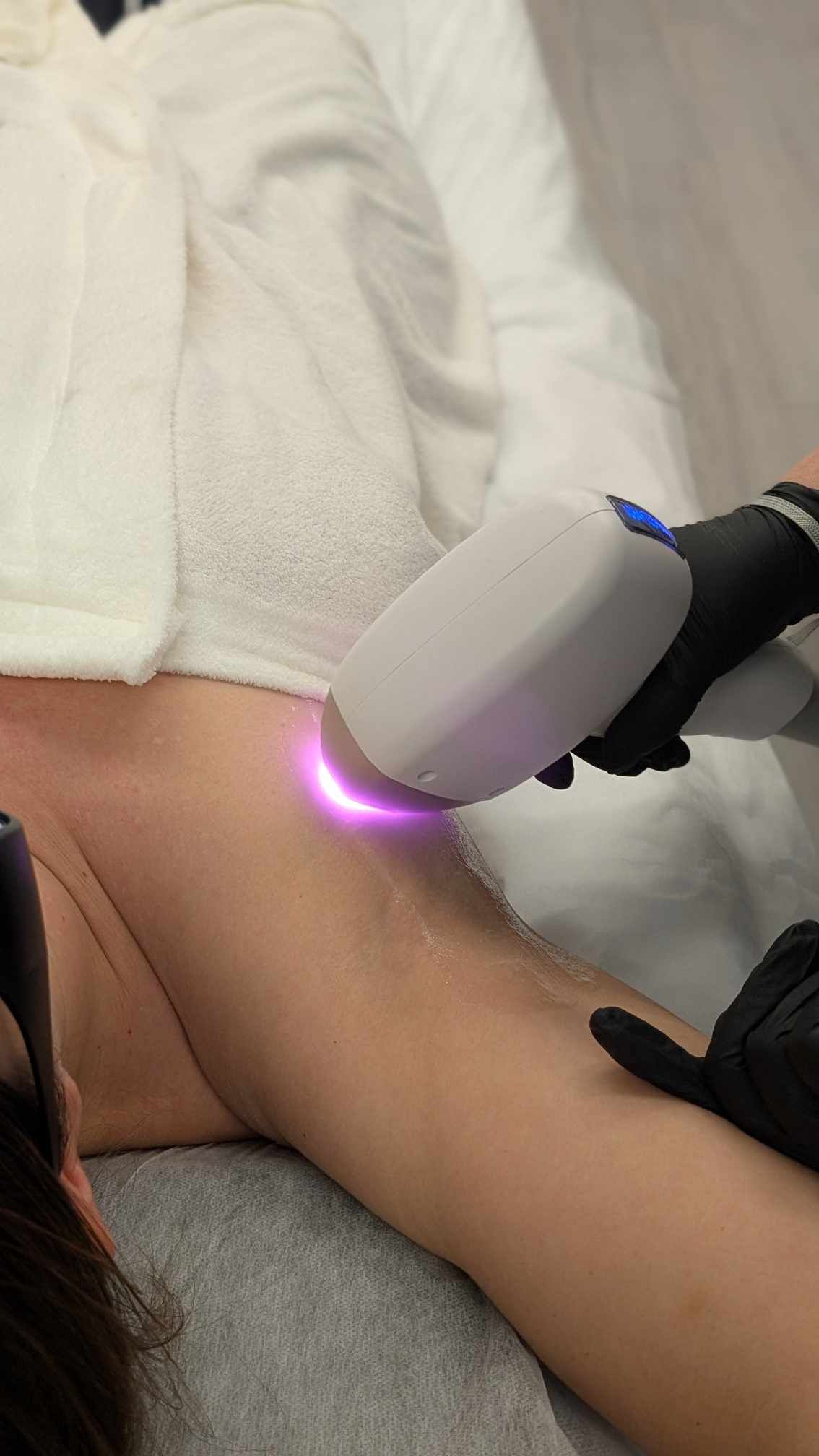
IPL works by emitting multiple wavelengths of light that target pigment within the hair shaft. This energy is absorbed by the melanin in the hair and transferred to the follicle, where it helps slow future growth. Professional laser hair removal uses a more concentrated, specific wavelength — allowing for deeper and more precise targeting. This difference plays a significant role in treatment effectiveness.
What using Ulike actually involves — not just how it works in theory
At-home IPL devices are designed to fit into a regular routine rather than work as a one-off treatment. Hair grows in cycles, and IPL is most effective during the active growth phase. At any given time, only a proportion of hairs are in this phase — which is why repeated treatments over weeks and months are needed to gradually target hairs as they enter the right stage.
Using Ulike typically involves: shaving the area first, applying the device to clean dry skin, and emitting pulses across the treatment area. Most devices recommend frequent treatments initially, followed by maintenance sessions as growth slows. Consistency is fundamental — missing sessions or reducing frequency significantly affects outcomes.
One of the key practical differences from professional treatment is that at-home IPL relies on the user for consistency, correct technique, and appropriate settings. Small differences in application can significantly affect outcomes, which explains why results vary so widely between users.
At-home IPL devices operate at lower energy levels than clinic systems — intentionally, for safety. This reduces risk but also means the energy delivered to the follicle is less concentrated, and hair reduction tends to be slower and less predictable than professional laser treatment.
Honest expectations based on how the technology actually works
Hair may grow back more slowly, feel finer, or appear lighter. Shaving may become less frequent. These changes are temporary and depend on continued, consistent use.
Hair may appear patchier and regrowth slows further. More commonly reported by individuals with darker hair and lighter skin tones, where IPL can target pigment most effectively.
A common experience in Ulike reviews. IPL operates at lower energy levels and may not sufficiently disable deeper or more resilient follicles. At this point, some users explore professional laser.
At-home IPL is best understood as a maintenance-focused approach. It can reduce hair growth, but rarely eliminates it entirely. Ongoing use is typically needed to sustain results.
Hair type and skin tone play a major role. Ulike works best with strong contrast between hair colour and skin tone. Dark, coarse hair responds most predictably. Hair with little pigment — blonde, grey, or red — may not respond well at all. Darker skin tones require extra caution due to increased melanin absorption.
What you need to know before using any at-home IPL device
At-home IPL devices like Ulike are designed for consumer use and include built-in safety features. They operate at lower energy levels than professional systems, which reduces risk — though this same lower power also limits effectiveness. When used correctly on suitable skin types, they are generally considered safe for long-term use.
One key safety difference between at-home and professional treatment is assessment. In a clinic, practitioners assess skin type, hair colour, and medical history before treatment — tailoring settings accordingly. At home, this responsibility rests entirely with the user. This doesn't make at-home devices unsafe, but it does require informed, cautious use.
An honest side-by-side comparison — not a sales pitch for either option
| Factor | Ulike (At-home IPL) | Professional Laser (Clinic) |
|---|---|---|
| Technology | Broad-spectrum IPL | Single focused wavelength (e.g. Diode) |
| Power output | Lower — for home safety | Higher, controlled by trained practitioner |
| Precision | Limited — fixed settings | Tailored to skin type and hair colour |
| Consistency | Depends entirely on user discipline | Structured plan, monitored by practitioner |
| Skin/hair suitability | Best for dark hair, light skin | Wider range — more adaptable settings |
| Results timeline | Gradual, requires ongoing maintenance | More definitive, longer-lasting reduction |
| Upfront cost | One-time device purchase | Higher initial investment |
| Long-term value | Depends on results achieved | Often better value if IPL has plateaued |
It's common for individuals to begin with Ulike and later explore professional laser hair removal once they understand their own response and limitations. This progression reflects informed decision-making rather than failure — at-home IPL provides useful insight into hair response, while professional treatment offers a more targeted solution for those seeking stronger results.
Choosing based on your goals — not trends or marketing claims
There is no single best option for everyone. The right choice depends on your skin type, hair colour, expectations, and lifestyle. Understanding the genuine differences between these approaches — rather than relying on marketing — allows you to choose what actually aligns with your priorities.
At Alex James Clinic, Dawn provides professional laser hair removal using clinic-grade Diode laser technology. Free consultation and patch test included — so you know whether it's right for you before committing.
Learn About Laser Hair Removal