
MULTIPLE AWARD WINNING
2000+ HAPPY CUSTOMERS
HAIR LOSS SOLUTIONS · LANCASHIRE
If you're weighing up scalp micropigmentation against a hair transplant, you want straight answers — not a sales pitch. Both treatments have genuine merit. Both have real limitations. And neither is the right choice for everyone.
This guide covers everything that actually matters: how each treatment works, what results look like long-term, what the total cost adds up to over a decade, and which situations suit each option best. Having undergone SMP myself, I can also tell you what it's like from the inside — something most comparison articles can't offer.
A precision technique — not a tattoo
SMP uses micro-needles to deposit tiny dots of carbon-based pigment into the upper dermis of the scalp — around 0.25mm deep. Each dot replicates the appearance of a shaved hair follicle. The result is an illusion of dense, cropped hair across the scalp.
Unlike tattooing, the pigment sits shallowly enough that it doesn't blur or shift colour over time. Done correctly, it doesn't turn blue or green. The dots are placed with spacing and variation that matches the natural pattern of your existing follicles, so the brain reads it as real hair under almost any lighting.
Most clients need two to three sessions, spaced a week apart. The first session establishes the hairline and initial density. The second builds depth and shade. A third session — where needed — refines detail and addresses any variation in how pigment has settled.
Sessions typically run two to four hours depending on the area being treated. There's no surgical preparation, no anaesthetic, and no recovery period — most people return to work the following day.
From Alex
Having had SMP myself, the most useful thing I can tell you is that the result isn't something you have to think about. Once healed, it just looks like your hair. I stopped noticing it within a few weeks — which is exactly the point.
SMP is non-invasive. There's no cutting, no anaesthetic, and no meaningful infection risk when performed with sterile single-use cartridges. Pigments are carbon-based and hypoallergenic. Alex James SMP operates under local authority licensing and follows NHBF hygiene protocols.
A surgical procedure with real variables
A hair transplant physically moves follicles from a donor area — usually the sides and back of the scalp — to thinning or bald zones. Two main surgical methods are used in UK clinics.
A strip of scalp is surgically removed, divided into individual grafts, and implanted. This leaves a linear scar across the back of the head — visible if hair is worn short. It allows a larger number of grafts per session.
Individual follicles are extracted one at a time and re-implanted. It's less invasive and leaves smaller, scattered scars rather than a linear one — but it's more time-consuming and limits the number of grafts per session.
Transplant results depend heavily on graft survival — typically 10–15% of grafts fail. The extent of your hair loss determines whether you have enough donor hair to achieve meaningful coverage. Advanced baldness often means insufficient donor supply, making transplants unsuitable altogether.
Transplanted hair can also continue to thin over time if hair loss progresses, potentially requiring a second procedure or additional treatment to maintain results.
What each treatment actually looks like
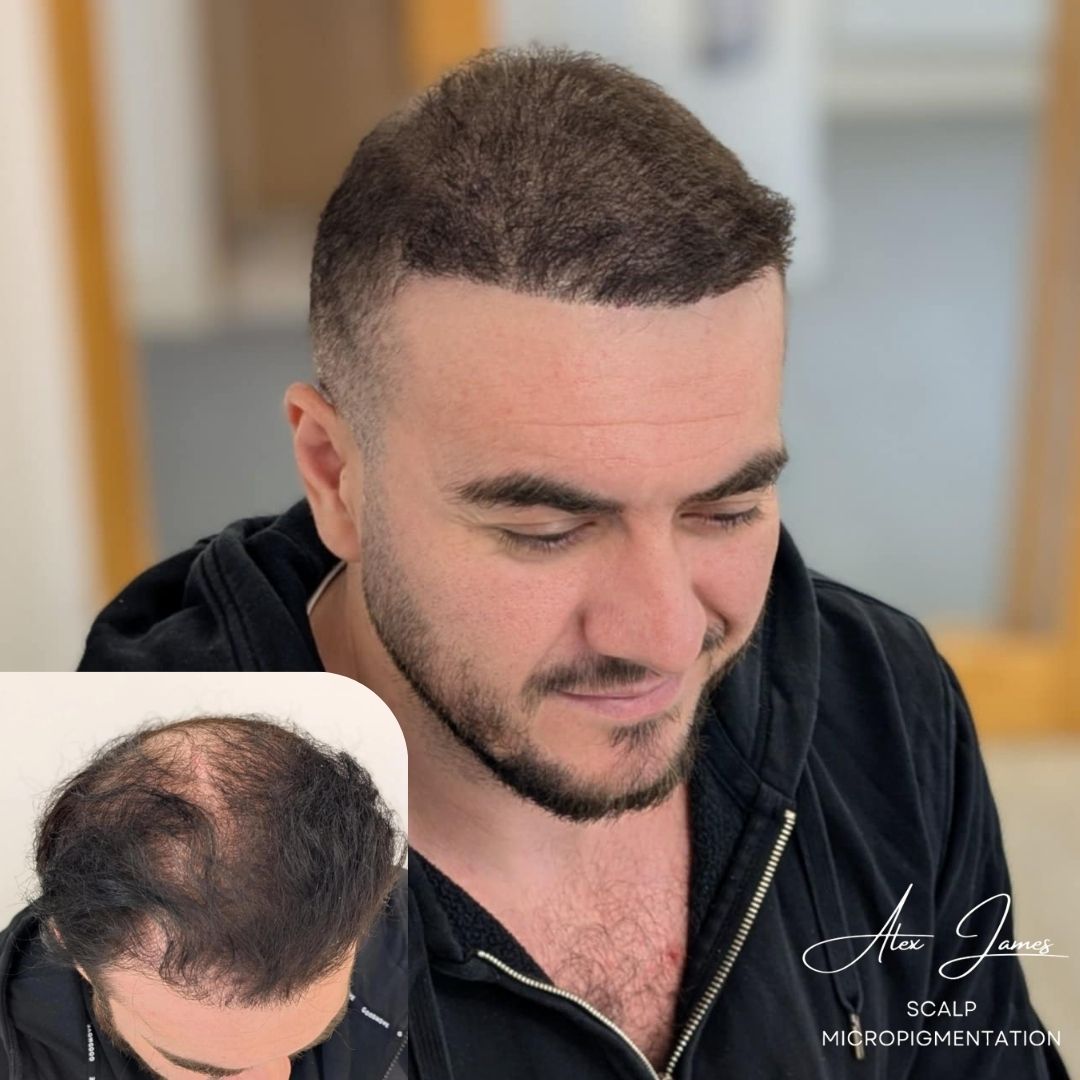
Results are visible from the first session. The finished look is a clean, shaved aesthetic — consistent density, defined hairline, and a matte finish that holds up under daylight, artificial light, and at close range. What you see at the end of session two is essentially what you'll see for years.
After surgery, transplanted hair sheds before regrowing — a process called shock loss. Visible results typically don't emerge for three to six months, with final results taking up to twelve months. The outcome depends on graft survival, donor hair quality, and how well the new hair blends with existing hair as it grows.
| Treatment | Longevity | Maintenance |
|---|---|---|
| SMP | 3–5 years before refresh | SPF + moisturise daily |
| Hair Transplant | Lifelong (if successful) | Possible second procedure |
| Medication | Only while taking it | Daily pills or application |
| Hair System | 6–12 months per unit | Re-bond and clean bi-weekly |
SMP fading is slow and even — there's no sudden change. UV exposure is the main accelerant; a daily SPF extends results significantly. Refresh sessions are brief and don't require re-doing the full treatment.
Not sure which option suits your situation?
Book a free consultation. See Alex's own SMP results in person and get honest advice — including whether SMP is actually the right choice for you.
WhatsApp Alex for a Free ConsultationFree consultations available · No pressure · Rossendale, Lancashire
The figure that often changes people's minds
Upfront price is only part of the picture. The total cost of ownership over a decade tells a very different story.
| Treatment | Up-Front Cost | 10-Year Total | Downtime |
|---|---|---|---|
| SMP | £1,250–£3,000 | £1,550–£3,500 | 24 hours |
| Hair Transplant | £5,000–£15,000 | £7,000–£17,000+ | Several weeks |
| Medication | £30–£40/month | £4,000–£5,000 | None |
| Hair System | £1,500–£3,000/yr | £15,000–£30,000 | Ongoing re-fits |
SMP pricing at Alex James SMP
Receding hairline from £1,250. Full head coverage from £1,550. Payment across sessions is the most common option — no requirement to pay everything upfront. 0% finance also available through PLIM Finance (4 months). See full pricing →
Hair systems look affordable per unit but the cumulative cost over a decade routinely exceeds £20,000 when re-bonding, maintenance, and replacement units are factored in. Medication costs nothing to start, but you're committing to a monthly expense indefinitely — and stopping the medication reverses any benefit within months.
What to expect after each treatment
Mild redness for 24 hours. Light scabbing over the treated area for three to five days — don't pick it. Avoid heavy sweating or shaving for the first week. By day 10–14 the pigment has settled and the healed result is visible. Normal activity resumes the next day.
Swelling and tightness for five to ten days. Visible crusting at graft sites for two to three weeks. Shock loss occurs — transplanted hair sheds before regrowing, which is distressing if you're not expecting it. Most people need at least a week off work, and contact sport or heavy training is off limits for a month or more.
New hair growth begins around three months. Final results aren't apparent for twelve months — meaning you're waiting a year to know whether it's worked.
For most people in the North West
Taking weeks off work, avoiding the gym, and waiting a year to see results simply doesn't fit. SMP fits around your life. A transplant demands your life adjust around it.
The honest version
When both treatments work together
SMP and hair transplants aren't mutually exclusive. Some clients combine both:
FUT surgery leaves a linear scar. FUE leaves a scatter of dot scars. Both are visible with a short haircut. SMP applied over donor scarring camouflages the marks and allows clients to wear their hair shorter with confidence — a common request.
Where transplanted hair hasn't provided full coverage — due to limited donor supply or graft failure — SMP fills in gaps and creates the illusion of consistent density. The two treatments are complementary.
For clients with early thinning who want to slow hair loss while addressing aesthetics, SMP can be combined with PRP (platelet-rich plasma) — which supports follicle health and may slow the progression of hair loss. Dawn at Alex James SMP handles PRP as a qualified phlebotomist with four years' experience.
The full picture on all the alternatives
Reduces DHT levels to slow follicle miniaturisation. It can maintain existing hair for many men, but rarely restores what's already been lost. Must be taken daily indefinitely — stopping reverses any benefit within months. Possible side effects include reduced libido and mood changes, which affect a meaningful minority of users.
Extends the growth phase of follicles and can stimulate modest regrowth on mild thinning. Requires twice-daily application. Works less well on advanced loss. Like finasteride, stopping means losing any progress made.
Modern hair systems have improved significantly and can look convincing when fitted well. But maintenance is relentless: re-bonding every two to three weeks, professional cleaning, and dealing with adhesive wear. In wet or humid conditions — standard Manchester weather — adhesives can lift. The annual cost of a quality system typically runs £1,500–£3,000 once servicing is included.
Keratin fibres that cling to existing hair, temporarily reducing scalp contrast. They work quickly and cheaply — but they're sensitive to wind, sweat, and rain. Not a long-term solution for anything beyond mild thinning.
Honest answers to the questions we hear most
Only poorly executed SMP looks fake. When pigment spacing, shade, and hairline design match your natural pattern, it's indistinguishable from a freshly shaved head — including under close scrutiny. Viewing healed results in person at a consultation is the best way to judge this for yourself.
No. Pigment is placed between existing follicles — hair continues to grow normally. SMP has no effect on follicle health.
Yes. SMP doesn't affect follicles or the scalp in a way that would prevent future surgical treatment.
Three to five years before a refresh is typically needed. Fading is gradual and even — there's no sudden change. UV protection extends the life of results significantly.
Most clients rate it two to three out of ten. It's comparable to light scratching — less uncomfortable than most people expect. Some areas of the scalp are more sensitive than others.
Yes. Because the pigment sits shallowly, it responds well to laser removal — typically two to three sessions. It can also be lightened rather than fully removed, which is useful if you want to adjust the design or shade. See our laser SMP removal page for more detail.
ALEX JAMES SMP · ROSSENDALE, LANCASHIRE
Come in, see healed results in person, and get an honest assessment of whether SMP is right for your situation. No commitment required — just a conversation.
WhatsApp Alex for a Free Consultation