
MULTIPLE AWARD WINNING
2000+ HAPPY CUSTOMERS
SMP TRAINING · LANCASHIRE
Scalp micropigmentation has grown into one of the most sought-after skills within the aesthetics industry — not because it's quick or easy, but because it delivers meaningful, confidence-restoring results when performed properly. As awareness of SMP grows, clients are becoming more informed and more selective. They actively look for practitioners who specialise in SMP rather than offering it as an add-on.
For anyone considering SMP training, this guide covers what proper training actually involves, why the learning curve is steeper than many expect, and what separates training that genuinely prepares you for real clients from training that merely issues a certificate.
The most important mindset shift before you start
Scalp micropigmentation is not difficult because it is complicated — it is difficult because it demands consistency, patience and restraint. Unlike treatments that offer immediate, temporary change, SMP creates results that clients will live with every day. Every decision made during treatment, from pigment choice to spacing to depth, contributes to a result that must remain natural not just immediately, but months and years later.
The scalp is not a uniform surface. Skin thickness, oil production, elasticity and sensitivity vary across different areas of the head and from client to client. An effective SMP practitioner must learn to adjust technique continuously — pressure, speed, angle and spacing all need to be controlled and adapted in real time. These adjustments are subtle, but they make the difference between results that look natural and results that don't.
SMP is as much about visual judgement as it is about technical execution. Practitioners must learn how the eye perceives hair density, how light interacts with the scalp, and how contrast affects the appearance of thinning. Training should teach how to assess a scalp holistically — not just where pigment is needed, but how that pigment will influence the overall look under different lighting conditions and with different hairstyles.
Restraint is a core SMP skill
One of the most difficult lessons for new practitioners is restraint. In SMP, more is not always better. Overworking the scalp, adding too much density too quickly, or trying to fix thinning in a single session leads to unnatural results. High-quality training emphasises gradual progression — density built in layers, allowing pigment to heal and settle between sessions.
Understanding hair loss patterns is also essential before treatment begins. Male and female hair loss present differently, and even within those categories, patterns vary widely. Training should teach how to assess hair loss progression, identify stable areas and anticipate future changes — allowing practitioners to design treatments that remain balanced over time.
Good training builds thinking skills, not just technique. Courses that focus only on technique without context leave trainees reliant on rigid formulas. Training that builds critical thinking equips practitioners to handle the unpredictable nature of real-world work — and that distinction is one of the key markers of high-quality SMP education.
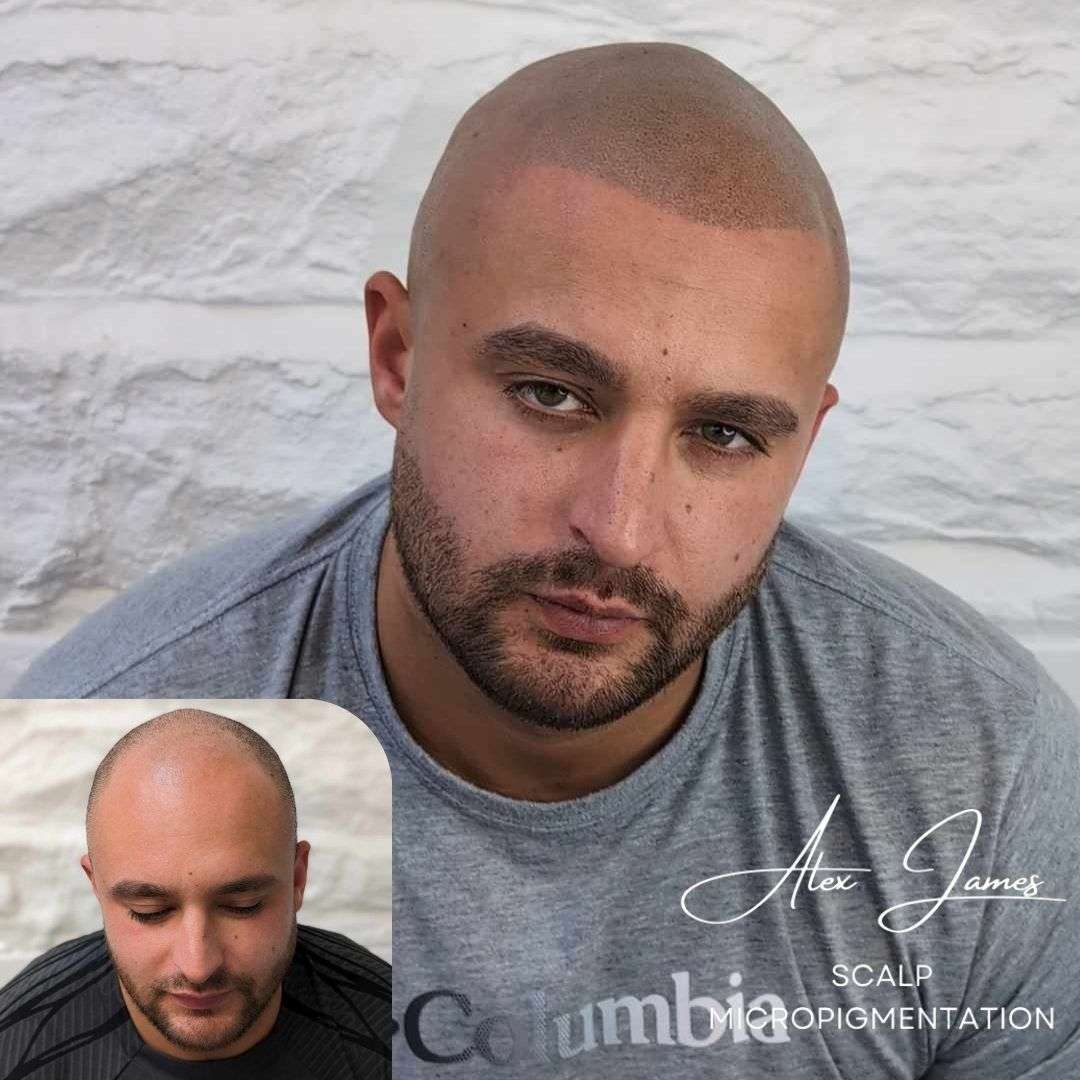

Full head SMP — Alex James clinic, Rossendale
Honest about the journey — so you arrive prepared
Many people arrive at SMP training enthusiastic and motivated, but unsure of what learning the skill will actually feel like. In the early stages, many beginners feel overwhelmed by the number of variables involved — depth, spacing, pressure, angle, pigment choice and pattern all need to be considered simultaneously. It's common for trainees to feel confident during demonstrations, then less certain when they begin practising themselves. This gap between observation and execution is a normal part of skill development, not a sign of failure.
SMP relies heavily on muscle memory. The ability to maintain consistent pressure and depth across large areas of scalp does not come naturally — it is built through repetition. Early practice sessions often feel slow and mentally demanding. Over time, movements become more fluid and intuitive, allowing practitioners to focus on planning and assessment rather than mechanics alone.
Common early mistakes include working too deeply, placing impressions too close together, or trying to build density too quickly. These mistakes usually stem from enthusiasm rather than lack of ability. High-quality training addresses these issues early, teaching trainees how to correct technique and slow down when necessary.
The confidence dip after training is normal
Many trainees experience a temporary drop in confidence after completing their course. This often occurs when moving from a structured learning environment into independent practice. Without immediate feedback, it's natural to question decisions. Training programmes offering post-course support help bridge this gap — reassuring trainees that uncertainty is part of the process.
New practitioners often judge their progress harshly, comparing themselves to experienced artists or social media highlights. Effective training reframes progress as consistency rather than perfection — improvement is measured in control, confidence and decision-making, not flawless results from day one.
The learning curve is not a drawback — it's a sign that the skill you're learning is meaningful and valuable. SMP's demand for precision is what makes it effective and respected. Training that acknowledges this prepares trainees for long-term success.
Not defined by how much information is delivered — but how well it prepares you
A reputable SMP course ensures trainees understand the fundamentals before picking up a needle — scalp anatomy, skin structure and healing behaviour, hygiene and infection control, and professional standards. This is particularly important for beginners, but it also benefits experienced practitioners transitioning from other disciplines.
Colour theory is often underestimated in SMP training. Pigment choice is not about matching hair colour directly — it's about recreating the shadow effect of hair follicles beneath the skin. A quality course teaches how undertones in the skin influence pigment appearance once healed, how pigments age over time, and how to avoid unwanted colour shifts.
Pigment placed too deeply can blur or migrate. Placed too shallowly, it fades prematurely. Quality training dedicates significant time to developing depth control through supervised practice with direct feedback on pressure, angle and pacing. Training also covers how to plan density across multiple sessions, when to stop, and how to evaluate progress objectively — preventing overworked scalps and unnatural results.
Technical skill alone is not enough. Clients arrive with high emotional investment and varied understanding of what SMP can achieve. Training includes guidance on conducting thorough consultations, explaining the process clearly, and setting realistic expectations — including when SMP may not be the right option. These skills protect both practitioner and client.
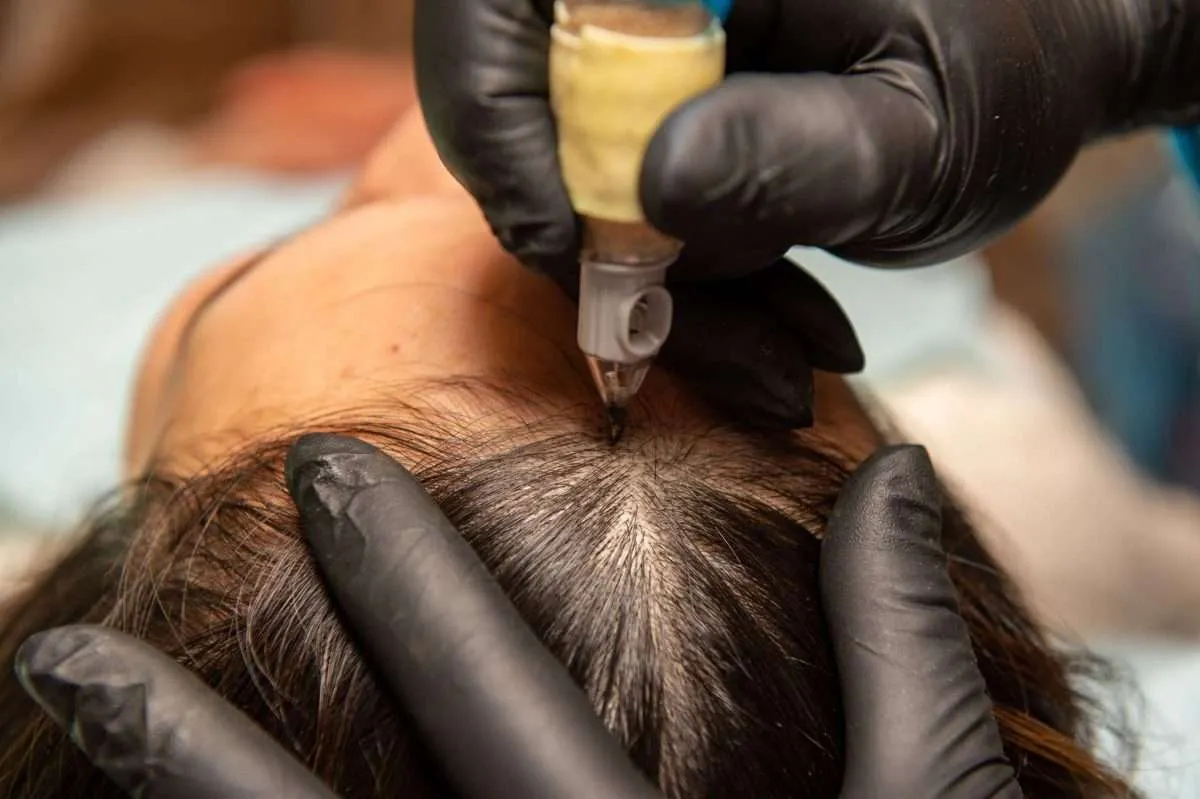
Synthetic skins can be useful for initial practice, but they do not replicate the variability of real scalps. Live models introduce differences in skin texture, sensitivity, hair density and client expectations. Working under supervision allows trainees to experience these variables in a controlled environment — building confidence that cannot be gained through theory alone.
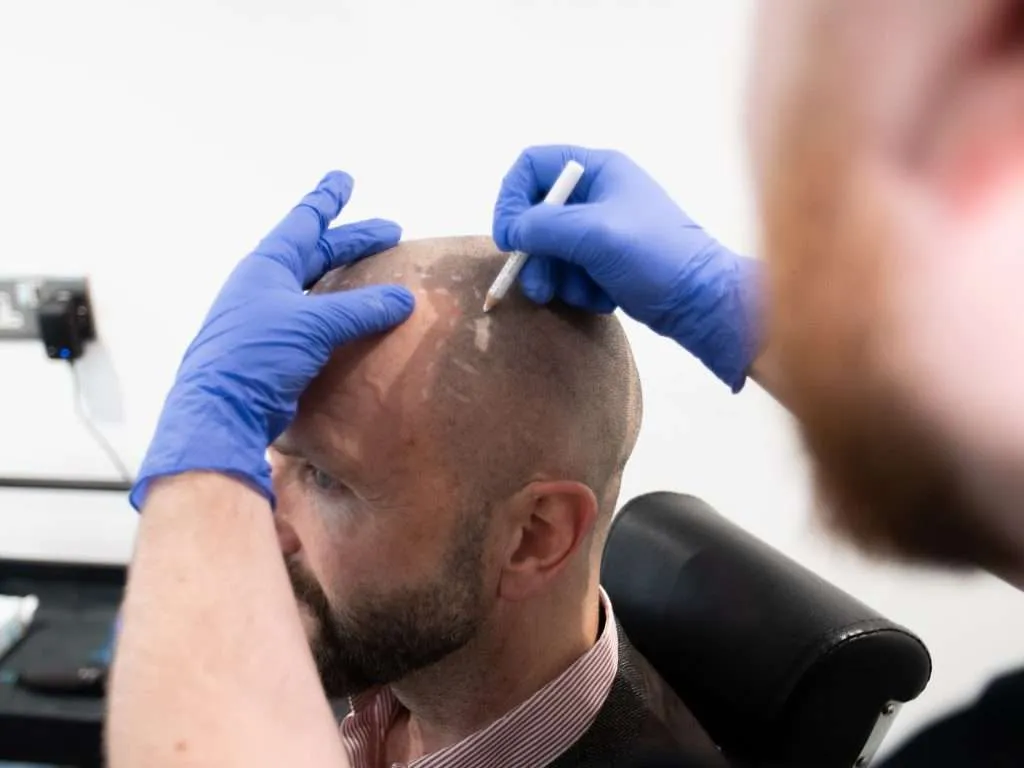

Hands-on training — Alex James Training Academy, Rossendale
What you actually need — and what you don't
One of the first things experienced SMP practitioners will tell you is that results are driven by technique, not machines. While reliable equipment is important, no machine can compensate for poor depth control, inconsistent spacing or lack of understanding. Quality training focuses on building skill before encouraging investment — protecting trainees from the misconception that success is tied to expensive tools rather than developed ability.
SMP machines differ from traditional tattoo machines — they are designed to operate at specific speeds with controlled impact suitable for the scalp. Training should explain what makes a machine suitable for SMP (weight, stability, consistency) rather than pushing particular brands. A good course teaches adaptability: if you understand technique properly, you can work confidently with different machines.
Needle selection is another area that can feel overwhelming for beginners. In reality, most SMP work relies on a small, consistent range of needle configurations. Training focuses on how needle choice affects impression size, depth and healing — rather than presenting endless options. Simplicity and safety are the guiding principles.
Avoiding unnecessary upsells and pressure
Some trainees encounter pressure to purchase extensive equipment packages before they've developed confidence. Ethical training avoids this — prioritising education and gradual investment. Equipment can always be upgraded later as experience and demand increase. Most successful SMP practitioners build their setup over time, refining it as confidence grows.
Lighting and ergonomics are also worth understanding early. Proper lighting allows practitioners to see contrast clearly and maintain consistency. Ergonomics — how you position yourself during treatment — protect your health over a long career. These practical considerations contribute to longevity in the profession.
An area many new practitioners underestimate
Professional insurance is a non-negotiable requirement for anyone offering scalp micropigmentation. It protects you in the event of client dissatisfaction, adverse reactions or unforeseen complications. Training should clearly explain what type of insurance is required for SMP — including treatment-specific cover rather than general beauty insurance — and how training certification fits into the process.
In the UK, local authorities play a role in regulating cosmetic treatments including SMP. Requirements vary by region, but generally include registration, inspection and adherence to hygiene and safety standards. High-quality training introduces trainees to these expectations early — covering what local authorities look for and how to prepare for compliance, including record keeping, consent forms, aftercare documentation and infection control protocols.
Consent is a fundamental part of ethical SMP practice. Clients must understand the procedure, its limitations, potential risks and expected outcomes before treatment begins. Training covers how to conduct informed consent properly, document discussions, and ensure clients have realistic expectations — protecting both client and practitioner.
SMP involves breaking the skin, which means hygiene and infection control must be taken seriously. Sterilisation, barrier protection, waste disposal and safe working practices are covered in detail. Learning these standards in a real clinic environment reinforces their importance and helps trainees build safe habits from day one — habits that protect both long-term reputation and client wellbeing.
Interested in SMP Training at Alex James Academy?
WhatsApp Alex to discuss course dates, what's included, and whether SMP training is the right next step for you.
WhatsApp Alex to EnquireOr visit the full SMP training course page for all details
Where and how you train matters as much as what you're taught
Training in a clinic environment allows trainees to see the full client journey unfold — from initial enquiry and consultation through to treatment, aftercare and follow-up. This context matters. It helps trainees understand that SMP is not a standalone technical task, but a service that requires organisation, communication and consistency.
Clients seeking scalp micropigmentation are often emotionally invested in the outcome. Hair loss can affect confidence deeply, and this emotional element is something trainees must learn to navigate with care and professionalism. Clinic-based training allows trainees to observe real conversations, questions and concerns — seeing how experienced practitioners reassure clients, explain limitations honestly, and build trust through clarity rather than promises.
Every scalp is different. Skin texture, sensitivity, oil production and hair density vary from client to client. Training on live models in a clinic environment exposes trainees to these differences early — teaching adaptability rather than reliance on rigid formulas. Smaller group training enhances this further, allowing for more individual attention and feedback that reflects real outcomes rather than hypothetical scenarios.
In a clinic environment, professional standards are not abstract concepts — they are daily practice. Hygiene protocols, consent processes, record keeping and aftercare instructions are followed consistently and visibly. Trainees absorb these standards naturally, making compliance feel normal rather than burdensome.
Ultimately, scalp micropigmentation training should prepare practitioners for independent, responsible work — technically, professionally, and interpersonally. Trainees leave with a clearer understanding of what it means to be an SMP practitioner, not just how to perform treatments. This clarity reduces anxiety and supports a smoother transition into real-world practice. See the SMP training course page for full details on what's included at Alex James Training Academy.
ALEX JAMES TRAINING ACADEMY · LANCASHIRE
See full course details — including what's included, hands-on training structure, and current pricing — on the SMP training page.
View the SMP Training Course