

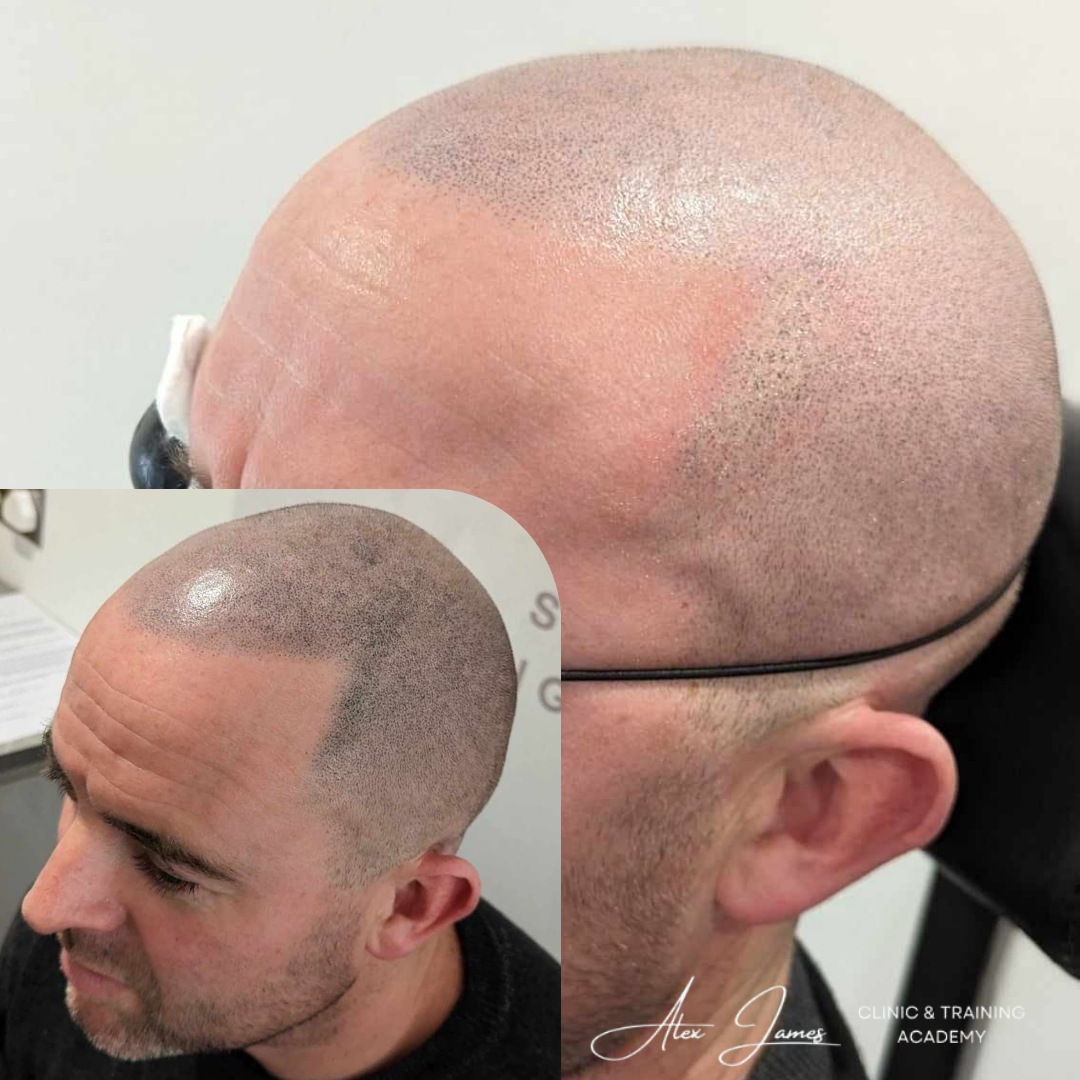
After learning how scalp micropigmentation removal works in Part 1, this section turns to the question most people ask next — what does it cost, and what does true value look like?
Here, the team at Alex James SMP Clinic & Training Academy explains the real factors behind scalp micropigmentation removal pricing, how to recognise fair quotations, and how new innovations in pigment and laser science are shaping the next decade of SMP care.
The Science Behind Laser-Based SMP Removal
Laser removal remains the most researched and reliable method for eliminating unwanted scalp pigmentation. It combines photothermal precision with biological efficiency, allowing clinicians to remove pigment without surgery or significant downtime.
Selective Photothermolysis – The Foundation
The term selective photothermolysis describes how lasers differentiate between pigment and surrounding tissue. Each pigment molecule absorbs light energy at specific wavelengths. When a laser pulse of the right wavelength hits that molecule, it absorbs the energy, heats momentarily, and breaks apart into smaller fragments.
For scalp micropigmentation, this principle works particularly well because the pigments are carbon-based. Carbon strongly absorbs light in the 1064 nm wavelength, emitted by Q-switched Nd:YAG lasers. The pigment shatters mechanically rather than thermally, minimising collateral heat spread. The body’s lymphatic system then gradually removes these tiny fragments over the following weeks.
Because SMP pigments lie close to the surface (around 0.5–1.0 mm below the epidermis), treatment energy can remain low. This precision ensures effective fading without compromising skin texture or natural hair follicles.
Several laser technologies are available for cosmetic tattoo and SMP removal, each with distinct characteristics. The two most widely used systems are Q-switched and picosecond lasers.
The industry standard for SMP correction, the Q-switched laser delivers nanosecond pulses of high-energy light. These ultra-short bursts generate acoustic waves that fragment pigment particles quickly and evenly.
Key advantages:
The latest evolution of laser technology, picosecond devices release energy in pulses measured in trillionths of a second (one thousand times shorter than nanoseconds). The shorter pulse duration increases photoacoustic rather than thermal effect, producing finer pigment fragmentation with less inflammation.
Benefits include:
At Alex James SMP Clinic & Training Academy, both systems are employed depending on the client’s pigment chemistry and treatment goals. Where maximum precision or mixed pigment tones are present, picosecond technology offers superior results; where cost-efficiency and broad adaptability matter, the Q-switched laser remains a gold standard.
How a Laser Session Works – Step by Step
Each complete session usually lasts 20–40 minutes, depending on coverage area and pigment depth. Treatment intervals remain at four to six weeks, allowing the body to process and eliminate pigment safely between visits.
Client Comfort and Pain Management
Although laser light interacts with pigment, clients often compare the sensation to tiny elastic snaps or mild static tingling. Discomfort is transient and manageable.
Pain control options include:
At clinics such as Alex James SMP Clinic in Lancashire, comfort forms part of the care philosophy. Calming communication, topical anaesthetic, and careful pacing ensure the procedure feels manageable even for those anxious about laser treatments.
Laser-based scalp micropigmentation removal is designed to be minimally invasive, but it still initiates a controlled healing cycle within the skin. Understanding this process helps clients prepare and contributes to consistent, predictable results.
Immediate Post-Treatment Phase (First 24–48 Hours)
Right after treatment, the scalp may appear slightly red or feel warm, similar to mild sun exposure. This is a natural inflammatory response, signalling the beginning of the body’s healing cascade. Any frosting observed during treatment fades within minutes. Clients may notice a faint “tight” sensation for several hours as micro-edema subsides.
To aid this stage:
By the next day, most people can resume routine activities without issue.
Early Healing Phase (Days 3–7)
Mild flaking or dryness may occur as micro-lesions close and new epithelial cells form. Hydration, gentle cleansing, and avoidance of sun exposure remain priorities. Clients should not exfoliate, shave, or expose the scalp to excessive heat (e.g., saunas or steam rooms).
During this time, macrophages and lymphatic circulation are actively clearing fragmented pigment. The visible fading continues gradually rather than dramatically — a subtle but steady improvement.
Ongoing Recovery (Weeks 2–6)
By the second week, any redness or dryness resolves. Pigment continues to disperse internally, producing lighter, more natural tone across the scalp. The practitioner assesses this change during the next appointment to decide the correct energy level for subsequent sessions.
At Alex James SMP Clinic & Training Academy, clients receive ongoing support between sessions. Practitioners encourage follow-up photos under consistent lighting to track progress objectively — a simple yet effective way to demonstrate cumulative fading.
Aftercare Essentials
Proper aftercare makes the difference between good results and great results. Post-laser skin remains sensitive, so maintaining a clean, balanced environment supports optimum healing.
Recommended Do’s:
Avoid:
These straightforward steps protect the skin’s barrier and prevent post-inflammatory hyperpigmentation, especially important for darker skin tones.
Laser safety is non-negotiable. The margin between effective pigment targeting and excessive thermal exposure is narrow, making precise calibration vital. Professional clinics use detailed protocols based on skin phototype, pigment colour, and treatment history.
Energy (Fluence)
Measured in joules per square centimetre, fluence defines how much energy the skin receives. Too low, and pigment fragmentation is incomplete; too high, and unnecessary heat may develop. Experienced practitioners begin conservatively and adjust incrementally.
Spot Size and Repetition Rate
Larger spot sizes penetrate deeper but diffuse energy more evenly, suitable for broad SMP coverage. Smaller spots concentrate energy for dense or stubborn pigment. Repetition rate (measured in Hz) determines pulse frequency; slower rates offer greater control on sensitive areas.
Cooling Systems
Modern laser platforms incorporate advanced cooling — contact chillers, cryo-air, or cold packs — to protect the epidermis and enhance comfort. Cooling also reduces post-treatment inflammation and accelerates recovery.
Eye Protection
Both client and operator wear wavelength-specific goggles designed for the laser’s emission spectrum. This simple precaution is critical; even diffuse reflection can damage unprotected eyes.
At Alex James SMP Clinic & Training Academy, each laser session adheres to manufacturer calibration logs, optical-path testing, and health-and-safety records required by local council regulation. Documentation and quality assurance distinguish legitimate clinics from informal operators who may not meet UK safety standards.
Troubleshooting and Managing Irregular Pigment Behaviour
While complications are rare, pigment behaviour occasionally varies. Understanding these scenarios ensures professional handling.
Clients at the Lancashire clinic are reassured that any anomalies are handled with transparency and follow-up care. Continuous monitoring is part of the package — a mark of professional ethics and genuine aftercare commitment.
While every scalp responds uniquely, the structure of a typical laser removal programme follows a predictable rhythm. Understanding what happens at each stage helps clients visualise the process and appreciate gradual improvement rather than expecting sudden transformation.
Session 1 – Initial Fragmentation
The first laser session introduces the pigment to controlled photomechanical shock. Carbon granules break into smaller fragments, creating the foundation for lymphatic clearance. Visually, clients may see a lightening of 20–30 % across the treated area. Because pigment density is highest during this stage, mild redness and frosting are most noticeable immediately afterward.
The goal of Session 1 is not perfection but even, balanced fragmentation that primes the skin for further fading.
Session 2 – Visible Softening
Four to six weeks later, the second session builds on prior progress. The pigment particles now sit closer to the surface and respond more efficiently to subsequent pulses. This stage often delivers the most visible aesthetic change — harsh lines soften, and overall tone begins to blend naturally with surrounding skin.
Clients frequently comment that friends or family notice the difference even if they cannot pinpoint what has changed. Confidence tends to rise significantly at this point.
Session 3 – Refinement and Colour Balancing
By the third session, the practitioner fine-tunes laser parameters to target stubborn clusters. Remaining pigment may appear patchy as clearance becomes more selective. The scalp tone becomes increasingly uniform.
For clients planning to refresh their SMP design, this is when consultation for redesign begins. Those pursuing complete clearance simply continue with additional low-fluence passes until desired outcome is achieved.
Session 4–5 – Final Clearance or Light Residue
Later sessions act as finishing stages. Most clients achieve near-complete removal by this point. A small subset may retain minimal pigment shadow visible only under strong lighting. At Alex James SMP Clinic & Training Academy, these final visits also include scalp health review and optional micro-exfoliation to polish surface texture.
Expected Results and Realistic Timeframes
The body needs time to do its work. Laser treatment breaks pigment apart; biological clearance removes it. On average, clients complete their course within three to six months, depending on density and pigment chemistry.
Typical milestones:
After one session: Noticeable softening and light fade.
After two to three sessions: Distinct reduction, smoother transition zones.
After four to five sessions: Natural scalp tone restored or minimal ghosting.
Consistency matters more than intensity. Attempting to accelerate results with higher energy or reduced intervals increases risk of surface irritation without shortening overall timeline.
Long-Term Skin Quality
One of the greatest benefits of modern SMP laser removal is the preservation of skin integrity. Correctly delivered energy does not harm follicles or dermal collagen. Clients often report that their scalp feels smoother and healthier afterward, owing to improved circulation and the stimulation of new collagen during healing.
Photographic Tracking
Before-and-after photography under controlled lighting provides objective evidence of progress. At Alex James SMP Clinic, these images form part of clinical record-keeping and also serve as valuable reassurance to clients observing steady but subtle fading between sessions.
Case 1 – Uneven Pigment from Previous Technician
A client from Manchester arrived with visible colour migration along the frontal hairline, resulting from an over-deep SMP implant done elsewhere. Over four low-fluence laser sessions spaced six weeks apart, the migrated pigment was completely neutralised without surface damage. The client later opted for a subtle new hairline crafted by the clinic’s lead practitioner.
Key takeaway: Low-fluence, multiple-pass strategy prevents scar formation and preserves canvas quality for re-pigmentation.
Case 2 – Partial Fading for Redesign
A client from Blackburn requested only to soften an overly sharp temple angle rather than full removal. Two sessions using a smaller spot size and controlled fluence achieved sufficient fading for a redesigned, more natural contour. This demonstrates how targeted removal can refine an existing SMP rather than erase it.
Case 3 – Full Removal for Scar Camouflage Correction
Another case involved a client with scalp scarring disguised using outdated, dark SMP pigment. Because the scar tissue reflected laser energy differently, treatments alternated between Q-switched and picosecond modalities. Patience over six months delivered total pigment clearance, enabling later medical-grade microneedling for scar texture improvement.
Lesson: Personalised modulation of wavelength and energy ensures safe treatment even on compromised skin.
Performance Metrics: How Clinics Measure Success
Reputable practitioners assess results not purely by visual clearance but also by skin health, colour uniformity, and client satisfaction. At Alex James SMP Clinic & Training Academy**, every case concludes with:
By quantifying both visual and experiential outcomes, the clinic maintains consistent quality standards aligned with medical-aesthetic best practice across Lancashire and the wider North West.
Regional Expertise and Why Location Matters
In the North West, clients searching for scalp micropigmentation laser removal near me often discover a surprising reality: many providers offer SMP application, but few specialise in professional removal.
Alex James SMP Clinic & Training Academy bridges that gap. Based in Crawshawbooth — conveniently central to Rossendale, Manchester, Burnley, Blackburn, and Lancashire — the clinic attracts clients region-wide who prefer clinical expertise without the impersonal environment of large chain centres.
For many, the appeal lies in the combination of advanced technology and genuine communication. Clients often comment that consultations feel educational rather than sales-driven, an approach that reflects the clinic’s dual identity as both a treatment provider and an accredited training academy.
Accessibility and Convenience
The clinic’s accessible North West location means clients from Greater Manchester or even West Yorkshire can attend without the cost or time commitment associated with metropolitan clinics. Free parking, flexible scheduling, and the ability to coordinate follow-up sessions with other aesthetic or SMP-related appointments make treatment continuity seamless.
For clients travelling further afield, the clinic often helps coordinate multiple services — for example, combining pigment removal with later scalp rejuvenation or microneedling. This holistic, results-driven model has earned the clinic a loyal regional following.
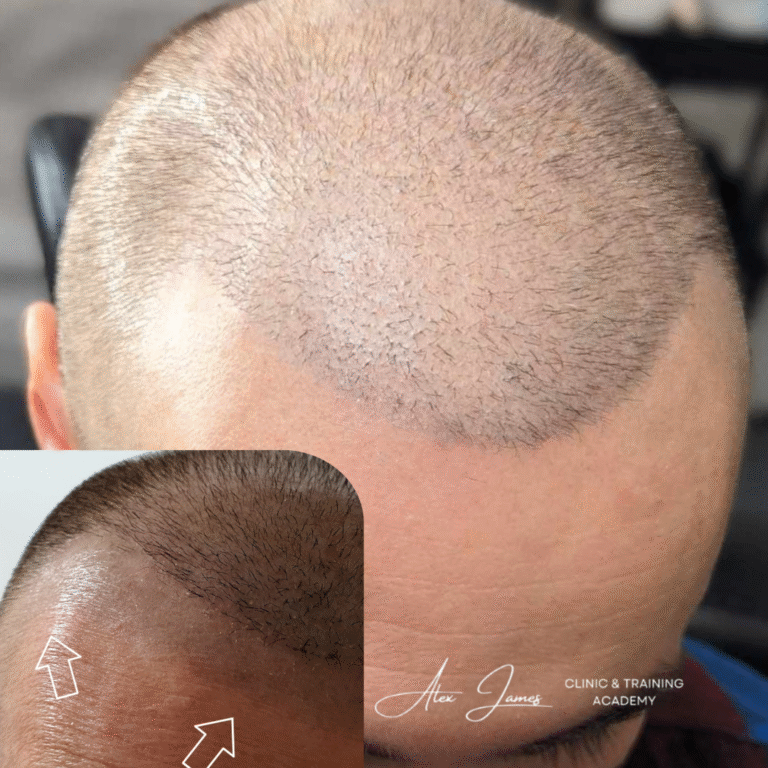
Behind every procedure is a personal story. Clients rarely seek SMP removal on a whim; it’s usually prompted by emotional frustration or disappointment with previous work. Addressing those feelings is as important as addressing the pigment itself.
At Alex James SMP Clinic & Training Academy, consultations begin with empathy. Practitioners take time to listen — to understand whether the goal is starting fresh, softening an old style, or simply feeling confident again in one’s appearance.
Rebuilding Confidence
The psychological transformation can be as profound as the visual one. Many clients express relief at discovering that removal is possible, safe, and within reach. For those who have lived with overly dark or uneven SMP for years, watching pigment lighten session by session feels like regaining control.
Education as Empowerment
Because the clinic also trains other professionals, client education naturally forms part of every appointment. Practitioners explain pigment behaviour, energy parameters, and expected healing in clear, jargon-free terms. When clients understand the why behind each step, anxiety decreases, and engagement increases.
This transparent communication style is integral to long-term trust — one of the reasons clients across Lancashire and Greater Manchester consistently refer friends and family for both SMP and removal procedures.
Setting Industry Standards
The Alex James SMP Clinic & Training Academy doesn’t merely provide services; it shapes standards. Through professional training courses in laser safety, SMP artistry, and correctional techniques, the clinic contributes to raising the national bar for quality and ethics in the scalp pigmentation field.
Its educational ethos means that even trainees leave understanding the difference between cosmetic tattoo removal and clinical SMP correction — an important distinction often misunderstood in the wider beauty industry.
The clinic’s philosophy is simple: when education leads, quality follows. This principle underpins every removal session delivered in Crawshawbooth, Rossendale, or any of its partner training locations throughout the North West.
Summary
Laser removal of scalp micropigmentation represents the perfect balance between science and artistry. It leverages advanced optical physics while respecting the nuances of individual skin biology. When executed by trained professionals using appropriate wavelengths and energy parameters, it provides an elegant, minimally invasive route to pigment correction or complete clearance.
Throughout Lancashire, Manchester, and the North West, Alex James SMP Clinic & Training Academy continues to lead the field with its patient-centred, evidence-based approach. Clients benefit not just from technology, but from compassion, education, and transparency — qualities that transform what could be a daunting corrective process into an empowering experience.
We have explored the mechanics of laser SMP removal, from wavelength science and parameter safety to session-by-session progress and clinical case insights. It has shown that modern SMP removal is not a gamble but a finely tuned procedure grounded in expertise. We will now turn our attention to Scalp Micropigmentation Removal Costs and Value — explaining how pricing structures are determined, what influences the total cost of treatment, and how clients can recognise fair, transparent pricing across the UK. We will also touch on regional price variations, the relationship between cost and outcome, and the importance of investing in long-term results rather than short-term savings.
The most obvious factor is the surface area of pigment.
Clinics typically structure prices by size — small zones, half-head, or full head. However, Alex James Clinic goes further by assessing density rather than simple area, so clients with lighter pigment coverage don’t overpay.
Carbon pigments respond quickly; older iron-oxide or hybrid formulas need additional passes. If pigment sits deeper than the optimal 0.5–1 mm dermal layer, more sessions will be required. Each additional pass equates to both laser time and practitioner expertise, influencing total cost.
Modern Q-switched and picosecond lasers represent major capital investments, costing tens of thousands of pounds. Clinics that maintain, calibrate, and insure such systems necessarily factor those operational costs into treatment pricing.
At the Rossendale clinic, both systems are available, and the correct laser is selected for each case — clients pay only for what their skin actually needs, not for unused technology.
Experienced clinicians often command higher fees because their skill reduces risk and the likelihood of needing corrective sessions later. Just as one would expect a qualified surgeon or dental specialist to cost more than an untrained provider, SMP removal should be viewed through the same professional lens.
Quality aftercare products, sterile consumables, and follow-up reviews are built into the clinic’s structure. Cheaper providers may omit these, leaving clients to manage healing alone. Including them up front ensures continuity of care and fewer complications — value in both outcome and peace of mind.
Prices across the UK vary regionally. London and major metropolitan centres carry higher overheads; smaller towns often provide better value without compromising quality. Being based in Crawshawbooth, Rossendale, allows Alex James Clinic to offer metropolitan-level technology at Lancashire pricing — an advantage for clients across the North West.
Typical Pricing Bands in the UK (Indicative)
The table below provides a realistic guide to scalp micropigmentation removal cost across the UK.
Treatment Area | Average Cost Range per Session | Typical Sessions Required |
Small correction (e.g. hairline edge) | £100 – £175 | 2 – 3 |
Half-scalp coverage | £150 – £250 | 3 – 4 |
Full-scalp dense pigment | £199 – £499 | 4 – 6 (occasionally more) |
Note: These figures reflect national averages and align with the pricing guide available on the Alex James Clinic website. Exact cost is confirmed only after assessment of density, skin type, and goal (clearance vs lightening).
The False Economy of “Cheap” Removal
Choosing a clinic based purely on price can be deceptive.
Low-cost services often rely on outdated laser platforms with inconsistent output or on practitioners who lack adequate laser-safety certification.
The risks include:
In contrast, professional environments like Alex James SMP Clinic produce consistent results in fewer sessions. Clients ultimately spend less overall and gain reassurance that their skin’s integrity remains intact.
Understanding Value Over Cost
Value in medical-aesthetic procedures is measured not simply in pounds but in outcomes, safety, and confidence.
A £200 session at a properly equipped clinic that achieves 40 % fading safely is worth far more than a £100 session elsewhere that causes patchy pigment or irritation.
Transparent Consultation
Every new client at Alex James Clinic receives a written plan detailing:
This clarity ensures no hidden surprises. Clients understand both short-term expenses and long-term benefits before the first laser pulse is delivered.
Comparing SMP Removal Costs to Other Cosmetic Procedures
When evaluating the cost of scalp micropigmentation removal, it’s helpful to place it in context with other clinical or cosmetic treatments. Many clients are surprised to learn that SMP removal is often one of the most affordable corrective procedures available relative to its precision and technology requirements.
Laser Tattoo Removal vs SMP Removal
Traditional body tattoo removal involves deep pigment layers and multiple colour inks that require different wavelengths. Such treatments can exceed £1,000–£2,000 for large areas. In comparison, SMP removal targets shallower pigment, uses fewer wavelengths, and generally requires fewer sessions — even for full-scalp coverage. A complete SMP correction course at Alex James SMP Clinic & Training Academy typically totals £600–£1,200, depending on size and density.
Cosmetic Dermatology Procedures
Chemical peels, fractional lasers, and microneedling packages often range from £150–£400 per session, yet their impact on pigment correction is indirect. SMP laser removal provides a targeted solution with immediate visible effect and long-term results, often for a similar or lower total cost.
SMP Reapplication and Adjustment
Sometimes, clients intend not full removal but adjustment before new SMP. In these cases, partial fading saves time and money during the redesign. Instead of paying for corrective pigment layering or camouflage, lightening the old work first ensures a cleaner canvas, reducing future touch-up costs.
For further information and to receive a quote for your scalp micropigmentation removal cost, please click below.
Financing and Accessibility
Professional removal should be financially accessible without encouraging rushed decisions. At Alex James SMP Clinic, payment flexibility ensures clients can prioritise safety over shortcuts.
Per-Session Pricing
Many clients prefer to pay per session. This approach keeps budgeting straightforward and allows adjustments if fewer sessions are needed than expected. Transparency avoids the pitfalls of pre-paid packages where motivation sometimes shifts from results to completion.
Course Discounts
For those committed to multi-session plans, package rates are offered. These modest reductions reward loyalty while maintaining the same clinical standard. Importantly, no client is pressured into paying for more than they require.
Finance Options
Partnered finance options or staged payments may be available upon consultation. The goal is inclusivity — ensuring that individuals from across Lancashire, Manchester, and neighbouring areas can access high-standard correctional care regardless of budget constraints.
Consultation Without Obligation
Consultations remain either complimentary or credited toward treatment, depending on the clinic’s current offer. This policy encourages exploration without commitment, allowing potential clients to learn about process and cost before deciding.
Regional Factors: Lancashire, Manchester, and the North West
The North West region presents a unique blend of affordability and expertise. Clinics like Alex James SMP Clinic & Training Academy combine city-grade technology with local approachability.
In metropolitan areas such as Manchester, Birmingham, or London, SMP removal costs typically carry a 25–40 % premium due to higher overheads and marketing costs. For the same standard of technology — and in many cases, greater practitioner involvement — clients in Lancashire pay significantly less.
Regional SEO and Discoverability
Many clients find the clinic while searching online for:
By optimising visibility through ethical SEO and educational content, the clinic reaches genuine clients seeking quality rather than cheap alternatives. Transparency builds trust long before consultation.
Community Reputation
Local reputation carries immense value. Word-of-mouth referrals and repeat visits underpin the clinic’s continued success. Reviews frequently highlight the team’s professionalism, empathy, and the comfortable, discreet atmosphere of the Crawshawbooth premises — factors that free clients from the anxiety often associated with corrective aesthetic work.
Understanding Value Beyond Money
Aesthetic confidence has no fixed price. Clients consistently report that the emotional relief of correcting poorly executed SMP far outweighs the monetary cost. Regaining a natural appearance or the freedom to wear hair at any length again translates into long-term wellbeing.
At Alex James SMP Clinic & Training Academy, “value” encompasses:
This holistic model ensures clients receive far more than pigment removal — they receive reassurance, education, and care.
The Long-Term Investment Perspective
When clients consider the cost of SMP removal, it’s worth viewing the process as a long-term investment in appearance, comfort, and confidence — not just a short-term expense.
Unlike many cosmetic procedures that need repeating every few months (for instance, wrinkle-relaxing injections or dermal fillers), successful pigment removal is permanent. Once the unwanted pigment is cleared, there’s no ongoing maintenance cost beyond healthy scalp care.
Emotional and Social Return on Investment
Clients often underestimate the emotional burden caused by a poor or outdated SMP. Feeling unable to go swimming, avoiding close-up photos, or constantly concealing the scalp under hats can quietly erode confidence.
After successful removal, clients frequently describe a sense of relief — freedom to cut their hair shorter, freedom from worry about unnatural tones, and restored self-image. These intangible benefits outlast the treatment itself and justify the investment many times over.
Professional Impact
For some individuals, visible SMP work that looks artificial can even affect career confidence, especially in roles requiring close client interaction or public speaking. Investing in proper removal supports not just personal wellbeing but professional composure — an advantage impossible to quantify in financial terms.
Alex James SMP Clinic & Training Academy follows an ethical, transparent pricing policy based on fairness, safety, and respect for clients’ budgets.
No Hidden Fees
Prices quoted during consultation are the final scalp micropigmentation removal cost. There are no “clinic fees,” add-on charges, or surprise costs for aftercare products. Everything — from the patch test to the post-laser serum — is clearly itemised.
Pay Only for What You Need
Not every client requires a full series of six sessions. Some achieve desired results after two or three. The clinic’s pay-per-session model ensures clients pay only for the treatment actually provided, with the option to stop once satisfied.
No Pressure to Upsell
Ethical practice means prioritising the client’s interest. Consultations are informative, not persuasive. If removal isn’t necessary — for example, when simple fading or colour correction would suffice — the practitioner will advise accordingly, even if that means less revenue for the clinic.
Fair Regional Pricing
Operating from Crawshawbooth, Rossendale, allows the clinic to maintain metropolitan-grade equipment and medical-standard hygiene at significantly lower operating costs than central Manchester or London. These savings are passed directly to clients without compromising quality.
Example of Transparent Quotation
To illustrate, here’s how a typical transparent quotation might appear for a medium-density full-scalp removal at the clinic:
Stage | Description | Cost | Notes |
Consultation | Assessment + patch test | Complimentary | Credited toward treatment if booked |
Session 1 | Full-scalp laser (Q-switched, low fluence) | £249 | Includes post-care serum |
Session 2 | Laser refinement | £249 | Adjusted parameters |
Session 3 | Final clearance / optional re-check | £199 | Optional follow-up |
Total Typical Course | £697 | Complete, inclusive of aftercare |
While some clients need fewer sessions, others may require one or two additional depending on pigment type. However, because the pricing structure is clear, there are no hidden surprises — just transparent, accountable care.
Why Ethical Pricing Supports Better Outcomes
When practitioners are not pressured to cut corners to meet unrealistic discount rates, they can spend the necessary time calibrating equipment and performing detailed aftercare reviews. Fair pricing sustains quality.
Ethical clinics also reinvest part of revenue into continuous professional development, device maintenance, and advanced training — all of which directly benefit clients through safer, faster, and more predictable results.
This is why the clinic’s pricing sits at the intersection of affordable and premium: accessible enough for most budgets, but high enough to maintain world-class standards.
Regional Comparison Snapshot
Location | Typical Price Range (Full Scalp Removal) | Distinguishing Factors |
London | £600–£1,000 per session | High overheads, corporate branding |
Manchester City Centre | £350–£600 per session | Urban clinics, variable expertise |
Rossendale / Lancashire (Alex James Clinic) | £199–£499 per session | Clinical precision, direct practitioner contact, excellent value |
This demonstrates why clients from Manchester, Bolton, and even Liverpool frequently travel to Crawshawbooth. The balance of premium technology, ethical pricing, and personalised care provides exceptional return on investment.
Summary
Cost, at its core, reflects trust. Clients entrust their skin — and confidence — to a professional whose responsibility extends beyond the treatment room. Transparent pricing, clear communication, and fair value transform what might feel like an expense into an act of self-care.
In Lancashire and across the North West, Alex James SMP Clinic & Training Academy continues to redefine what “value” means in SMP removal: measurable, safe, and ethically priced expertise delivered with empathy.
We have explained how costs are structured, what influences them, and why cheap options rarely offer true savings. It has also shown that long-term satisfaction depends not on finding the lowest price but on finding the right clinic.
Coming up, we’ll explore The Future of SMP Removal and Technological Advancements — looking at emerging innovations in pigment science, next-generation laser platforms, and how education and research at Alex James SMP Clinic are helping shape the next decade of SMP correction.
A Rapidly Evolving Field
The world of scalp micropigmentation removal is changing faster than ever. What was once considered a niche corrective service is now a respected subspecialty within aesthetic dermatology. Advances in pigment chemistry, laser engineering, and skin science are expanding what’s possible — making treatment faster, safer, and more precise.
Clinics that invest in ongoing education and modern technology, such as Alex James SMP Clinic & Training Academy in Rossendale, are leading this evolution. Their dual role as treatment providers and educators uniquely positions them to integrate emerging science into daily practice and pass that knowledge to future practitioners.
Picosecond Evolution
The arrival of picosecond lasers marked a turning point. Whereas traditional nanosecond (Q-switched) devices delivered energy via thermal effect, picosecond systems harness photoacoustic impact — shattering pigment mechanically rather than burning it.
Future iterations are already exploring even shorter pulses and dual-wavelength hybrids that adjust automatically based on real-time optical feedback. These systems can detect pigment density variations across the scalp and modulate energy output accordingly, improving both safety and consistency.
For clients, this means:
Fractional and Hybrid Platforms
Another exciting frontier is fractional laser integration, combining pigment fragmentation with dermal rejuvenation. By pairing pigment-specific wavelengths with collagen-stimulating fractional beams, future SMP removal may not only clear pigment but also improve skin texture and elasticity.
The result? Faster healing, smoother scalp surfaces, and better outcomes for those preparing for new SMP or scar camouflage.
AI-Assisted Calibration
Manufacturers are developing AI-driven calibration software capable of analysing skin tone, reflectivity, and pigment absorption before each session. These “smart lasers” automatically adjust fluence, pulse width, and repetition rate, reducing human error and standardising results.
Clinics embracing such systems will be able to provide highly consistent, data-backed outcomes — a game-changer for professional SMP removal across the UK.
Advances in Pigment Formulation
The pigments themselves are evolving. Modern SMP pigments are now engineered with laser-responsiveness in mind. Manufacturers are moving away from stubborn, iron-oxide-based compounds toward carbon-organic hybrids that break down predictably under 1064 nm and 755 nm wavelengths.
Benefits of Removable Pigment Technology
Alex James SMP Clinic’s training programmes already educate new technicians about pigment selection and removal compatibility, ensuring future SMP work remains reversible and safer to correct.
Improved Cooling and Skin Protection Systems
Another significant area of progress is epidermal cooling. Modern laser handpieces now include cryogenic spray systems or sapphire-contact chillers that keep surface temperature stable during treatment. Some models even integrate temperature sensors to automatically pause pulses if heat exceeds a safe threshold.
This technological refinement not only enhances comfort but also enables higher fluence where necessary, accelerating pigment clearance without added trauma.
Standardisation and Regulation in the UK
As SMP removal grows in demand, formal regulation is catching up. Local authorities across the UK, including those in Lancashire and Greater Manchester, are tightening licensing for laser practitioners and premises.
Expectations for the future include:
Clinics like Alex James SMP Clinic & Training Academy are already exceeding these anticipated standards. Their protocols — from sterilisation to patient consent — align with medical-grade practice rather than cosmetic convention.
No technology, no matter how advanced, can replace human skill. The safety and precision of scalp micropigmentation removal still depend primarily on the practitioner’s training, judgement, and ethical decision-making. This is where Alex James SMP Clinic & Training Academy continues to play a defining national role.
From Technician to Clinician
In recent years, the UK SMP industry has shifted from artistry alone toward a more clinical, evidence-led discipline. The practitioners of the future are expected to understand laser physics, skin histology, pigment chemistry, and even lymphatic biology. It’s not enough to operate a machine — one must interpret how skin responds, session by session.
At the Crawshawbooth-based training academy, courses go beyond mechanical technique. Students learn:
Graduates leave equipped not only to perform SMP and removal but to do so ethically and confidently — qualities that set apart true professionals from casual operators.
CPD and Continuous Improvement
Every industry evolves, and SMP removal is no exception. That’s why the academy’s continuing professional development (CPD) programmes allow established technicians to update their knowledge as new lasers and pigment technologies emerge. This continuous learning ensures that the North West remains a hub for safe, cutting-edge SMP correction.
The Role of Education and Research
The future of SMP removal will be shaped as much by data as by devices. Evidence-based practice — long standard in medical aesthetics — is now entering the SMP field.
Alex James SMP Clinic & Training Academy contributes to this evolution by documenting clinical outcomes, compiling anonymised data on pigment types, energy settings, and healing timelines. These insights feed back into the curriculum, forming a valuable research resource for the wider industry.
Collaborative Partnerships
The clinic’s educators maintain dialogue with pigment manufacturers and laser engineers, sharing field observations that inform product development. For example, feedback about pigment residue patterns under 1064 nm light has helped refine pigment particle size in new “easy-fade” SMP lines.
By collaborating with engineers, the clinic effectively acts as a research site for applied innovation — turning theory into practice that benefits future clients.
Ethics and Transparency
Research also extends to professional ethics. As the SMP industry matures, maintaining transparency about capabilities and limits becomes essential. The academy teaches practitioners to represent laser outcomes honestly — to avoid exaggerated claims and to ensure informed consent. Ethical training today prevents disillusionment tomorrow.
Client Benefits of Ongoing Innovation
For clients, technological and educational advances translate into tangible improvements in comfort, safety, and results.
Modern lasers fragment pigment more efficiently, reducing the average course length by one to two sessions compared with older methods. Faster treatment schedules mean lower overall cost and less disruption to daily life.
Earlier-generation devices sometimes struggled with darker skin tones due to higher melanin absorption. Newer dual-wavelength and picosecond systems have minimised that limitation, opening safe SMP removal to a wider demographic.
Improved cooling systems and fractional hybrid technologies minimise surface inflammation, leaving the skin smoother post-treatment. Many clients notice general improvement in scalp condition following a well-spaced course of laser removal.
Standardised protocols and AI-assisted calibration mean more uniform results between sessions and across clients. That consistency builds trust and further professionalises the industry.
As SMP pigments become more laser-responsive, clients gain the freedom to change their minds. Whether refreshing a design, transitioning styles, or opting for complete removal, flexibility becomes built-in rather than an afterthought.
The SMP field’s future looks remarkably bright. In the next decade, we can expect:
Alex James SMP Clinic & Training Academy intends to remain at the forefront of this transformation — combining local approachability with global-level expertise. Their continued investment in education, research, and technology ensures that Lancashire and the North West will remain a centre of excellence in SMP care.
Regional Leadership and Vision for the North West
In the evolving landscape of scalp micropigmentation and aesthetic laser services, regional leadership matters. Clients are increasingly seeking clinics that blend cutting-edge innovation with genuine accessibility, rather than having to travel to major cities for world-class results.
The Alex James SMP Clinic & Training Academy, based in Crawshawbooth, Rossendale, represents this balance perfectly. Its work has positioned Lancashire and the broader North West as a serious competitor to London and Birmingham in the field of SMP artistry and corrective laser technology.
Championing Clinical Excellence
The clinic’s vision extends beyond its own client base. By setting measurable standards for safety, hygiene, documentation, and ethical pricing, it raises expectations across the region. Local clients benefit directly — they can now receive metropolitan-quality care without metropolitan costs.
A Regional Hub for Innovation
Lancashire’s geographic location makes it a strategic hub for education and collaboration. Students travel from Manchester, Liverpool, and Leeds to attend the academy’s SMP and laser courses. Many go on to open practices across the UK that mirror the same clinical principles: evidence-based technique, transparent pricing, and empathy-led client care.
This ripple effect strengthens the reputation not just of the clinic but of the entire Northern aesthetic community, promoting sustainable growth built on integrity rather than marketing gimmicks.
Industry Collaboration and Client Empowerment
True innovation happens when professionals share knowledge rather than guard it. The next decade will see increasing collaboration among SMP practitioners, laser technicians, and dermatological researchers — and Alex James SMP Clinic & Training Academy aims to remain an active participant in that ecosystem.
Collaborating Across Disciplines
The boundaries between cosmetic tattooing, medical aesthetics, and dermatology are narrowing. Scalp micropigmentation removal sits at the intersection of all three. By partnering with dermatologists, pigment manufacturers, and aesthetic device developers, the clinic contributes to a more integrated approach to scalp and skin health.
Research partnerships may explore:
These collaborations will ultimately translate into safer, faster, and more comfortable experiences for clients across the UK.
Empowering the Client
Future SMP removal will be defined not only by technological sophistication but by informed decision-making. Clients now have unprecedented access to educational resources, transparent pricing, and case studies.
By publishing guides such as this one, Alex James SMP Clinic empowers individuals to understand:
This empowerment encourages accountability industry-wide, creating a virtuous cycle of quality and trust.
The Next Decade of SMP Removal
Precision Without Compromise
The trajectory of laser technology points toward greater precision with lower energy output — meaning faster pigment clearance and reduced risk even on sensitive skin. With continued research, it’s conceivable that scalp micropigmentation removal could one day be performed with near-zero discomfort and instantaneous healing response.
Eco-Responsibility and Sustainability
As environmental awareness increases, equipment manufacturers and clinics alike are moving toward sustainable operational models: energy-efficient lasers, recyclable consumables, and reduced chemical waste. Alex James SMP Clinic already incorporates environmentally responsible practices wherever possible — a small but vital contribution to the industry’s sustainable future.
Personalised Treatment Algorithms
Imagine a system where an AI scanner analyses a client’s scalp tone, pigment density, and hydration levels, instantly generating a bespoke laser protocol. Such technology is already in prototype development, and it’s expected to become commercially available within the decade. Clinics at the forefront, including Alex James, are likely to adopt and refine these tools early on.
Final Summary
Understanding your scalp micropigmentation removal cost means more than comparing numbers — it’s about measuring trust and long-term results. The future of scalp micropigmentation removal promises faster results, safer technology, and ever-greater flexibility for clients. Yet one principle remains unchanged: the combination of science, ethics, and empathy that defines every treatment at Alex James SMP Clinic & Training Academy.
If you’d like to discuss your own treatment plan or book a free consultation, visit alexjamessmp.co.uk
— your next chapter in confidence starts here.
➜ Return to Part 1 – How SMP Removal Works & Laser Techniques