Alex James SMP

Laser Tattoo Removal Training: Learning Laser the Right Way

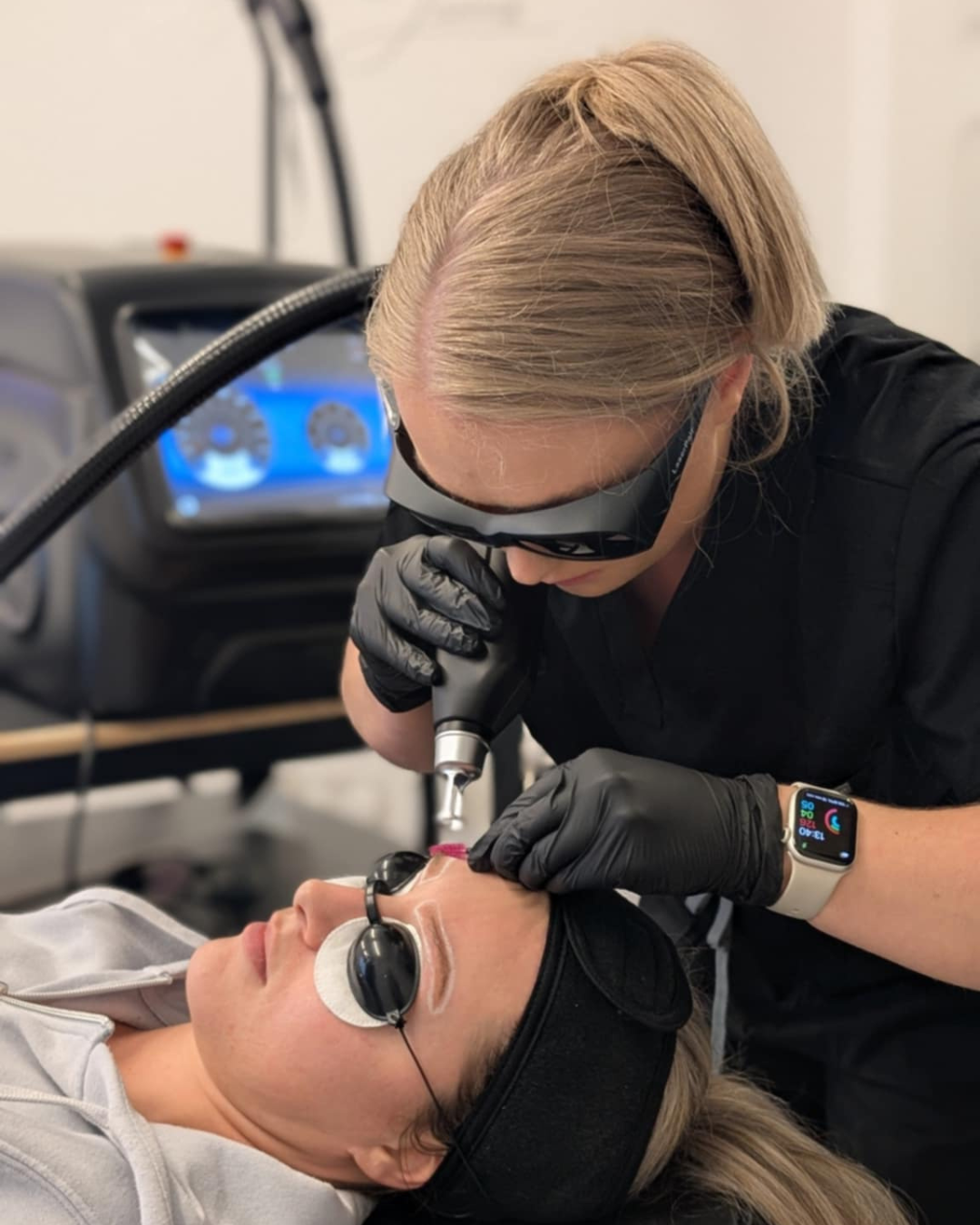
laser tattoo removal training course students learning techniques Alex James academy Manchester

200+ 5 STAR REVIEWS

MULTIPLE AWARD WINNING

2000+ HAPPY CUSTOMERS

LASER TATTOO REMOVAL · LANCASHIRE

Laser Tattoo Removal: What It Is, How It Works & What to Expect

Tattoo removal has become one of the most sought-after aesthetic treatments in the UK, with thousands of people each year choosing to fade or fully remove unwanted tattoos. Whether it's a design that no longer represents you, a cover-up requiring lightening first, or artwork that simply hasn't aged well — laser tattoo removal remains the gold standard for safe, effective and controlled fading.

At Alex James Clinic in Rossendale, Lancashire, we specialise in professional laser tattoo removal for clients across the North West — Manchester, Burnley, Preston, Bury, Blackburn and beyond. We perform laser tattoo removal daily, and we've heard every question. This guide answers all of them, clearly and honestly.

What Laser Tattoo Removal Is and How It Works

The science made simple

Laser tattoo removal uses highly targeted light energy to break tattoo pigment into microscopic particles that the body can naturally remove. It is safe, controlled, and specifically designed to target ink without damaging the surrounding skin. At Alex James Clinic, we use a professional Q-switched Nd:YAG laser — the industry's most trusted technology for breaking down tattoo pigment efficiently and safely.

To understand why laser technology is necessary, it helps to understand how tattoos work. A tattoo machine deposits ink deep into the dermis — the second layer of the skin. The body recognises the pigment as a foreign substance and immune cells attempt to remove it, but the particles are too large. They become permanently trapped in the dermis. To remove a tattoo, those particles must be broken into pieces small enough for the body to eliminate — and laser is currently the only method that can achieve this safely.

Laser tattoo removal works through selective photothermolysis: specific wavelengths of light are absorbed by the tattoo ink, the ink heats rapidly and shatters into tiny particles, the skin remains largely unaffected, and the immune system gradually removes the fragmented ink.

Why Nd:YAG technology?

Nd:YAG lasers produce multiple wavelengths — 1064nm (best for black ink, dark pigments, and darker skin types) and 532nm (best for red, orange and warm-toned pigment). This dual-wavelength capability allows treatments to be tailored based on your tattoo's unique characteristics.

Many clinics heavily market Pico laser systems. While Pico lasers can work well, Nd:YAG remains the most proven, reliable and widely used system globally for consistent tattoo removal. We focus on what works safely and effectively — not on buzzwords.

Why Multiple Sessions Are Needed

And why rushing them is counterproductive

No professional laser clinic will ever promise removal in one treatment — and you should be wary of any that do. Each session breaks down only a portion of the ink. After treatment, the ink breaks into tiny particles and your immune system begins removing the fragments. Over weeks, the tattoo lightens. Each subsequent session targets deeper, older pigment. Depending on the tattoo, clients may need anywhere from 6 to 12+ sessions for significant fading or removal.

Why some tattoos fade faster than others

Ink colour: Black fades fastest. Red is often responsive. Yellow, orange and light blue/green are the most resistant.

Age of the tattoo: Older tattoos tend to fade faster because pigment has already naturally broken down over the years.

Ink depth and application: Professional tattoos are often more saturated and sit deeper. Amateur tattoos are generally easier to remove.

Location on the body: Areas with stronger circulation (upper body) lighten faster. Hands, feet and lower legs can take longer.

Lifestyle: Hydration, exercise, and avoiding smoking all influence how quickly your body flushes pigment. The laser breaks the ink — your body removes it.
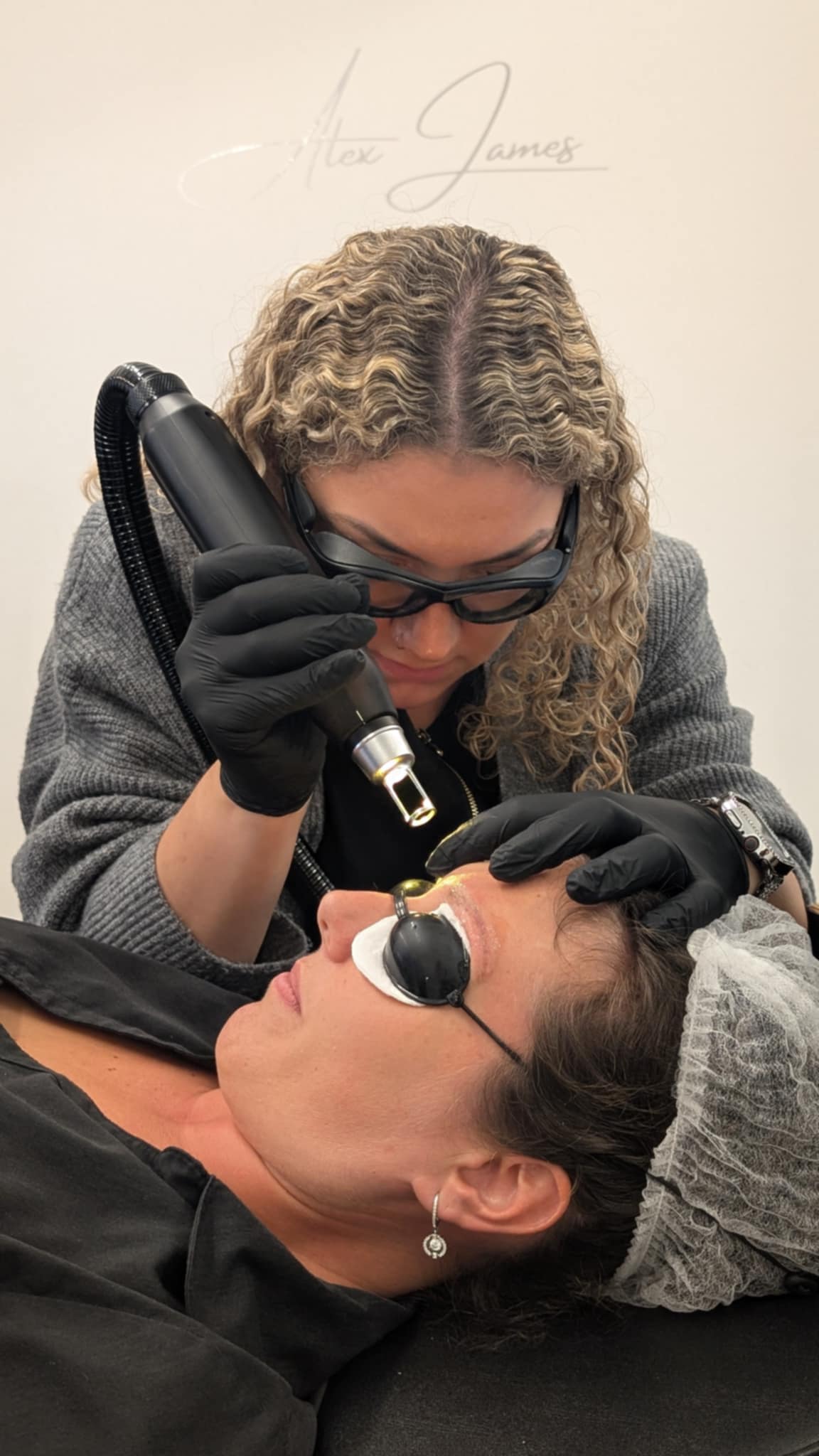
Laser tattoo removal treatment in progress Alex James clinic Lancashire

Laser tattoo removal — Alex James clinic, Rossendale

The Treatment Process and Fading Timeline

What happens during each session — and between them

Before your first session we begin with a detailed consultation — assessing tattoo colour, ink depth, saturation, skin type, medical history, and expectations. Every client receives a patch test to confirm skin responds safely and allow us to adjust energy settings. We always explain the realistic fading timeline and how many sessions may be needed for your specific tattoo.

During treatment, the handpiece emits extremely fast pulses of light. Tattoo ink absorbs this energy, the pigment shatters into smaller particles, and the surrounding skin remains largely untouched. Most treatments take 1–20 minutes depending on tattoo size. Cooling is used before, during and after treatment to manage comfort. Immediately after, you may notice temporary whitening (frosting) of the tattoo — this is normal, indicates gases beneath the skin have risen during the process, and fades within minutes.

Fading timeline between sessions

0–2 weeks: Mild redness, tenderness, possible temporary darkening. The tattoo may briefly look more concentrated as ink particles oxidise — this resolves as the immune system begins clearing pigment.

3–6 weeks: First visible lightening — softer edges, colours dulling, a general washed-out appearance. This is when most clients first notice progress.

6–10 weeks: Fading accelerates. Gaps begin appearing, lines become inconsistent, ink density reduces. Deep internal fading continues even when not yet fully visible.

Sessions are spaced 6–10 weeks apart — not to slow things down, but because treating too soon increases risks and slows long-term fading. The skin needs time to heal. The immune system needs time to process pigment. Spacing sessions correctly ensures faster overall fading, more effective ink shattering, and reduced risk.

Most clients continue seeing fading up to 12 weeks after each session

This steady, progressive improvement is a sign of proper immune response and healthy lymphatic drainage. It's also why rushing sessions is counterproductive — the body is still working between appointments.

Results and Realistic Outcomes

What to expect — including the honest limitations

Tattoo removal does not produce immediate results — fading follows a predictable pattern that unfolds over months. Early sessions establish the foundation. By sessions 3–5, most clients notice dramatic visible reduction in dark ink, clear breakdown of outlines, and softer shading. Later sessions target deeper pigment and the most stubborn areas.

Patchiness during early fading is completely normal. Ink is not evenly distributed beneath the skin. Blood flow differs by area. Certain colours respond differently. The immune system works in stages. Patchiness is a sign the laser has done its job and the body is actively clearing pigment — it becomes more uniform as sessions progress.

Full removal vs fading — what is realistic

Tattoos that usually clear very well: black ink, older tattoos, amateur tattoos, minimal shading, upper body placement.

Tattoos requiring more sessions: dense black outlines, multi-layered cover-ups, deep professional ink, lower body placement.

Tattoos that can be more stubborn: bright green, light blue, aqua, pastel colours, some cosmetic pigments. These contain mineral compounds that don't always break down evenly — improvement is visible, but not always full removal.

Many clients choose laser removal not for full removal, but to lighten a tattoo enough for a successful cover-up. A cover-up is far more successful when laser has been used beforehand to reduce density and contrast. We always discuss this option during consultation.

Thinking About Laser Tattoo Removal?

Book a free consultation and patch test at Alex James Clinic — we'll assess your tattoo honestly and give you a realistic picture of what to expect before you commit to anything.

WhatsApp Alex for a Free Consultation

Or visit the laser tattoo removal treatment page for pricing and full details

Safety, Alternatives and Aftercare

Why professional laser is the only method you should trust

When performed by trained professionals using quality equipment, laser tattoo removal is considered one of the safest non-invasive aesthetic treatments. The risks most commonly associated with laser tattoo removal come from untrained operators, cheap equipment ordered online, incorrect wavelengths, no patch testing, and no aftercare guidance. Fixing damage from poor laser treatment is far harder — and sometimes impossible — compared to working with a trained professional from the start.

Why alternatives are ineffective or dangerous

Acid/chemical removal: Acids remove skin, not ink. High scarring risk. Does not reach the dermis where ink sits.

Dermabrasion: Considered outdated and unsafe. Cannot reach deep pigment. Significant scarring risk.

Tattoo removal creams: Cannot penetrate deep enough to affect ink. Zero impact on the dermis. If they could penetrate deeply enough, they would burn the skin.

Saline removal: Designed for superficial PMU pigment, not tattoo ink in the dermis. Poor results on large tattoos.

Aftercare — what to do and what to avoid

Do: Keep the area clean and dry. Apply cool compresses for swelling. Allow scabs or blisters to heal naturally. Drink plenty of water. Wear SPF 50 on exposed tattoo areas. Follow spacing guidelines.

Don't: Pick or scratch the skin. Pop blisters. Expose the area to sun or tanning beds. Visit saunas or swimming pools for 48–72 hours. Get another session too soon. Following correct aftercare dramatically improves long-term results.

Laser Tattoo Removal at Alex James Clinic

Expertise, pricing and why clients travel from across the North West

At Alex James Clinic, tattoo removal is one of our core services — performed every week, with extensive experience treating professional tattoos, amateur tattoos, cover-ups, SMP removal, and PMU removal. Our approach is never rushed, never pushy, and always focused on ethical treatment. We do not oversell, we do not guarantee impossible results, and we do not push clients to book unnecessary sessions.

Clients regularly travel from Rossendale, Manchester, Burnley, Bury, Blackburn, Bolton, Preston, Rochdale, and across Lancashire because the clinic is easy to reach, offers free parking, and provides a more personal and professional experience than high-turnover city clinics.

Transparent pricing — no hidden fees

Small tattoos from £50 · Medium tattoos from £75 · Large tattoos £125 · Extra-large £200

Patch test and consultation included. No pressure to book multiple sessions. Tailored advice based on your tattoo and goals. For full pricing details see our laser tattoo removal page.

Consultations are friendly, thorough and informative — including tattoo analysis, skin assessment, realistic fading timeline, patch test, aftercare review, and pricing clarity. Your tattoo may have been permanent, but living with it doesn't have to be.

ALEX JAMES CLINIC · ROSSENDALE, LANCASHIRE

Ready to Start Your Tattoo Removal Journey?

Free consultations and patch tests available at Alex James Clinic, Rossendale. Honest advice, transparent pricing, no pressure.

View Laser Tattoo Removal

PHONE

07763875362

LOCATION

538 Burnley Rd, Crawshawbooth, Rossendale BB4 8NE

Mon–Fri 9AM–4PM · Sat 9AM–12PM