
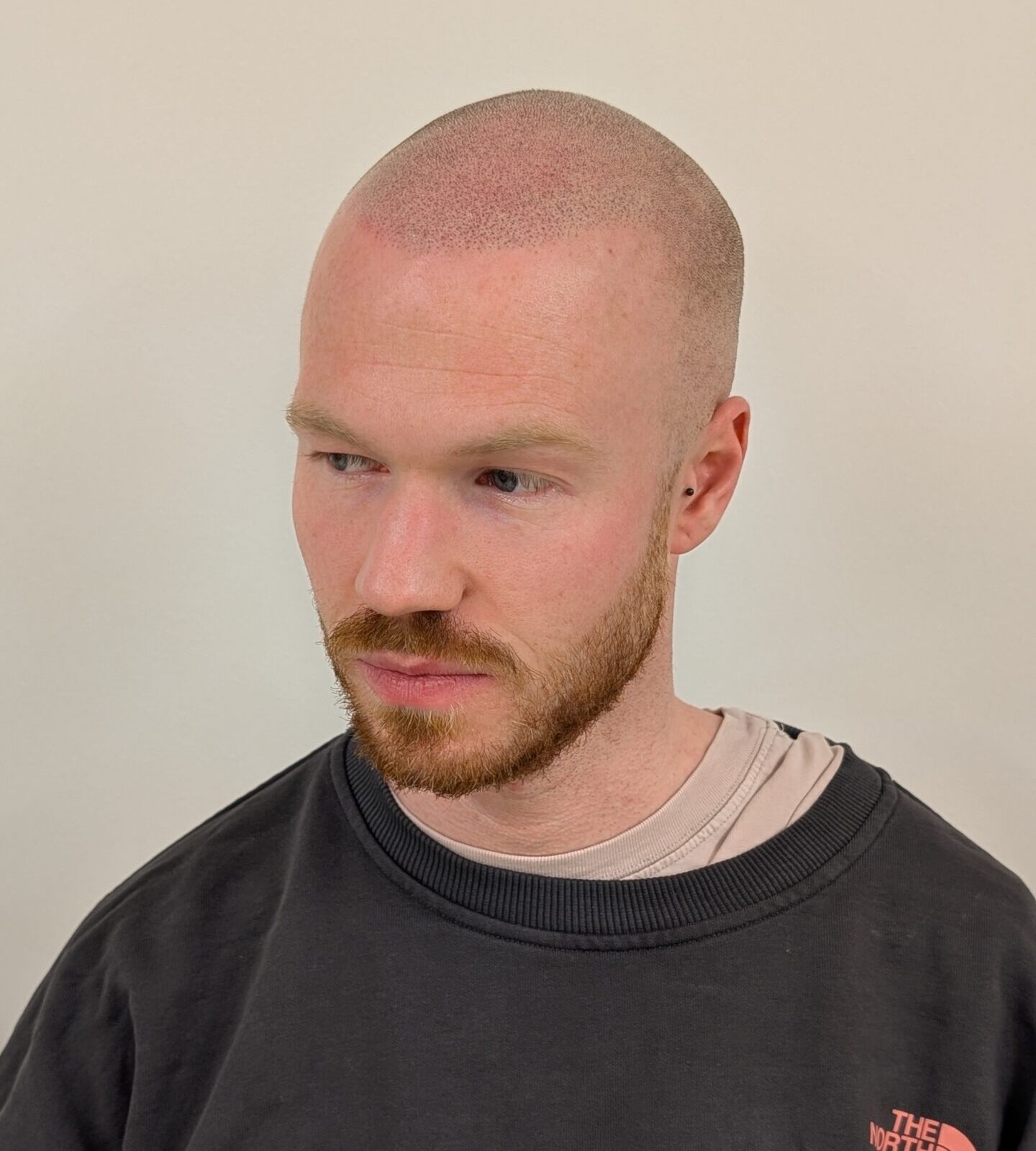
SMP is designed to last — but life changes, tastes evolve, and sometimes the work done elsewhere doesn't meet the standard you hoped for. Whether you're looking to refresh fading results, adjust a hairline that no longer suits you, or explore removal options, you have more choices than most people realise.
This guide covers the full range of options: from simple touch-ups through to style modifications and complete removal. The right path depends on your situation — but all of them start with an honest conversation about what's achievable.
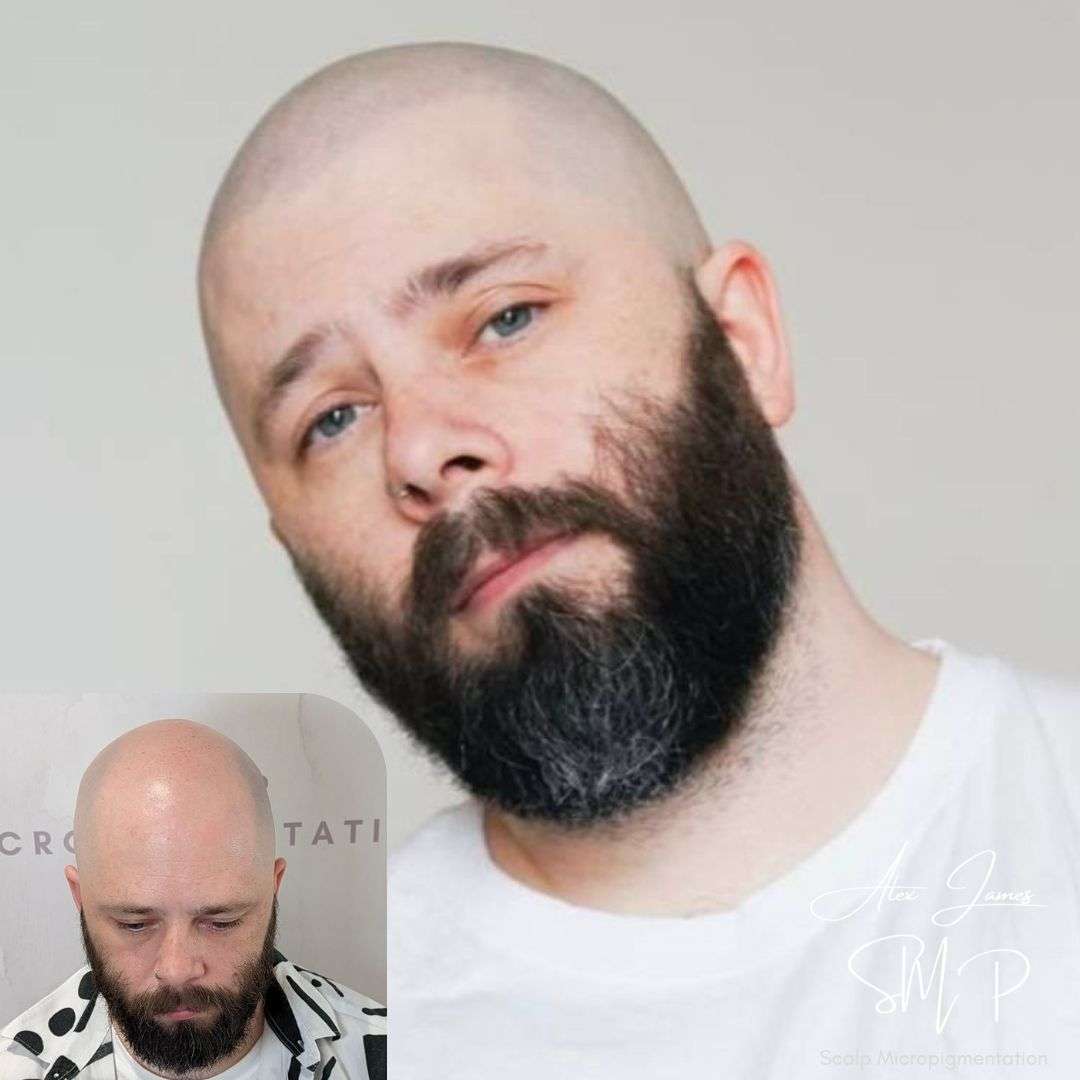
The most common — and most straightforward — modification
SMP fades gradually over time — typically becoming noticeably lighter after 3–6 years depending on skin type, sun exposure, and how well aftercare has been maintained. A touch-up session restores the original crispness and density, and usually takes a single session rather than the full multi-session process of an original treatment.
Pigment has lightened noticeably, particularly in areas exposed to regular sun. The overall look is less defined than it used to be.
Some areas have faded faster than others — often the crown or hairline — creating a patchy appearance.
Natural hair loss has continued since the original treatment, creating areas where the SMP no longer blends as it should.
Results are technically fine but the client wants to restore the crispness they had immediately after the original sessions.
Touch-ups at Alex James SMP start from £200 for existing clients with priority booking. The six-month warranty included with all original treatments covers any adjustments needed in the first six months.
Think your SMP might need a touch-up? Send a photo for an honest assessment.
Send a PhotoHairline adjustments, density changes, and style updates
Tastes change. A hairline that suited you at 30 may not feel right at 40. Density that looked sharp when first done may now look heavier than you'd like as styles have shifted. Or you may have had SMP done elsewhere and want the work adjusted to a higher standard.
Most modifications are achievable — though the options depend on what's already there and what the goal is. Adding density or darkening work is straightforward. Lightening, softening, or moving a hairline is more complex and may require laser removal of existing work in certain areas before new work can be placed.
A significant proportion of the work I do is corrective — clients who've had SMP elsewhere that wasn't quite right. The most common issues are hairlines that are too low or too aggressive, and dots that are too large or too dark. Most of it is fixable, but it requires an honest conversation about what's realistic and what the correction process involves.
If you're unhappy with existing SMP: send me a photo and I'll give you a straight assessment of what the options are.
A clear overview of what removal involves and which method suits which situation
Complete SMP removal is possible, though it's more involved than the original treatment and results vary depending on the pigment used, how deeply it was placed, and how long it has been there. Partial removal — lightening or removing specific areas — is often more achievable than full removal and is frequently the right approach for corrections.
Most effective · Multiple sessions · Best for full or large-area removal
Targeted laser energy breaks down the pigment particles, which the body then naturally eliminates. The number of sessions depends on pigment density, colour, and depth — typically 2–6 sessions for SMP. Carbon-based SMP pigment responds well to laser. This is the most reliable method for significant removal and what Alex James SMP offers via the laser SMP removal service.
Gentler · Slower · Better suited to recent or superficial work
A saline solution is applied to the treated area, drawing pigment upward through the skin as it heals. Less aggressive than laser and better suited to recently applied SMP or very superficial work. Multiple sessions required and results can be less predictable than laser on older, deeper pigment.
No treatment required · Very slow · Only practical in specific situations
SMP does fade on its own over time — particularly with sun exposure and without the usual protective aftercare. For clients who simply want to let existing work fade gradually without intervention, this is an option, though it takes years and the fading is rarely even.
The process, timeline, and realistic outcomes
Laser SMP removal at Alex James SMP uses a Q-Switch laser — the most effective technology for breaking down carbon-based pigment. The laser targets pigment particles without significantly affecting surrounding tissue, making it precise and well-suited to scalp work.
Most clients achieve significant lightening within 2–3 sessions. Complete removal is possible but may require additional sessions. Partial removal, where the goal is to lighten enough to allow new corrective work, is typically achievable in fewer sessions.
Considering laser SMP removal? Get an honest assessment of your options.
WhatsApp AlexWhether you want to refresh, modify, or remove — here's where to start
The right first step is the same regardless of what you're considering: a consultation where the current state of your SMP can be properly assessed. Photos help but seeing it in person gives a more accurate picture of the options available and what each involves.
Alex James SMP offers laser SMP removal as well as touch-up and corrective SMP work, meaning most modification and removal journeys can be handled in one place rather than across multiple providers.
Touch-up, modification, or removal — the right answer depends on your specific situation. Send Alex a photo or book a free consultation for an honest, no-pressure assessment of what's achievable and what it involves.
WhatsApp Alex DirectlyFree consultations · Laser SMP removal available · Based in Rossendale, Lancashire