
MULTIPLE AWARD WINNING
2000+ HAPPY CUSTOMERS
SCALP MICROPIGMENTATION FOR WOMEN · LANCASHIRE
Hair loss in women is far more common than most people realise, yet it remains one of the least openly discussed experiences. It doesn't arrive with a clear label or a predictable pattern — it tends to creep in gradually. A parting that looks a little wider than it used to. A crown that reflects more light. Hair that feels flatter, finer, or harder to style than before.
For many women, these changes are noticed long before anyone else does. Hairstyles are adjusted. Certain lighting is avoided. Activities that once felt carefree — swimming, windy walks, tying hair up — begin to feel uncomfortable. Female scalp micropigmentation exists because female hair loss is different. It requires a solution that is discreet, non-invasive, and capable of restoring the appearance of fuller hair without dramatically altering identity or daily routine.
IN THIS GUIDE
Not a tattoo. Not a cover-up. A natural visual enhancement.
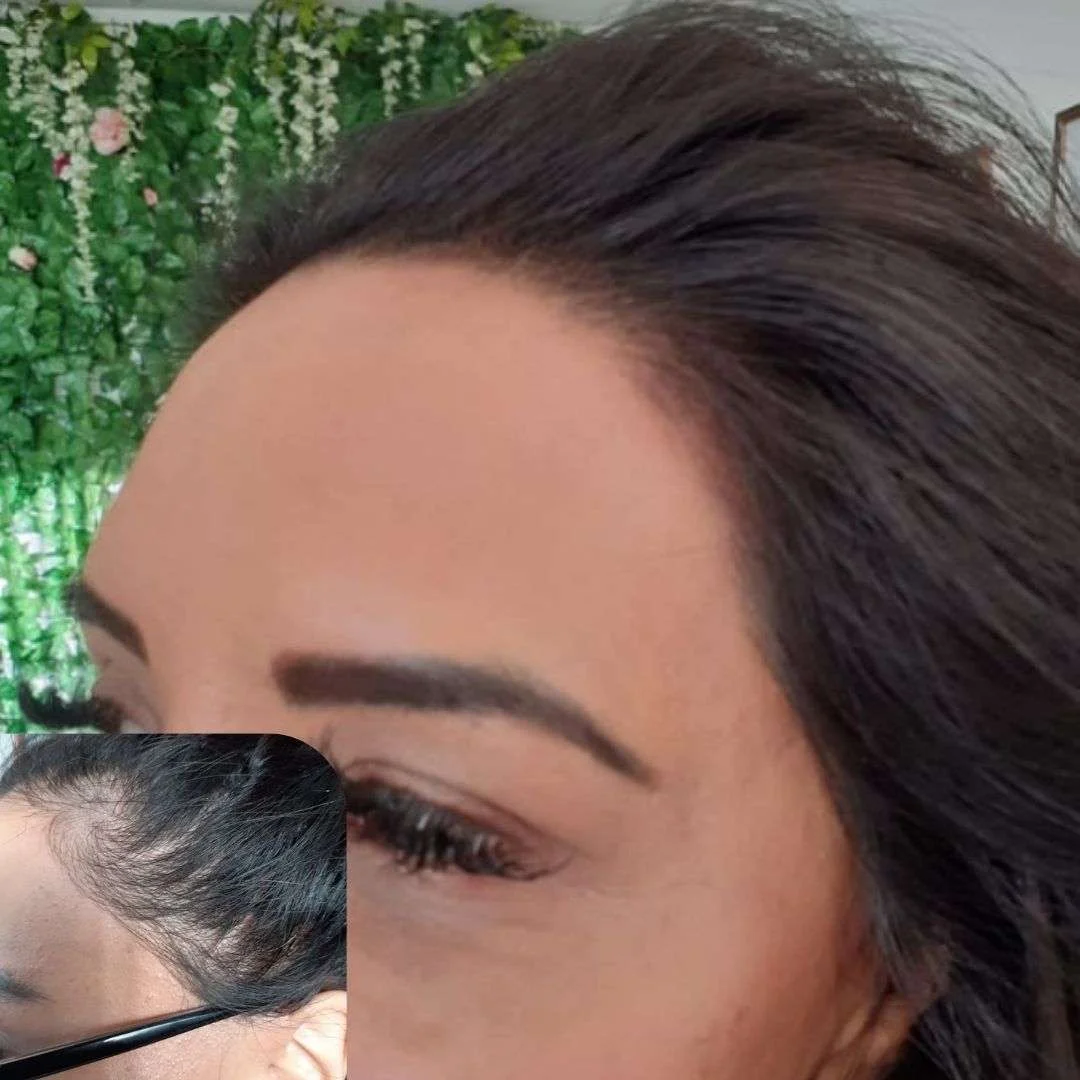
Female scalp micropigmentation is a cosmetic procedure that creates the illusion of increased hair density by placing thousands of tiny pigment impressions into the upper layers of the scalp. These impressions replicate the look of natural hair follicles beneath the skin, reducing the contrast between hair and scalp.
Unlike traditional tattooing, scalp micropigmentation uses specialised equipment and pigments designed specifically for the scalp. The pigment is placed at a controlled, superficial depth so it remains soft, subtle and natural-looking as it heals and fades gradually over time. For women, treatment is focused almost entirely on density — not hairline recreation. Pigment is applied between existing hair strands to darken the scalp beneath, making hair appear thicker and more evenly distributed.
When done correctly, it doesn't look like ink
It simply looks like healthier, fuller hair. The treatment works quietly beneath your existing hair — enhancing what's already there rather than drawing attention to itself.
You may come across terms like "hair tattoo for women" when researching SMP. While these are used for simplicity, SMP is very different from traditional tattooing. SMP pigments are designed to remain soft and fade gradually. Impressions are intentionally small, irregular and layered — mimicking natural follicles rather than solid shapes or lines. Pigment is placed much more superficially than a body tattoo, which helps maintain a natural appearance over time.
Many women arrive at scalp micropigmentation after trying multiple alternatives. Temporary concealment products require daily application and constant awareness. Wigs and hair toppers don't suit every lifestyle. Surgical options may not be suitable for diffuse thinning. Female SMP sits in a different category — it doesn't interfere with your natural hair, doesn't require daily effort, and doesn't restrict how you live. Once healed, it becomes part of your scalp, providing consistent visual support in all situations.
Why female hair loss is harder to treat than most people realise
One of the most frustrating aspects of hair loss for women is that it rarely presents in a simple or predictable way. Unlike male pattern baldness — which often follows a clear progression — female hair loss tends to be more complex, more variable, and harder to diagnose. This is one of the main reasons so many women struggle to find solutions that genuinely work.
Female hair loss is most commonly characterised by a gradual reduction in density rather than complete hair loss. Follicles don't disappear entirely — they become finer, weaker, and produce shorter, thinner strands. As this happens, the scalp becomes increasingly visible, particularly in areas where hair naturally parts or where light hits from above.
The most common form of hair loss in women. Rather than affecting one specific area, density gradually reduces across the top of the scalp — often becoming noticeable along the parting first. It can be difficult to pinpoint exactly when it begins. Hair may feel flatter, styles may not hold as well, and volume disappears more quickly throughout the day. Diffuse thinning is particularly challenging to treat with traditional hair loss options, which is where SMP's visual approach becomes especially effective.
For many women, the parting becomes the most emotionally challenging area — impossible to fully hide, especially when hair is worn naturally. A widening parting creates a natural line of contrast that sharpens as density reduces, particularly under bright or overhead lighting. Female SMP is highly effective here, applied precisely along the parting to soften the contrast without altering the hairline or hairstyle.
The crown sits at the highest point of the head and reflects light more strongly than other areas — meaning even mild thinning can appear exaggerated from above. Women with crown thinning often feel self-conscious under office lighting, in photographs, or anywhere bright light hits from overhead. SMP reduces shine and light reflection in the crown by darkening the scalp, creating depth and shadow that makes hair appear more evenly distributed.
Hormonal changes — pregnancy, postpartum recovery, menopause, medical conditions — play a significant role in female hair loss. Shedding can be unpredictable and emotionally challenging, and regrowth isn't always guaranteed. Stress-related hair loss can feel sudden and uncontrollable. In these situations, scalp micropigmentation can provide visual support once hair loss has stabilised — helping to restore confidence without interfering with natural hair processes. SMP does not stop hair loss or stimulate regrowth. It works alongside your natural hair, supporting appearance regardless of the underlying cause.
The science of contrast, light and shadow
Hair thinning doesn't become noticeable simply because hair is lost — it becomes noticeable because of contrast. When density reduces, more scalp becomes visible and light reflects off that exposed skin. The brighter and more reflective the scalp, the thinner the hair looks. Female scalp micropigmentation works by reducing this contrast. Tiny, precisely placed pigment impressions darken the scalp beneath the hair, making it less reflective and creating depth and shadow that tricks the eye into perceiving thicker, fuller hair.
Although the core principles are the same, female SMP is technically and artistically different. Men's SMP often focuses on recreating shaved follicles or defining a hairline. Female SMP is almost entirely about density. Women typically wear their hair longer, part it differently from day to day, and expect results to remain invisible across a wide range of lighting conditions. This requires a softer, more layered approach — impressions spaced more subtly, density built gradually, colour selection more nuanced. Adding too much pigment too quickly compromises natural results.
Pigment is not matched directly to hair colour. Instead, it is chosen to replicate the shadow created by hair follicles beneath the skin. This distinction matters — hair colour can change over time through colouring, greying or natural ageing. Shadow-based pigment selection ensures results remain natural even as hair evolves. Scalp undertone also plays a role: an experienced practitioner understands how to adjust pigment choice and saturation to suit individual skin characteristics, ensuring results never look ashy, blue or overly dark.
Scalp micropigmentation is never completed in a single session for women. Building natural density requires a gradual, layered approach. The first session establishes a base layer of pigment — this may look subtle once healed, which is intentional. Subsequent sessions build on that foundation, increasing density where needed and refining the result. Spacing sessions allows the practitioner to observe how your skin retains pigment and how it blends with your existing hair, with adjustments made accordingly.
Restraint is what makes female SMP successful
More pigment does not mean better results. A conservative, thoughtful approach — one that plans for how hair may change in future — is what separates natural-looking female SMP from rushed or overdone treatments.
Immediately after treatment, pigment appears darker and more defined. As the scalp heals over the following weeks, pigment softens and lightens slightly, settling into a natural tone that integrates with your hair. This settling period is why sessions are spaced several weeks apart. Over years, pigment fades gradually rather than remaining static — allowing results to evolve alongside your hair rather than competing with it. Optional refresh sessions can be considered in future, but many women enjoy their results for several years before any maintenance is needed.
Considering female SMP? The first step is a free consultation.
We'll assess your hair loss pattern, discuss what's realistically achievable, and give you an honest answer — no pressure, no obligation.
WhatsApp Alex for a Free ConsultationFree consultations available · Rossendale clinic · Currently booking 2–3 weeks ahead
Not dramatic. Just consistently better than before.
The most important thing to understand is that female scalp micropigmentation is designed to be subtle. The success of the treatment is often measured not by dramatic transformation, but by how little attention it draws. The best results are the ones that simply look like fuller hair, without anyone being able to identify why.
For many women, the biggest shift is not something others comment on directly. Instead, it's the quiet confidence that comes from no longer worrying about scalp show-through, harsh lighting, or certain hairstyles.
After SMP, many women notice their hair looks more consistent across all lighting environments. The scalp reflects less light, creating a softer, more even appearance. This is particularly noticeable in the crown and along the parting. In everyday situations — walking outside, under bright office lights, in photographs — hair appears fuller and more balanced. This consistency is one of the most valued aspects of SMP, removing the unpredictability that often comes with thinning hair.
Because female SMP is focused on density rather than bold markings, it remains discreet even when hair is pulled back. When worn down, SMP works underneath to support volume and fullness. When worn up, the softened contrast between hair and scalp makes thinning far less noticeable. The pigment doesn't create lines or blocks, so it doesn't draw attention when hair is styled differently. This versatility allows women to style their hair more freely again.
✓ What it does
✗ What it doesn't do
One of the most common things women say after completing scalp micropigmentation is that they stop thinking about their hair. Activities that once caused anxiety — windy days, swimming, bright lights — become non-issues. Hair feels easier to style, and there is less reliance on volume products or concealment techniques. SMP doesn't demand attention. It works quietly in the background, supporting confidence rather than becoming a focal point.
Honest assessment is the foundation of good results
Female scalp micropigmentation is suitable for many women, but like any professional treatment, it is most successful when applied to the right circumstances. Results are always best when hair loss has stabilised and the scalp is healthy.
SMP is most effective when hair loss patterns are reasonably predictable. If hair loss is actively progressing rapidly, it may be advisable to wait before beginning treatment — not because SMP won't work, but because planning results around unstable hair loss can make outcomes harder to maintain. A thorough consultation allows these factors to be assessed honestly.
Healthy scalp skin is essential. Active conditions such as psoriasis, eczema, dermatitis or infection need to be fully resolved before treatment. SMP should only ever be performed on calm, intact skin. Scarring, sensitivity or previous scalp treatments are also considered during consultation — in many cases treatment can still proceed, but technique may need to be adapted.
Women with extremely light blonde, white or grey hair may experience more subtle results due to lower contrast between hair and scalp. Where hair loss is extremely advanced with minimal existing hair, SMP may not provide the level of coverage some women hope for. A responsible practitioner will always prioritise honesty — proceeding with treatment that is unlikely to meet expectations doesn't serve anyone.
Female SMP should be recommended, not sold
During your consultation, your hair loss pattern, scalp condition, lifestyle and goals are discussed in detail. If treatment isn't the right option at that moment, understanding your situation still often brings clarity and relief.
Simple aftercare. No impact on your natural hair.
Scalp micropigmentation is considered a safe, non-surgical procedure when performed by a trained specialist. The treatment does not damage hair follicles and does not interfere with natural hair growth. Pigment is placed superficially in the scalp, avoiding deeper skin layers.
In the days following treatment, keep the scalp clean, dry and protected to allow pigment to settle properly. Avoid:
Once healed, most women return to their normal hair care routine without restriction. SMP does not limit styling, colouring or daily activities.
Sun protection is particularly important — UV exposure can cause premature fading. Using gentle shampoos and avoiding aggressive scalp exfoliation also supports longevity. Pigment is designed to fade gradually, allowing results to age naturally. Optional refresh sessions can be considered in future if desired, but they are not mandatory.
Scalp micropigmentation is both technical and artistic. Choosing a practitioner with specific experience in female SMP is essential for achieving natural results. Female hair loss patterns, styling habits and expectations differ significantly from male SMP, and the approach must reflect this. An experienced practitioner understands when to add pigment and when to hold back — and that restraint is what keeps results soft, discreet and adaptable over time.
Want to understand what's possible for your hair?
Visit our Female SMP service page for full details, pricing and before/after results — or WhatsApp us to book a free consultation.
WhatsApp Alex for a Free ConsultationFree consultations · No pressure · Rossendale clinic · See real results in person
Why SMP often feels like the missing piece after years of trial and error
Most women who eventually explore SMP have already tried at least one other approach. Understanding how it compares helps clarify why it works so well for certain women.
Fibres, powders and sprays
Provide instant coverage but require daily application and constant awareness. Affected by rain, sweat, wind and touch. Over time, the daily effort becomes tiring and the anxiety of product reliability doesn't go away.
Wigs and hair toppers
Work well for some women, but not all. Can feel restrictive, require regular maintenance and ongoing cost. For mild to moderate thinning, they can feel like a disproportionate step.
Medical and pharmaceutical treatments
Results vary significantly. Many require long-term commitment without guaranteed improvement. Even when regrowth occurs, density may not return evenly across the scalp.
Hair transplant surgery
Rarely suitable for diffuse thinning — the most common form of female hair loss. Without a clearly defined donor area, results can be unpredictable and may not address overall density.
Female scalp micropigmentation
Addresses the visual impact of thinning directly by reducing scalp contrast. Works independently of hair growth cycles. Compatible with other treatments. No daily effort. No restrictions on activities. Consistent in all lighting, all hairstyles.
For many women, the appeal lies in its subtlety and consistency. There is no dramatic change, no "before and after" moment that feels exposing. Instead, there is a gradual return to balance — and the quiet relief of no longer thinking about hair loss every day.
FEMALE SMP · ROSSENDALE, LANCASHIRE
Book a free consultation at our Rossendale clinic. We'll assess your hair loss pattern, discuss your goals honestly, and tell you clearly whether SMP is the right option for you — no pressure to proceed.
WhatsApp Alex for a Free Consultation