Alex James SMP

Can SMP Help with Patchy Hair Loss & Alopecia?

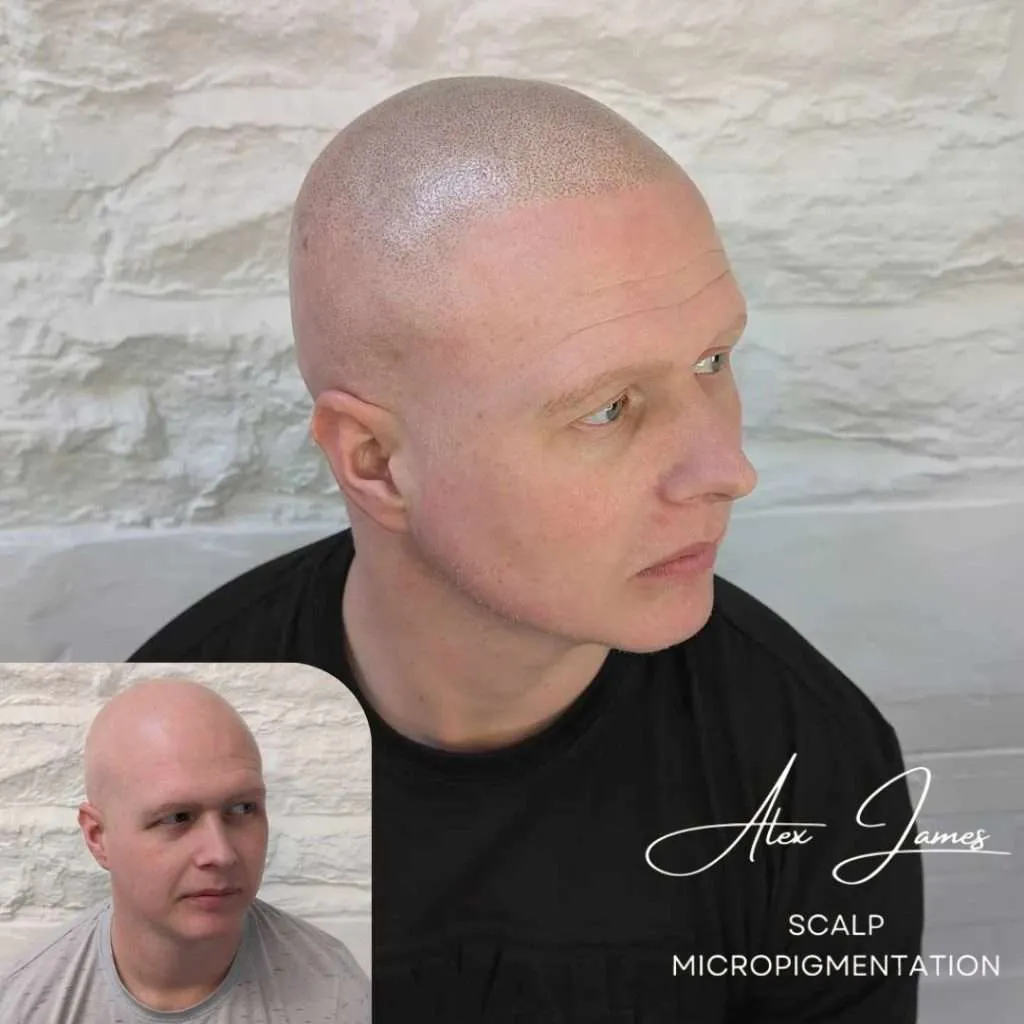
Full head scalp micropigmentation before and after results Manchester specialist clinic

200+ 5 STAR REVIEWS

MULTIPLE AWARD WINNING

2000+ HAPPY CUSTOMERS

Alopecia Areata and Patchy Hair Loss — What You're Dealing With

Understanding the condition before exploring solutions

Hair loss can be a distressing experience, particularly when it occurs in irregular patches, as seen in conditions like alopecia areata. For those struggling with patchy hair loss, scalp micropigmentation (SMP) has become an increasingly popular option — a non-invasive procedure that can effectively camouflage areas of hair loss without surgery or medication.

Alopecia areata is an autoimmune condition where the immune system attacks hair follicles, resulting in sudden, patchy hair loss on the scalp or other parts of the body. The condition is unpredictable — hair can regrow in some areas while new patches develop elsewhere. It can vary from small, coin-sized bald spots to more extensive loss.

Alopecia Areata

Autoimmune condition causing sudden patchy loss. Unpredictable — patches can appear, regrow, and reappear over time.

Scarring Alopecia

Inflammation damages follicles permanently, leaving smooth areas that will not regrow. SMP can camouflage these effectively.

Traction Alopecia

Caused by excessive pulling of hair over time — common with tight styles. Can leave thinning or bald areas, particularly around the hairline.

Stress or Hormonal Loss

Sudden patchy or diffuse loss triggered by hormonal changes, illness, or stress. May resolve naturally or respond to PRP treatment.

How Scalp Micropigmentation Helps With Patchy Hair Loss

What SMP does — and how it works for alopecia specifically

SMP is a specialised technique that implants tiny pigment deposits into the scalp, creating the appearance of hair follicles. Unlike hair transplants or medications, SMP does not regrow hair — it provides the illusion of fuller, more even coverage by blending affected areas with the rest of the scalp.

The pigments are carefully matched to your existing hair colour, making bald spots blend seamlessly into the surrounding areas. For alopecia clients, the aim is coverage that looks natural under any lighting — not a result that draws attention, but one that removes it.

The Benefits of SMP for Alopecia

Why it's become one of the most practical options for patchy hair loss

1

Conceals patches of any size

Whether you have small, coin-sized bald spots or larger affected areas, SMP can fill in gaps with natural-looking pigmentation. The precision of the technique allows for seamless blending even around existing hair.

2

Non-surgical with minimal downtime

Unlike hair transplant surgery, which involves incisions and a lengthy recovery period, SMP is non-invasive. After a few sessions, clients achieve long-lasting coverage with little to no maintenance required and no recovery period.

3

Works for all hair types and skin tones

SMP is suitable across the full range of skin tones and hair colours. Pigments are individually matched to replicate your natural follicle appearance — whether your hair is dark, fair, or anything in between.

4

Restores confidence quickly

Patchy hair loss — particularly when it appears suddenly — can be emotionally difficult. SMP helps individuals regain confidence by giving the appearance of a fuller, more even scalp. Many clients describe the change as significant from the very first session.

5

Results can be adapted over time

Because alopecia areata can be unpredictable — with new patches appearing as others recover — SMP can be adapted with touch-up sessions to maintain uniform coverage as your condition changes over time.

Honest Limitations — What SMP Cannot Do

We'll always tell you what's realistic before you commit

SMP is a fantastic option for many people with alopecia, but it's important to go in with a clear picture of what the treatment can and cannot achieve.

Important considerations for alopecia clients

  • SMP does not regrow hair. It creates the appearance of follicles, not actual hair. For clients who want to actively support hair regrowth, PRP treatment may be worth exploring alongside or instead of SMP.
  • If alopecia areata progresses, new patches may appear. Touch-up sessions can address these as they develop, but this is worth factoring into your planning.
  • Active, rapidly spreading alopecia may not be the right time for SMP. A stable or slowly changing pattern typically produces better long-term results. Alex will assess this honestly during consultation.
  • The procedure must be performed by a trained professional. Pigment matching and placement for alopecia requires experience and precision — results vary significantly between practitioners.

If your hair loss is in active progression, or if you have live follicles that could respond to treatment, PRP may be worth exploring first. Alex and Dawn will assess your situation honestly and recommend the most appropriate approach — even if that means a different treatment entirely.

Is SMP Right for Your Situation?

A free consultation gives you an honest answer before you commit to anything

If you're dealing with patchy hair loss and looking for a low-maintenance, long-lasting cosmetic solution, SMP could be an excellent option. Alex specialises in creating customised scalp micropigmentation solutions for alopecia clients — taking the time to understand your hair loss pattern, match pigments precisely, and design coverage that looks genuinely natural.

Every consultation at Alex James SMP is free and completely without pressure. Alex will give you an honest assessment of whether SMP is suitable for your specific pattern of hair loss, and if another approach would work better, he'll tell you that too.
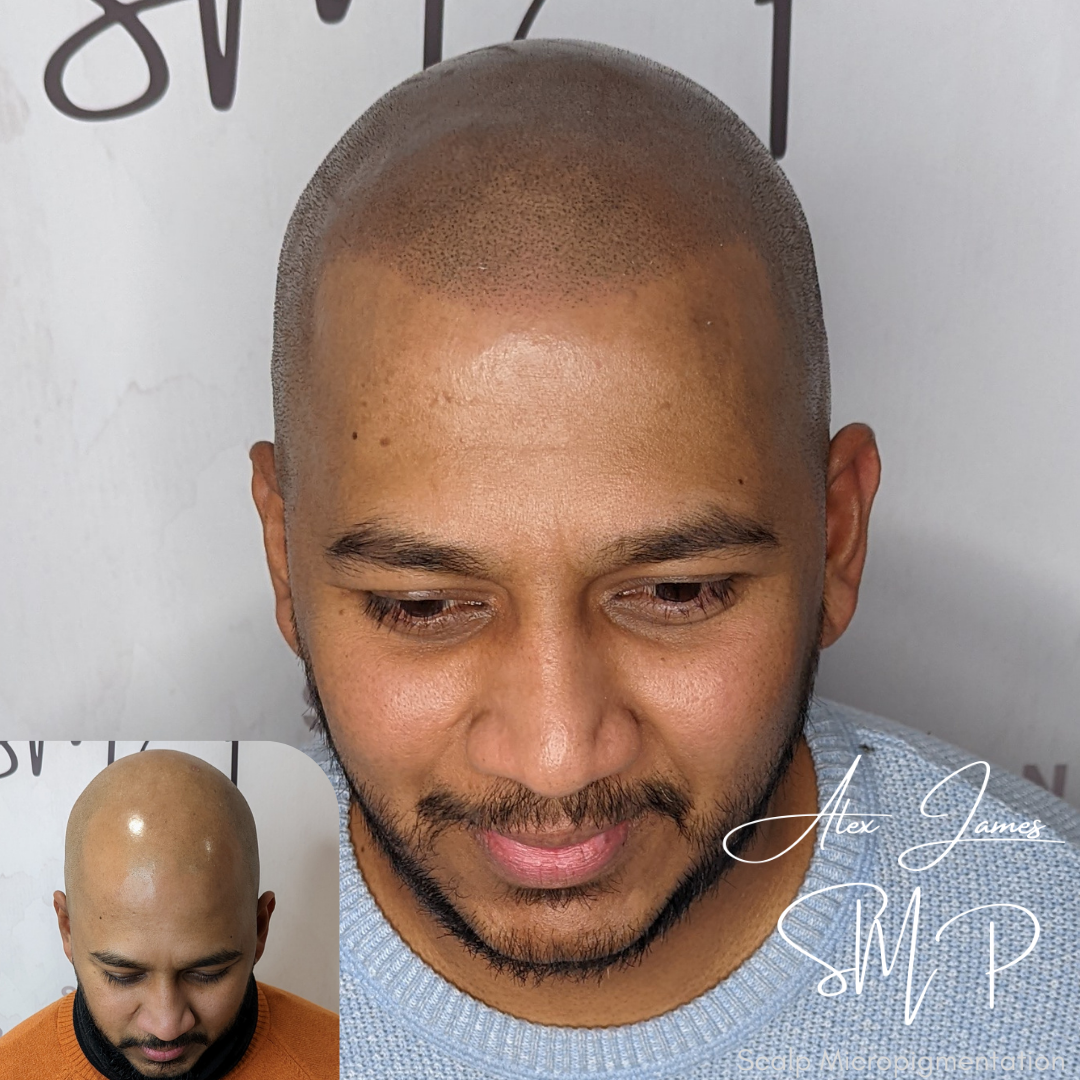
Scalp micropigmentation before and after full head coverage Manchester

Book a Free Alopecia Consultation

WhatsApp Alex directly to discuss your hair loss and whether SMP is right for you. Include photos if you're comfortable — it helps assess suitability before your first visit.

Learn About SMP for Alopecia