
MULTIPLE AWARD WINNING
2000+ HAPPY CUSTOMERS
A respectful, informed guide for those navigating faith and personal wellbeing
For many people considering scalp micropigmentation, the question of whether the procedure is halal is not a casual one. It is often rooted in a sincere desire to make decisions that align with faith, intention, and personal values. This is why searches such as "is scalp micropigmentation halal" and "is SMP allowed in Islam" are becoming increasingly common.
Hair loss can affect confidence, identity, and emotional wellbeing — and it is natural for individuals to seek solutions that help them feel comfortable in their own skin. At the same time, those who follow Islamic principles want to ensure any cosmetic procedure they consider does not conflict with their beliefs.
A note on this article: This guide is written to provide clarity rather than instruction. It does not aim to issue religious rulings or declare SMP halal or haram. Instead, it explains what scalp micropigmentation actually is, how it differs from tattooing, and the key considerations commonly discussed within Islamic guidance — so readers can make an informed personal decision and, where appropriate, seek advice from a trusted scholar.
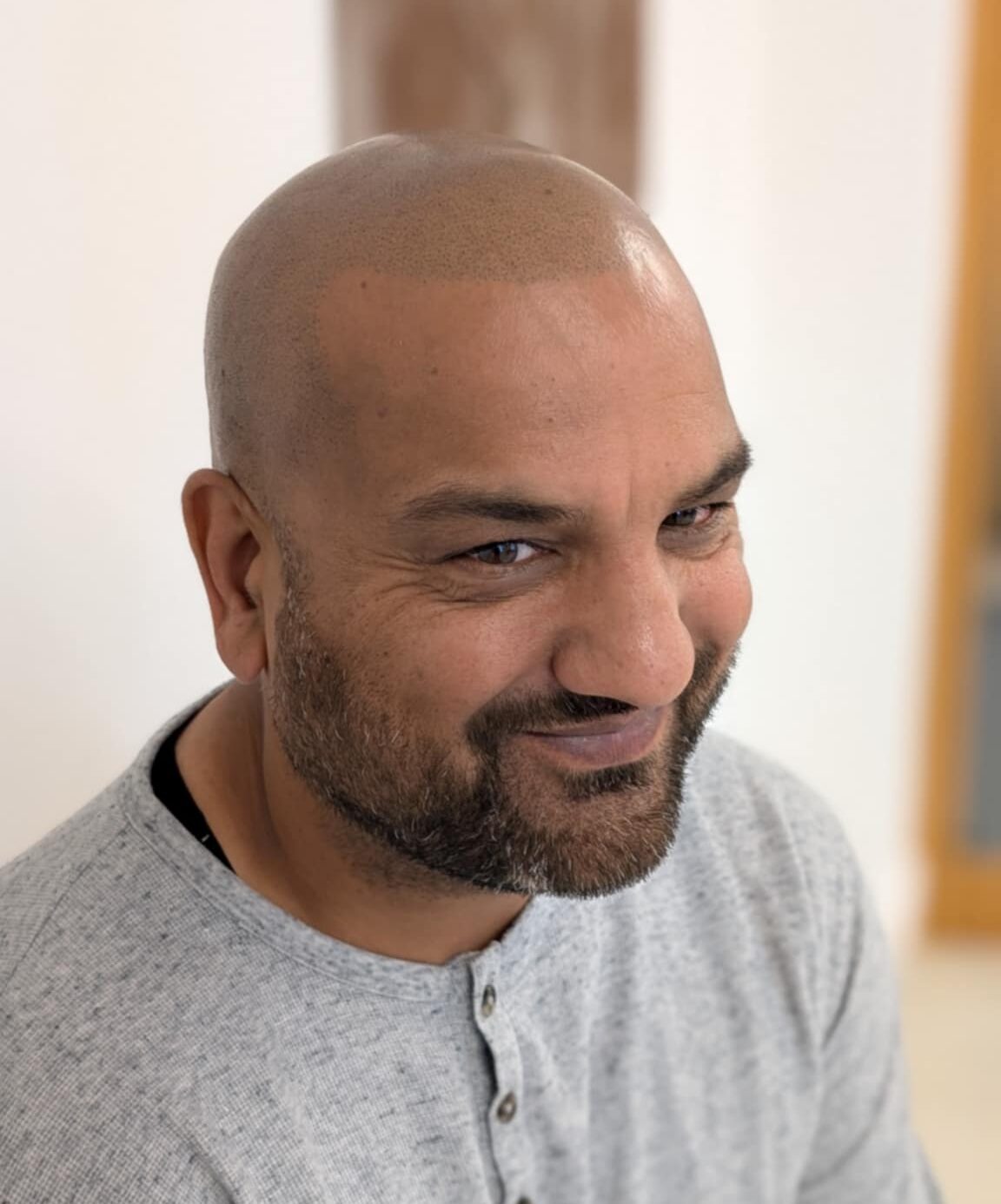
What scalp micropigmentation actually is: SMP is a cosmetic procedure that creates the appearance of hair follicles on the scalp using specialised pigments. These pigments are applied in small, controlled impressions designed to replicate the look of closely shaved hair or to add the appearance of density in thinning areas. Unlike hair transplant surgery, SMP does not alter hair growth or move hair follicles — it is a visual solution rather than a biological one.
Although SMP is sometimes described as a type of cosmetic tattooing, modern scalp micropigmentation differs significantly from traditional tattoos in both technique and intent. Pigment is placed very superficially within the skin, and the products used are formulated to soften and fade gradually over time rather than remain permanently bold.
Understanding the surface similarity — and the important technical differences
The comparison between scalp micropigmentation and tattooing is one of the main reasons the question of permissibility arises. Both procedures involve pigment being placed into the skin, and this surface similarity can understandably cause confusion.
Despite these differences, the resemblance in process means that many people instinctively associate SMP with tattooing. This association is at the heart of discussions around whether scalp micropigmentation is considered halal or haram — and understanding it is essential before exploring how Islamic perspectives are formed.
The recurring themes applied to modern cosmetic procedures in Islamic guidance
In many Islamic traditions, tattooing is discussed within religious texts and scholarly interpretations due to concerns around permanence, bodily alteration, and intention. When modern cosmetic procedures are considered, discussions tend to focus on several recurring themes.
Procedures that permanently alter the body are often viewed differently from those that are temporary or reversible. Scalp micropigmentation, while long-lasting, is designed to fade gradually over time rather than remain permanently fixed. This characteristic is frequently mentioned in discussions about how SMP differs from traditional tattooing.
In Islamic teachings, intention plays a central role in evaluating actions. Cosmetic procedures undertaken for reasons related to wellbeing, confidence, or addressing distress may be viewed differently from those intended purely for adornment or excess. Hair loss can be emotionally challenging, and many people seek SMP as a way to restore a sense of normality rather than to enhance appearance beyond its natural state.
While scalp micropigmentation is not a medical necessity, it can have a meaningful psychological impact for individuals who experience distress related to hair loss. Some scholars recognise the importance of mental and emotional wellbeing when considering modern treatments.
This includes how the procedure is performed, the depth of pigment placement, and whether the substances used are considered impure. These details can influence how a procedure is viewed and why distinctions between SMP and traditional tattooing are important when seeking guidance.
Islamic scholarship is nuanced. While there is strong consensus on certain principles, the application of those principles to modern cosmetic procedures often requires careful consideration of context, intention, and method. This is why newer procedures such as SMP are frequently discussed rather than dismissed outright.
The distinctions that explain why SMP is evaluated independently — not automatically grouped with tattoos
Scalp micropigmentation is not intended to create decorative imagery or artistic expression. Instead, it aims to replicate a natural feature in a subtle, understated way. The design is conservative by nature — intended to blend rather than stand out.
The placement of pigment in SMP is also more superficial than traditional tattooing. This technical difference affects how the pigment behaves over time and is one of the reasons SMP is designed to soften and fade rather than remain permanently bold.
These distinctions do not automatically determine permissibility, but they do explain why scalp micropigmentation is often evaluated independently within Islamic discussions rather than being categorised simplistically alongside conventional tattoos.
Why opinions may differ: Scholars may place different emphasis on factors such as permanence, intent, or resemblance to traditional tattooing. Cultural context, evolving cosmetic technologies, and differing schools of thought can also influence interpretation. For this reason, it is generally encouraged that individuals seek guidance from a trusted scholar who understands both Islamic principles and the nature of the procedure being considered.
Why the reason behind a decision matters as much as the decision itself
For many people, the decision to explore scalp micropigmentation is not driven by vanity, but by a desire to feel more comfortable and confident in everyday life. Hair loss can affect self-image in subtle ways, influencing how people present themselves socially, professionally, and emotionally.
Some individuals view scalp micropigmentation as a way to restore a sense of normality rather than to alter their appearance beyond what is natural. The aim is not to create something new, but to replicate what has been lost. For those who experience distress or reduced confidence due to hair loss, this distinction can be meaningful within Islamic discussions about intention.
Wellbeing is not limited to physical health alone. Emotional and psychological wellbeing play a role in how people function day to day. While SMP is not a medical necessity, it can offer reassurance and peace of mind for those who feel affected by changes in their appearance.
Scalp micropigmentation is ultimately a personal decision. Taking the time to understand both the practical and ethical considerations — and seeking guidance from a trusted scholar where appropriate — helps ensure that decision is made with confidence and clarity.
Frequently asked questions about scalp micropigmentation in the context of Islamic guidance
Opinions on whether SMP is halal may vary. Because SMP is a modern cosmetic procedure, it is often discussed in relation to tattooing, intention, and permanence. Individuals are encouraged to seek guidance from a trusted scholar who understands both Islamic principles and the nature of the procedure.
SMP shares surface similarities with tattooing — both involve pigment placed into the skin — but differs significantly in technique, depth, intent, and permanence. Many scholars discuss SMP as a separate case rather than automatically categorising it alongside conventional tattoos.
SMP is long-lasting but not permanent in the same way as traditional tattoos. The pigments are formulated to fade gradually over time, and SMP can be lightened or removed using laser treatment. This characteristic is often relevant in discussions about permanence and permissibility.
Yes. SMP can be lightened or removed using laser treatment — typically 2–6 sessions depending on pigment density. This reversibility is one of the characteristics that distinguishes SMP from traditional tattooing in scholarly discussions.
Understanding what the procedure involves, how it differs from tattooing, and the range of perspectives available allows for a thoughtful, informed decision. For those with faith-based concerns, seeking guidance from a scholar who understands both Islamic principles and modern cosmetic practices is encouraged.
Alex offers free consultations where you'll see his own SMP results and receive honest, no-pressure advice about whether the treatment is right for your situation.
Learn About SMP Treatment