
MULTIPLE AWARD WINNING
2000+ HAPPY CUSTOMERS
SCALP MICROPIGMENTATION · LANCASHIRE
A consultation is your chance to gather information — not to be talked into something. If a clinic makes you feel like asking questions is an inconvenience, that tells you everything you need to know about how they work.
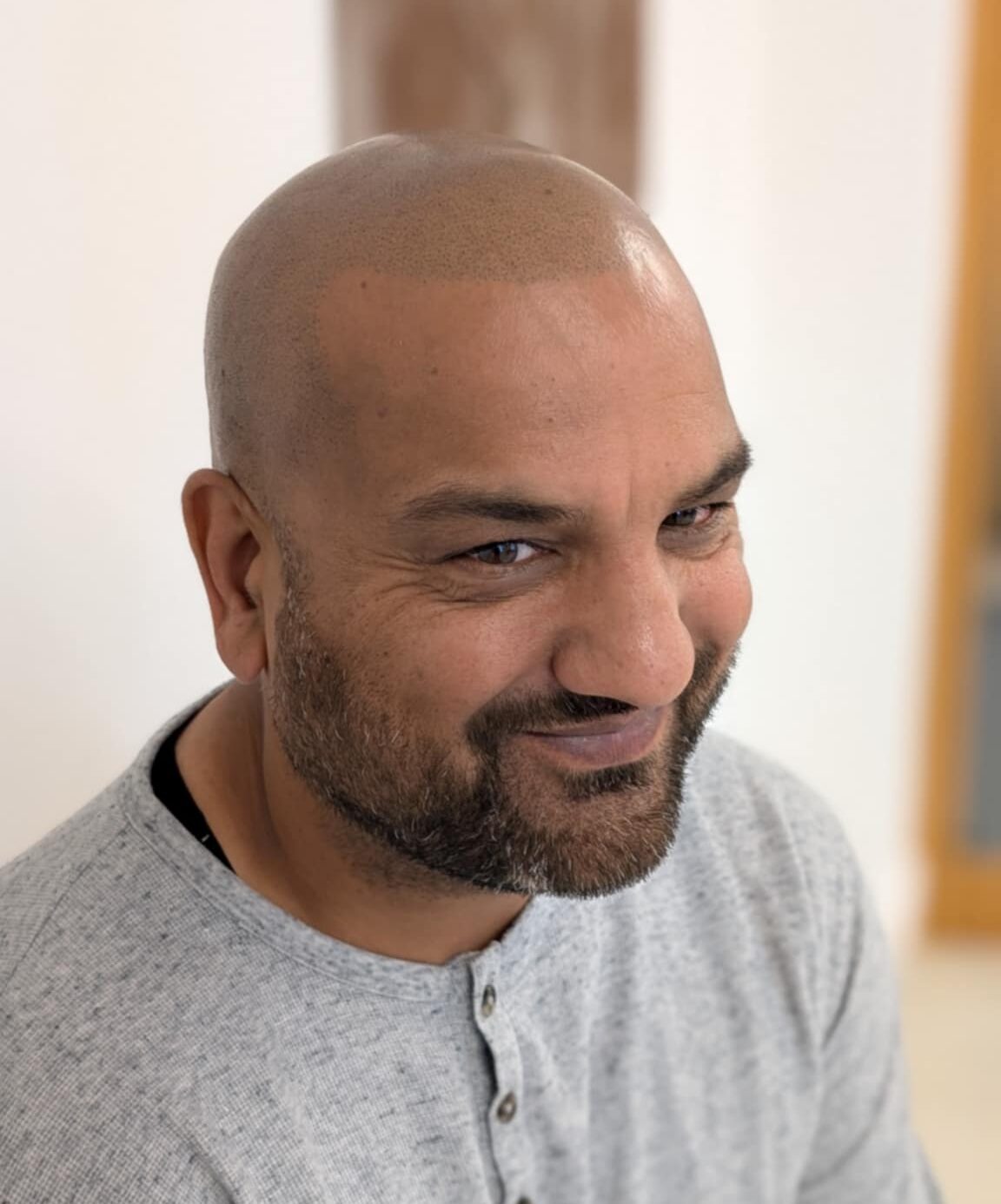
Having had SMP myself, I know what it's like to sit across from a practitioner wondering whether the result is going to look natural, whether it'll hold up over time, and whether the person across the table actually knows what they're doing. These are the questions worth asking — and what the honest answers should sound like.
THE 10 QUESTIONS
What to ask before you trust anyone with your scalp
WHY THIS MATTERS
Fresh SMP always looks more defined and slightly darker than it heals. A practitioner who only shows you results from the day of treatment is hiding how the work actually settles.
Ask specifically for photos taken two to four weeks after the final session. In natural daylight. Without filters. At close range. A reputable practitioner will have plenty of these, because healed results they're proud of are their best marketing.
Ideally, ask to see results on clients with a similar skin tone and hair loss pattern to yours — the way pigment heals varies significantly between fair and darker complexions.
WHY THIS MATTERS
SMP requires genuine skill built over time. Hairline design, depth control, and pigment mixing are things that improve significantly with experience. Years and client numbers are a reasonable proxy for competence.
There's no magic number, but you want someone who has treated hundreds of clients, not dozens. A practitioner who qualified six months ago and has done thirty treatments is in a different category to one who has been working for several years across different skin types and hair loss patterns.
Training credentials matter too — ask where they trained and who taught them. The quality of SMP training courses in the UK varies enormously. Someone who learned from a respected artist in a structured environment has a different foundation to someone who did a weekend course and immediately started trading.
WHY THIS MATTERS
SMP is excellent for most hair loss patterns, but it's not ideal for everyone. A practitioner who says yes to every client regardless of their situation is prioritising their revenue over your outcome.
SMP works best for men with clearly defined hair loss who are comfortable with a short, shaved aesthetic. It's also effective for thinning hair — adding the appearance of density without requiring a fully shaved head. But it's not a good fit if you want to grow your hair longer, or if you have an active scalp condition that hasn't been treated.
At a good consultation, the practitioner will assess your scalp condition, your hair loss pattern, your skin tone, and your expectations — and tell you honestly whether SMP can deliver what you're hoping for. If it can't, they should say so.
Understanding what you're actually signing up for
WHY THIS MATTERS
The "it turns blue" concern comes from practitioners using the wrong pigments. Carbon-based SMP pigments fade neutrally — to a lighter grey. Tattoo inks containing heavy metals behave differently and can shift in colour over time.
A reputable clinic uses pigments specifically formulated for SMP — carbon-based, hypoallergenic, and designed to fade predictably. Ask what brand of pigment they use and whether it's been developed for SMP specifically or is a general tattoo ink.
Also ask how pigment is mixed for your skin tone. Good practitioners adjust for undertones — slightly warmer mixes for paler complexions, cooler for darker skin — to ensure the healed result looks natural under different light conditions rather than reading as artificial.
WHY THIS MATTERS
SMP done correctly requires multiple sessions. A practitioner offering to complete the full treatment in a single sitting is either cutting corners on density or working too fast to allow proper pigment settling between sessions.
Most clients require two to three sessions, spaced a week apart. The first session establishes the hairline and baseline density. The second builds depth. A third session — where needed — refines the result once the earlier sessions have fully settled.
Rushing this process produces flat-looking results. Building density gradually over sessions is what creates a natural, three-dimensional appearance. Ask the practitioner to walk you through exactly what happens at each session and why the spacing matters.
WHY THIS MATTERS
Aftercare directly affects how pigment settles. If you don't follow the guidance, you risk uneven healing, premature fading, or infection risk at the treatment site.
In the first week after each session: avoid heavy sweating, keep the scalp clean with gentle products, don't pick any scabbing, and avoid shaving the treated area for at least five days.
Long-term: daily moisturising keeps the scalp supple and helps pigment stay consistent. A daily SPF 30+ is the single most effective thing you can do to extend the life of your SMP — UV exposure is the main cause of premature fading.
Ask whether the clinic provides written aftercare instructions, and whether there's someone you can contact if you have questions during the healing process. A clinic that disappears after your last session is a red flag.
What to ask before you trust anyone with your scalp
WHY THIS MATTERS
Fresh SMP always looks more defined and slightly darker than it heals. A practitioner who only shows you results from the day of treatment is hiding how the work actually settles.
Ask specifically for photos taken two to four weeks after the final session. In natural daylight. Without filters. At close range. A reputable practitioner will have plenty of these, because healed results they're proud of are their best marketing.
Ideally, ask to see results on clients with a similar skin tone and hair loss pattern to yours — the way pigment heals varies significantly between fair and darker complexions.
WHY THIS MATTERS
SMP requires genuine skill built over time. Hairline design, depth control, and pigment mixing are things that improve significantly with experience. Years and client numbers are a reasonable proxy for competence.
There's no magic number, but you want someone who has treated hundreds of clients, not dozens. A practitioner who qualified six months ago and has done thirty treatments is in a different category to one who has been working for several years across different skin types and hair loss patterns.
Training credentials matter too — ask where they trained and who taught them. The quality of SMP training courses in the UK varies enormously. Someone who learned from a respected artist in a structured environment has a different foundation to someone who did a weekend course and immediately started trading.
WHY THIS MATTERS
SMP is excellent for most hair loss patterns, but it's not ideal for everyone. A practitioner who says yes to every client regardless of their situation is prioritising their revenue over your outcome.
SMP works best for men with clearly defined hair loss who are comfortable with a short, shaved aesthetic. It's also effective for thinning hair — adding the appearance of density without requiring a fully shaved head. But it's not a good fit if you want to grow your hair longer, or if you have an active scalp condition that hasn't been treated.
At a good consultation, the practitioner will assess your scalp condition, your hair loss pattern, your skin tone, and your expectations — and tell you honestly whether SMP can deliver what you're hoping for. If it can't, they should say so.
Want to ask these questions in person?
Free consultations at Alex James SMP. See healed results in person, get honest answers, and leave with a clear picture — no commitment required.
WhatsApp Alex for a Free ConsultationFree consultations available · See Alex's own SMP results · Rossendale, Lancashire
What to ask before you trust anyone with your scalp
WHY THIS MATTERS
Fresh SMP always looks more defined and slightly darker than it heals. A practitioner who only shows you results from the day of treatment is hiding how the work actually settles.
Ask specifically for photos taken two to four weeks after the final session. In natural daylight. Without filters. At close range. A reputable practitioner will have plenty of these, because healed results they're proud of are their best marketing.
Ideally, ask to see results on clients with a similar skin tone and hair loss pattern to yours — the way pigment heals varies significantly between fair and darker complexions.
WHY THIS MATTERS
SMP requires genuine skill built over time. Hairline design, depth control, and pigment mixing are things that improve significantly with experience. Years and client numbers are a reasonable proxy for competence.
There's no magic number, but you want someone who has treated hundreds of clients, not dozens. A practitioner who qualified six months ago and has done thirty treatments is in a different category to one who has been working for several years across different skin types and hair loss patterns.
Training credentials matter too — ask where they trained and who taught them. The quality of SMP training courses in the UK varies enormously. Someone who learned from a respected artist in a structured environment has a different foundation to someone who did a weekend course and immediately started trading.
WHY THIS MATTERS
SMP is excellent for most hair loss patterns, but it's not ideal for everyone. A practitioner who says yes to every client regardless of their situation is prioritising their revenue over your outcome.
SMP works best for men with clearly defined hair loss who are comfortable with a short, shaved aesthetic. It's also effective for thinning hair — adding the appearance of density without requiring a fully shaved head. But it's not a good fit if you want to grow your hair longer, or if you have an active scalp condition that hasn't been treated.
At a good consultation, the practitioner will assess your scalp condition, your hair loss pattern, your skin tone, and your expectations — and tell you honestly whether SMP can deliver what you're hoping for. If it can't, they should say so.
The things that should happen before any commitment is made
A good consultation takes at least 20–30 minutes. It's not a sales pitch followed by a booking form. Here's what should happen:
The practitioner assesses your scalp. Not just a glance — they should look at your skin tone, follicle density, scalp condition, and the pattern of your hair loss to give you an accurate picture of what SMP can achieve in your specific case.
You see healed results in person. Photos on a screen are useful but limited. Seeing SMP on someone in a real-world setting — ideally on the practitioner themselves or in person with clients who've consented — gives a much more accurate impression of the finished result.
Hairline options are discussed. You should understand the choices available for hairline position and style, and have genuine input into the decision — not be presented with one option and told it's the right one.
Pricing is explained clearly. Total cost across all sessions. What happens if a fourth session is needed. What top-ups cost. Payment options. All of this before you're asked to commit.
You're told if SMP isn't suitable for you. Not every consultation ends with a booking. If SMP isn't the right solution for your hair loss pattern or your expectations, a practitioner worth their reputation will say so and recommend alternatives.
At Alex James SMP, consultations are free and there's no obligation
Bring every question on this list. Bring your scepticism. You'll see healed results in person — including Alex's own SMP — and leave with enough information to make a clear decision. No pressure, no upselling.
ALEX JAMES SMP · ROSSENDALE, LANCASHIRE
Come in with your questions. See healed results. Get an honest assessment of whether SMP is right for your situation. No commitment required.
WhatsApp Alex for a Free Consultation