

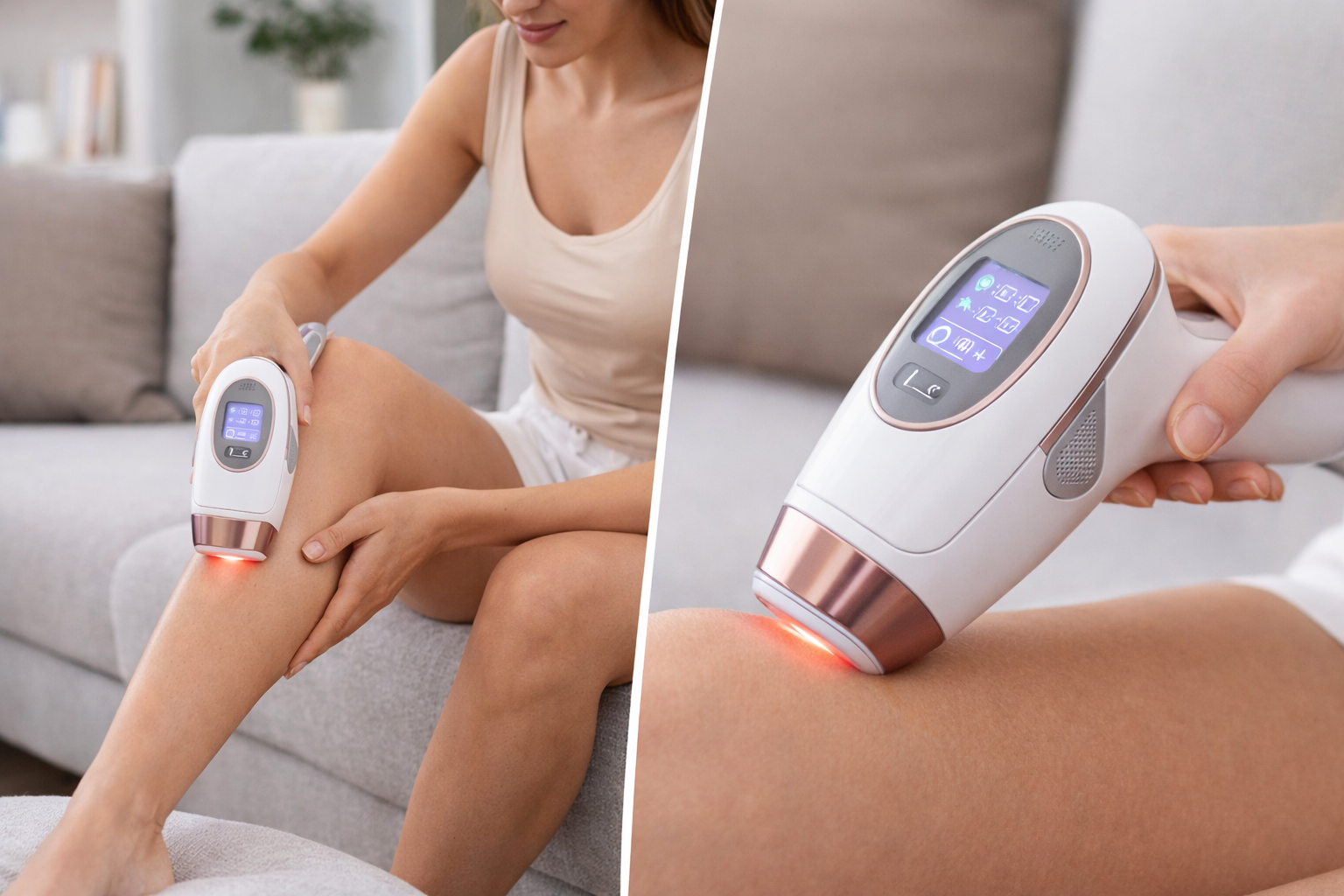
If you’ve recently been researching hair removal options, it’s almost impossible to miss the surge in interest around Ulike hair removal. From social media adverts to influencer reviews and comparison videos, Ulike has quickly become one of the most talked-about at-home hair removal devices.
Search interest has increased dramatically, leaving many people asking the same questions: Does Ulike hair removal actually work? How does it compare to professional laser hair removal? And is at-home hair removal really a viable alternative to clinic treatments?
This article is designed to answer those questions clearly and honestly — without hype, fear-based messaging or sales pressure — so you can make an informed decision about which hair removal option suits you best.
The rapid growth in searches for Ulike hair removal hasn’t happened by accident. Several factors have contributed to its popularity, particularly as more people look for convenience, privacy and long-term solutions to unwanted hair.
At-home hair removal devices promise freedom from frequent salon visits and the ability to treat hair in your own time. Combined with bold marketing claims and sleek product design, it’s easy to see why Ulike has captured attention so quickly.
However, popularity alone doesn’t always tell the full story. Understanding why a product is trending — and whether it’s suitable for you — requires a deeper look at how it works and what results are realistically achievable.
For many people, the appeal of at-home hair removal comes down to control and convenience. The idea of managing hair reduction from home, without appointments or ongoing costs per session, can feel empowering.
At-home devices are often marketed as a long-term investment, suggesting that once purchased, hair removal becomes simpler and more affordable over time. This messaging resonates strongly with people who have previously relied on shaving, waxing or depilatory creams.
Ulike hair removal fits neatly into this category, offering a modern, user-friendly approach aimed at those seeking an alternative to clinic-based treatments.
Alongside general interest, there has been a noticeable rise in comparison searches such as Ulike vs laser hair removal and at home laser hair removal vs clinic. This suggests many people are weighing their options rather than committing immediately.
These searches often come from individuals who want effective results but are unsure whether an at-home device can truly deliver outcomes comparable to professional treatments.
Understanding the differences between these approaches is key to avoiding disappointment and choosing a solution that aligns with your expectations, skin type and hair growth pattern.
The rise of Ulike hair removal has also highlighted the importance of clear, unbiased information. At-home devices are often promoted using best-case scenarios, influencer testimonials and carefully curated results.
While Ulike hair removal reviews can provide useful insight, they often reflect individual experiences rather than guaranteed outcomes. Hair removal results vary significantly depending on skin tone, hair colour, consistency of use and biological factors.
This is why education — rather than persuasion — plays such an important role when exploring hair removal options.
Rather than positioning Ulike hair removal as “good” or “bad,” this article takes a balanced, expert-led view. At-home IPL devices have a place for certain users, just as professional laser hair removal does.
By understanding how Ulike works, what results are realistic and how it compares to clinic-based laser hair removal, you can make a decision based on facts rather than trends.
Ulike hair removal is an at-home hair reduction device that uses IPL technology, which stands for Intense Pulsed Light. Although often referred to as “at-home laser hair removal,” IPL is technically different from medical or clinic-grade laser treatments. Understanding this distinction is important, as it directly affects how results are achieved, who the device is suitable for and how it compares to professional laser hair removal.
Despite how it’s commonly described online, Ulike hair removal is not a laser. Instead, it uses broad-spectrum light energy (IPL) rather than a single, focused laser wavelength.
IPL works by emitting multiple wavelengths of light that target pigment within the hair. This energy is absorbed by the melanin in the hair shaft and transferred to the follicle, where it helps slow future growth.
Professional laser hair removal uses a more concentrated, specific wavelength, which allows for deeper and more precise targeting of the hair follicle. This difference plays a significant role in treatment effectiveness and consistency of results.
At-home IPL hair removal devices like Ulike are designed to be user-friendly and safe for non-professional use. They typically operate at lower energy levels than clinic-based lasers and include built-in safety features to reduce risk.
The device is applied directly to the skin, where it emits pulses of light over the treatment area. Over repeated use, this light aims to weaken hair follicles and reduce regrowth.
Consistency is key with IPL devices. Because they operate at lower power levels, results depend heavily on regular, long-term use rather than occasional treatments.
IPL technology relies on contrast between hair colour and skin tone. The light energy is attracted to darker pigment in the hair, which is why IPL hair removal tends to work best on darker hair against lighter skin.
Hair that contains little pigment — such as blonde, grey or red hair — may not respond well to IPL. Similarly, darker skin tones require careful consideration due to increased melanin in the skin, which can absorb light energy and raise safety concerns.
This is one of the reasons suitability varies significantly between individuals.
Ulike hair removal is designed to reduce hair growth over time, not permanently remove hair in a single session. With consistent use, many users aim to achieve slower regrowth, finer hair and reduced need for shaving.
This makes Ulike appealing to individuals looking for maintenance-level hair reduction rather than complete or permanent hair removal.
Understanding this goal helps set realistic expectations and avoids disappointment when comparing at-home devices to clinic treatments.
As interest in Ulike has grown, so too have comparisons between Ulike and professional laser hair removal. This is largely because both target hair follicles using light energy, even though the technology and delivery differ.
Searches such as ulike vs laser hair removal reflect a growing desire to understand whether at-home devices can offer similar results to clinic treatments — or whether the convenience comes with limitations.
These differences become clearer when looking more closely at results, safety and long-term outcomes, which will be explored in the next sections.
Knowing what Ulike hair removal actually is — and what it isn’t — allows you to make informed decisions rather than relying on marketing language. IPL devices can be effective for some users, but they are not interchangeable with professional laser treatments.
This distinction is not about one option being “better” than the other, but about choosing the right solution for your hair type, skin tone and expectations.
At-home IPL hair removal devices like Ulike are designed to fit into a regular routine rather than act as a one-off treatment. Understanding how they work in practice — not just in theory — helps explain why results vary so widely between users.
Unlike professional laser treatments, IPL relies heavily on consistency, correct technique and suitable hair-to-skin contrast to achieve noticeable hair reduction.
Hair grows in cycles, made up of growth, transition and resting phases. IPL hair removal is most effective during the active growth phase, when the hair is still connected to the follicle and contains pigment.
At any given time, only a percentage of hairs are in this active phase. This is why at-home IPL hair removal requires repeated treatments over many weeks or months to gradually target hairs as they enter the right stage of growth.
This principle applies to both IPL and professional laser hair removal, but lower energy levels mean IPL depends even more heavily on consistent timing.
Using Ulike hair removal usually involves shaving the area first, then applying the device directly to clean, dry skin. The device emits pulses of light across the treatment area, which are intended to target pigment in the hair.
Most at-home IPL devices recommend frequent treatments initially, followed by maintenance sessions as hair growth slows. Skipping sessions or using the device inconsistently often leads to reduced effectiveness.
This level of commitment works well for some users, but others find it difficult to maintain over long periods.
One of the key differences between at-home IPL and professional laser hair removal is power output. At-home devices operate at lower energy levels to ensure safety for non-professional use.
While this reduces risk, it also means the energy delivered to the hair follicle is less concentrated. As a result, hair reduction tends to be slower and less predictable compared to clinic-based laser treatments.
This lower power output is a major factor behind the mixed Ulike hair removal results seen in reviews.
At-home IPL devices work best when there is a clear contrast between skin tone and hair colour. Dark hair on lighter skin allows light energy to be absorbed more effectively by the hair rather than the surrounding skin.
Individuals with lighter hair colours may struggle to see significant results, as there is less pigment for the IPL to target. Similarly, darker skin tones require caution due to increased melanin absorption in the skin.
These limitations are not unique to Ulike, but they are more pronounced with IPL than with professional laser systems.
Many Ulike hair removal reviews highlight the importance of sticking to a routine. Early enthusiasm often leads to regular use, but maintaining consistency over several months can be challenging.
Missed sessions, incorrect settings or treating areas irregularly can significantly affect outcomes. This is why results vary so widely — the technology relies heavily on user behaviour as well as biological factors.
For some users, this level of responsibility feels empowering. For others, it becomes a barrier to achieving meaningful results.
At-home IPL hair removal is designed to reduce hair growth, not eliminate it permanently. Users often aim for slower regrowth, finer hair and less frequent shaving rather than complete hair removal.
Understanding this distinction is crucial. IPL can be effective for maintenance-level reduction, but it is not intended to deliver the same depth of follicle targeting as professional laser hair removal. This difference becomes especially relevant when comparing long-term outcomes and value.
Because at-home IPL relies on multiple variables — skin tone, hair colour, consistency, device settings and technique — results are inherently unpredictable.
Some users report noticeable improvement, while others see little change despite following instructions carefully. This unpredictability is one of the reasons many people later explore professional laser hair removal after trying at-home devices.
At-home IPL devices like Ulike are not ineffective, but they do have limitations. Knowing these limitations upfront helps prevent unrealistic expectations and allows users to decide whether IPL aligns with their goals.
For those seeking convenience and gradual reduction, IPL may be sufficient. For those wanting faster, more consistent results, professional laser hair removal often becomes the next consideration. For further information about laser hair removal options at Alex James Clinic, click below for our laser hair removal treatment page.
When people search for Ulike hair removal results, they are often trying to answer one simple question: Will this actually work for me? The honest answer depends on several factors, including hair type, skin tone, consistency of use and individual biological response. Understanding what results are realistically achievable with at-home IPL hair removal helps prevent frustration and allows you to decide whether Ulike aligns with your goals.
In the early stages of using Ulike hair removal, some users notice subtle changes rather than dramatic hair reduction. These early changes may include hair growing back more slowly, feeling finer, or appearing lighter in colour. For some, shaving becomes less frequent, which is often interpreted as an early sign of effectiveness. However, these changes are typically temporary and depend heavily on continued use of the device. It’s important to recognise that these early improvements do not necessarily indicate long-term hair reduction unless consistency is maintained.
With regular use over several weeks or months, some users experience more noticeable reductions in hair density. Hair may appear patchier, regrowth may slow further and overall maintenance may feel easier. These outcomes are more commonly reported by individuals with darker hair and lighter skin tones, where IPL technology can target pigment more effectively. Even at this stage, results vary widely. Some users are satisfied with gradual improvement, while others feel progress is slower than expected.
One of the most common themes in Ulike hair removal reviews is the experience of results plateauing. After initial improvements, some users find that further reduction becomes minimal, even with continued use. This plateau often occurs because IPL operates at lower energy levels and may not be able to sufficiently disable deeper or more resilient hair follicles. At this point, hair reduction may stabilise rather than continue to improve. Understanding this limitation helps explain why some users eventually look toward professional laser hair removal for more definitive results.
Ulike hair removal tends to work best when there is strong contrast between hair colour and skin tone. Dark, coarse hair responds more predictably to IPL than fine or lightly pigmented hair. Hair that contains little pigment — such as blonde, grey or red hair — may not respond well at all. Similarly, individuals with darker skin tones must use caution, as increased melanin in the skin can absorb light energy and limit treatment intensity. These factors significantly influence results and should be considered before investing in an at-home device.
Unlike clinic-based treatments that are spaced weeks apart, at-home IPL requires regular application over extended periods. Missing sessions or reducing frequency often leads to reduced effectiveness and regrowth. Many mixed reviews stem not from the technology itself, but from the difficulty of maintaining consistent use over time. For some users, this commitment is manageable; for others, it becomes unsustainable. Consistency is not optional with IPL — it is fundamental to seeing any meaningful result.
Marketing imagery and influencer testimonials often suggest smooth, hair-free skin with minimal effort. In reality, Ulike hair removal results are more modest and gradual. At-home IPL is best understood as a maintenance-focused approach rather than a permanent solution. It can reduce hair growth, but it rarely eliminates it entirely. Recognising this difference helps ensure satisfaction is based on achievable outcomes rather than idealised expectations.
After using Ulike for several months, some individuals find that while hair reduction has occurred, it hasn’t met their long-term goals. This often leads to exploration of professional laser hair removal for more targeted and consistent results. This transition does not mean IPL has failed — it simply reflects the natural limitations of at-home technology compared to clinic-grade systems.
Ultimately, the value of Ulike hair removal depends on what you consider success. For some, slower regrowth and reduced shaving is sufficient. For others, the desire for more permanent reduction leads them toward professional options. Understanding these differences allows you to make a choice based on personal priorities rather than marketing claims.
Searching through Ulike hair removal reviews, a clear pattern begins to emerge. Experiences tend to fall along a spectrum rather than into clear “success” or “failure” categories. Some users are pleased with gradual improvements, while others feel results fall short of expectations set by marketing.
Understanding these common themes helps put individual reviews into context and provides a clearer picture of what Ulike hair removal can — and cannot — realistically deliver.
Many positive reviews focus on convenience. Being able to carry out hair removal at home, on your own schedule, is frequently mentioned as a major benefit. Users often appreciate not needing appointments or travel time, particularly for ongoing maintenance.
Another commonly noted positive is reduced shaving frequency. Even modest hair reduction can feel significant for users who previously shaved daily or experienced irritation from other hair removal methods.
Some users also describe IPL treatments as relatively comfortable compared to waxing or epilation, particularly once they become familiar with the device.
When users report good Ulike hair removal results, there are usually a few common factors involved. These reviews often come from individuals with darker hair, lighter skin tones and a willingness to commit to a regular treatment schedule.
Consistency appears frequently in positive feedback. Users who follow recommended treatment frequencies over extended periods tend to report better outcomes than those who use the device intermittently. These patterns highlight how strongly results depend on suitability and user behaviour rather than the device alone.
When users report good Ulike hair removal results, there are usually a few common factors involved. These reviews often come from individuals with darker hair, lighter skin tones and a willingness to commit to a regular treatment schedule.
Consistency appears frequently in positive feedback. Users who follow recommended treatment frequencies over extended periods tend to report better outcomes than those who use the device intermittently. These patterns highlight how strongly results depend on suitability and user behaviour rather than the device alone.
Mixed reviews are not unique to Ulike — they are common across most at-home IPL hair removal devices. This is largely due to the wide range of variables involved, including skin tone, hair colour, hormonal factors and consistency of use.
Unlike professional treatments, where settings and technique are controlled by trained practitioners, at-home results rely heavily on user application. Small differences in technique or frequency can significantly affect outcomes. This variability explains why one person’s positive experience may not be easily replicated by another.
It’s also important to distinguish between genuine user reviews and sponsored or incentivised content. Influencer testimonials often showcase best-case scenarios and may not reflect long-term outcomes.
Reading a broad range of reviews — including neutral and critical feedback — provides a more accurate understanding of what to expect from Ulike hair removal. This approach helps ensure decisions are based on balanced information rather than curated success stories.
Many reviews focus on convenience and early results but give less attention to long-term maintenance. At-home IPL often requires ongoing use to sustain results, something that is not always emphasised in promotional material. Understanding the long-term commitment involved is key to determining whether Ulike fits your lifestyle and expectations.
Reviews are most helpful when used as a guide rather than a guarantee. They can highlight potential benefits and drawbacks, but they cannot predict individual outcomes. By viewing Ulike hair removal reviews as part of a wider decision-making process — alongside understanding the technology and its limitations — you’re better equipped to choose the right option for you.
Safety is one of the most important considerations when exploring at-home hair removal devices. While Ulike hair removal is designed for consumer use and includes built-in safety features, it’s still important to understand how IPL interacts with the skin — and where limitations exist.
At-home devices are intentionally designed to operate at lower energy levels than professional systems, which helps reduce risk but also influences effectiveness.
Ulike hair removal devices use lower-intensity light pulses to ensure they can be used safely without professional supervision. This reduced power minimises the risk of burns or skin injury when used according to instructions.
However, this safety-focused design also means IPL energy does not penetrate as deeply or precisely as professional laser systems. While this makes the device safer for home use, it also contributes to slower and less predictable results. Understanding this trade-off helps explain both the appeal and the limitations of at-home IPL hair removal.
IPL technology works by targeting pigment, which means skin tone and hair colour play a significant role in safety. Darker skin tones contain higher levels of melanin, which can absorb light energy and increase the risk of skin irritation or pigmentation changes if not used correctly.
For this reason, many at-home IPL devices recommend caution or advise against use on certain skin tones. Similarly, very light hair colours may not respond effectively due to lack of pigment. Checking suitability guidelines carefully before use is essential to reduce risk and avoid disappointment.
Most side effects reported with Ulike hair removal are mild and short-lived. These may include temporary redness, warmth or mild sensitivity in the treated area. These effects typically settle quickly and are often comparable to sensations experienced after shaving or waxing. More significant reactions are uncommon when the device is used correctly and on suitable skin types.
Certain factors may increase sensitivity or risk when using at-home IPL hair removal. These include recent sun exposure, active skin conditions, broken skin or the use of products that increase photosensitivity. At-home devices rely on the user to identify and avoid these situations, which is why reading instructions carefully and understanding contraindications is important. Professional clinics assess these factors automatically as part of treatment planning, which is one reason safety outcomes are more predictable in clinical settings.
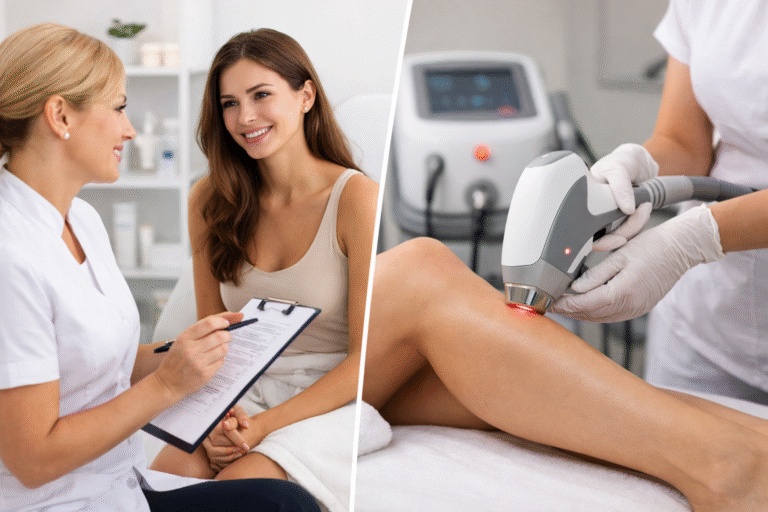
One of the key differences between at-home IPL and professional laser hair removal is assessment. In a clinic environment, practitioners assess skin type, hair colour and medical history before treatment.
This assessment allows energy settings to be tailored accurately and reduces the likelihood of adverse reactions. At home, this responsibility rests entirely with the user. This doesn’t make at-home devices unsafe — but it does place greater emphasis on informed, cautious use.
When used correctly, Ulike hair removal is generally considered safe for long-term use on suitable skin types. However, prolonged or incorrect use, particularly on unsuitable skin tones, may increase the risk of irritation or pigmentation changes. Following recommended treatment schedules and avoiding excessive use helps protect skin health and maintain safety.
Safety guidance is not just a formality. Understanding who should and should not use IPL devices is essential for avoiding unwanted outcomes. Being informed allows you to weigh convenience against responsibility and decide whether at-home hair removal fits your comfort level.
Ultimately, safety should be a central part of choosing between at-home IPL and professional laser hair removal. Both options can be safe when used appropriately, but they require different levels of oversight and responsibility. Recognising this difference helps ensure your choice is based on suitability rather than convenience alone.
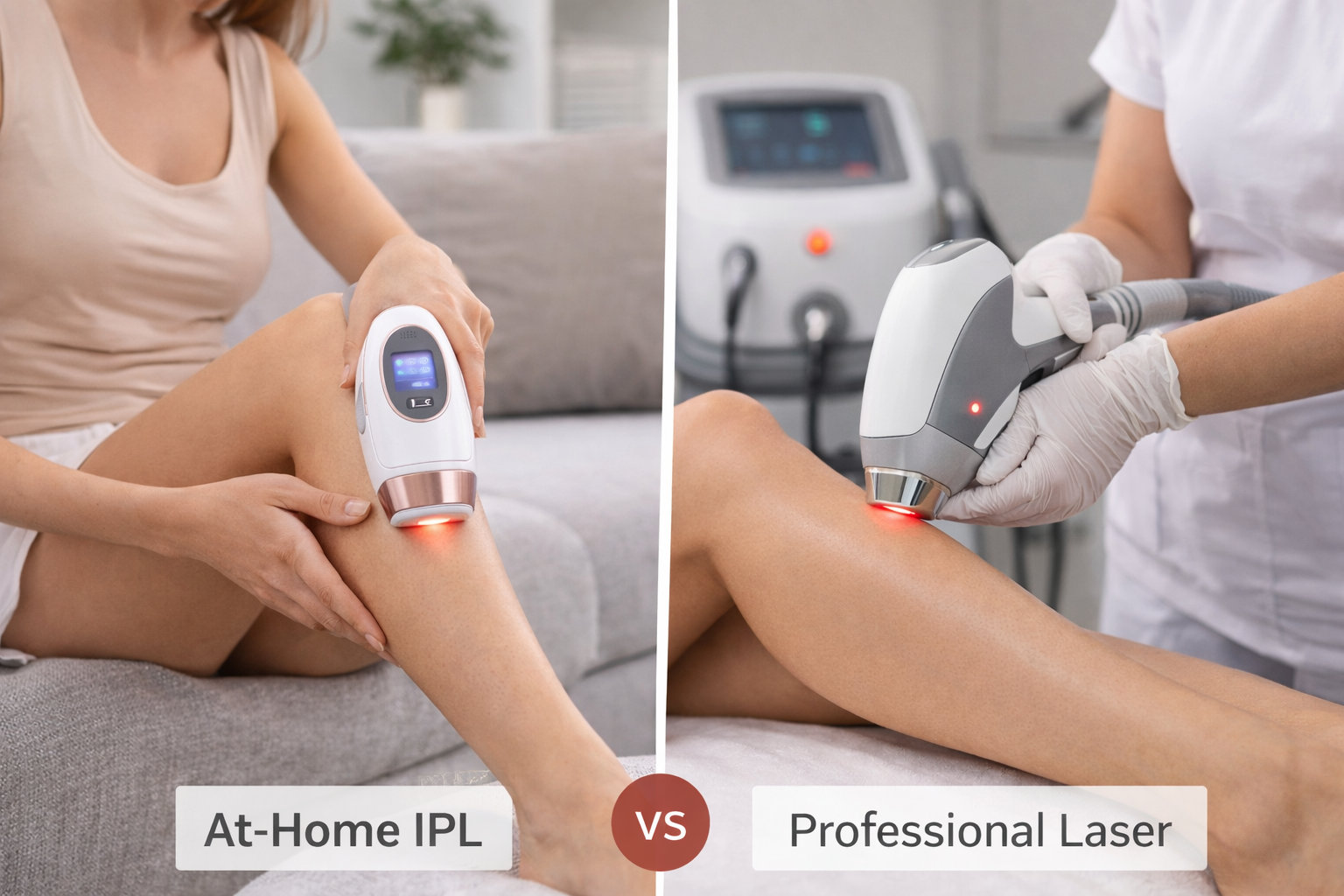
As interest in at-home devices grows, more people are actively comparing Ulike vs laser hair removal to decide which option is right for them. While both approaches use light-based technology to target hair follicles, the similarities largely end there.
Understanding the key differences between at-home IPL hair removal and professional laser treatments helps clarify why results, timelines and overall experiences can vary so widely.
Ulike hair removal uses IPL (Intense Pulsed Light), which emits a broad spectrum of light wavelengths. This light spreads over a wider area and targets pigment in the hair, relying on repeated exposure to weaken follicles over time. Professional laser hair removal uses a single, focused wavelength designed to penetrate deeper and target hair follicles more precisely. This allows for more controlled energy delivery and consistent follicle disruption. The difference in technology is one of the main reasons professional treatments tend to deliver more predictable and longer-lasting results.
At-home IPL devices are intentionally designed with lower power output to ensure safety for unsupervised use. While this reduces risk, it also limits how effectively deeper or more resilient follicles can be treated. Professional laser systems operate at higher, controlled energy levels under trained supervision. This allows practitioners to tailor settings to skin type and hair characteristics, improving both safety and effectiveness. Precision is a key advantage of clinic-based laser treatments, particularly for areas with coarse or stubborn hair.
With Ulike hair removal, consistency depends entirely on the user. Missed sessions, incorrect settings or uneven application can all affect outcomes. Professional laser hair removal follows structured treatment plans with carefully timed sessions. Each treatment is carried out by a trained practitioner who monitors progress and adjusts settings as needed. This oversight reduces variability and ensures treatments remain appropriate as hair growth changes.
Ulike hair removal is designed to reduce hair growth gradually, often requiring ongoing maintenance to sustain results. For some users, this level of reduction is sufficient. Professional laser hair removal aims for more significant, long-term hair reduction. While no method guarantees complete permanent hair removal, clinic treatments tend to deliver deeper follicle targeting and longer-lasting results. This difference often becomes more noticeable over time, particularly for individuals with thicker or darker hair.
At-home IPL works best when there is strong contrast between hair and skin tone. Suitability may be limited for lighter hair colours or darker skin tones. Professional laser systems offer greater flexibility, allowing practitioners to treat a wider range of skin types safely by selecting appropriate wavelengths and settings. This broader suitability is a key reason many people eventually explore clinic treatments.
Both Ulike hair removal and professional laser treatments can cause mild sensations during use. At-home IPL devices operate at lower intensities, which some users find more comfortable initially. Professional laser treatments may feel stronger, but cooling systems and tailored settings help manage comfort effectively. Treatment speed and efficiency can also reduce overall discomfort. Comfort is subjective, but professional oversight allows adjustments that are not possible with fixed at-home devices.
One of the main attractions of Ulike hair removal is the upfront cost. Purchasing a device can feel more affordable than paying per session for professional treatments. However, long-term value depends on results. At-home IPL often requires ongoing use and may not deliver the same level of reduction, leading some users to invest in clinic treatments later. Professional laser hair removal involves a higher initial investment but may provide more definitive results, reducing long-term maintenance needs.
It’s common for individuals to begin with Ulike hair removal and later explore professional laser hair removal once they understand their own response and limitations. This progression reflects a natural learning process rather than failure. At-home IPL provides insight into hair response, while professional treatments offer a more targeted solution for those seeking stronger results.
Ultimately, the decision between Ulike and professional laser hair removal should be based on your goals, lifestyle and expectations — not just search trends or marketing claims. Understanding these differences empowers you to choose the option that aligns best with your priorities.
While at-home IPL devices like Ulike can provide some level of hair reduction, professional laser hair removal is designed to achieve results in a very different way. The difference is not simply about stronger equipment, but about precision, assessment and control.
Understanding why clinic treatments often deliver more consistent outcomes helps explain why many people choose to move from at-home devices to professional care.
Professional laser hair removal systems use specific wavelengths chosen to penetrate deeper into the skin and target the hair follicle more accurately. This focused energy allows the laser to disrupt the follicle at its source, rather than affecting the hair shaft alone. At-home IPL devices disperse light across a broader spectrum, which can limit how deeply and precisely energy reaches the follicle. This difference in depth is one of the main reasons professional laser treatments tend to produce longer-lasting hair reduction.
One of the biggest advantages of professional laser hair removal is personalisation. In a clinic environment, treatments are tailored to your skin tone, hair colour and hair thickness. Energy levels, pulse duration and treatment intervals are adjusted based on how your skin and hair respond. This adaptability allows treatments to remain both safe and effective as hair becomes finer and growth patterns change. At-home devices use fixed or limited settings, which cannot account for these ongoing changes.
Before professional laser hair removal, practitioners assess skin condition, hair growth patterns and any factors that may influence safety or results. This assessment helps ensure treatment is suitable and avoids unnecessary risk. In contrast, at-home IPL devices rely on the user to self-assess suitability. While this can work for some, it does not offer the same level of accuracy or reassurance. Assessment is a key reason professional treatments often feel more predictable and controlled.
With professional laser hair removal, treatment schedules are structured and managed by the clinic. Sessions are spaced according to hair growth cycles, and progress is monitored throughout the course. This removes the burden of self-management and ensures treatments remain consistent even as motivation fluctuates. For many people, this structure is a major advantage over at-home devices that rely entirely on user discipline.
Certain areas of the body and certain hair types can be more difficult to treat effectively. Professional laser systems allow practitioners to adapt technique and settings to address these challenges. At-home devices may struggle in these situations, leading to uneven or incomplete results. This often becomes apparent after initial improvements plateau.
Professional laser hair removal combines technology with expertise. Practitioners are trained to recognise skin responses, adjust treatment parameters and respond appropriately if sensitivity occurs. This oversight reduces risk and helps ensure skin integrity is maintained throughout the treatment course. While at-home devices include safety features, they cannot replace professional judgement in more complex cases.
The combination of targeted technology, personalised settings and professional oversight leads to more consistent results with clinic-based laser hair removal. This doesn’t mean at-home devices are ineffective — it means they operate within different limitations and expectations. For individuals seeking stronger, longer-lasting hair reduction, professional laser hair removal often becomes the preferred option.
Many people view professional laser hair removal as a next step rather than a replacement for at-home devices. Starting with Ulike hair removal can help individuals understand their hair response before committing to clinic treatments. This progression reflects informed decision-making rather than dissatisfaction.
Recognising why professional laser hair removal delivers different outcomes allows you to choose based on evidence rather than assumption. Both options have a place — the key is knowing which aligns with your goals.
At-home IPL devices such as Ulike can be a practical option for certain individuals, particularly when expectations align with what the technology is designed to deliver.
Ulike hair removal may be suitable if you:
Have darker hair and lighter skin, where IPL technology is most effective
Are comfortable committing to regular, long-term use
Are looking for gradual hair reduction rather than permanent removal
Prefer the convenience and privacy of treating hair at home
Want a maintenance-focused solution rather than a definitive outcome
For some users, these factors make at-home hair removal a good starting point, especially for managing regrowth or reducing the need for frequent shaving.
Understanding suitability helps ensure satisfaction comes from realistic outcomes rather than comparisons with clinic-based treatments.
Professional laser hair removal is often better suited to individuals who want stronger, more consistent results and prefer a guided treatment approach.
You may want to consider clinic-based laser hair removal if you:
Have coarse, stubborn or fast-growing hair
Have tried at-home IPL with limited or plateaued results
Want longer-lasting hair reduction
Prefer professional assessment and tailored treatment settings
Find it difficult to maintain consistent at-home treatment routines
Professional laser treatments offer deeper follicle targeting, structured treatment plans and expert oversight, which can be especially beneficial for challenging hair types or larger treatment areas.
Cost is often a deciding factor when choosing between Ulike hair removal and professional laser treatments. At-home devices involve a one-time purchase, which can feel more affordable upfront.
However, long-term value depends on effectiveness. If at-home IPL delivers the level of reduction you’re happy with, the investment may feel worthwhile. If results are limited or require ongoing maintenance indefinitely, professional laser hair removal may offer better value over time.
Viewing cost through the lens of outcomes rather than initial spend helps clarify which option aligns best with your goals.
There is no single “best” hair removal method for everyone. The right choice depends on your skin type, hair colour, expectations and lifestyle. Ulike hair removal offers convenience and gradual reduction for suitable users. Professional laser hair removal offers stronger, more predictable results with expert guidance. Understanding the strengths and limitations of each allows you to make an informed decision rather than following trends or marketing claims.
The surge in interest around Ulike hair removal reflects a growing demand for accessible, at-home solutions to unwanted hair. For some people, IPL devices provide a useful way to manage hair growth and reduce reliance on traditional methods like shaving or waxing.
However, at-home IPL is not the same as professional laser hair removal. Differences in technology, power, precision and assessment lead to different outcomes.
By understanding how Ulike works, what results are realistic and how it compares to clinic-based laser treatments, you can choose the option that best fits your needs — whether that’s starting at home, moving to professional care, or combining both approaches over time.
For those who decide that at-home devices may not offer the level of results they’re looking for, professional laser hair removal can provide a more targeted and consistent approach.
At Alex James Clinic, laser hair removal treatments are carried out in a real working clinic environment, with a strong focus on skin safety, suitability and realistic outcomes. Each client is offered a free consultation and patch test, allowing treatments to be tailored based on skin type, hair colour and individual goals.
Professional laser hair removal differs from at-home IPL by using controlled, clinic-grade technology and practitioner-led treatment planning. This allows for deeper follicle targeting, greater consistency and structured treatment courses designed around natural hair growth cycles.
For clients who have tried at-home hair removal devices — including IPL systems — and are looking for more definitive results, clinic-based laser hair removal can be a natural next step. Treatments are planned carefully, comfort is prioritised through cooling measures, and honest guidance is provided throughout the process.
If you’re exploring your options and would like to understand whether professional laser hair removal is suitable for you, a consultation can help clarify the best approach for your skin and hair.
Ulike hair removal is an at-home hair reduction device that uses IPL (intense pulsed light) technology to slow hair regrowth over time. It is designed for regular home use rather than permanent hair removal in a single treatment.
Ulike hair removal can work for some people, particularly those with darker hair and lighter skin who use the device consistently. Results vary, and most users experience reduced regrowth rather than complete hair removal.
Early changes such as slower regrowth may be noticed within a few weeks, but visible results usually take several months of consistent use. Results depend on hair type, skin tone and how regularly the device is used.
No. Although often described as at-home laser hair removal, Ulike uses IPL technology rather than true laser energy. Professional laser hair removal uses a focused wavelength and higher controlled energy for deeper follicle targeting.
When used correctly and on suitable skin tones, Ulike hair removal is generally considered safe. However, users must carefully follow instructions and suitability guidelines, as there is no professional assessment during home use.
Ulike hair removal may be less effective on lighter hair colours, darker skin tones or coarse, stubborn hair. Results can plateau, and ongoing maintenance is usually required to sustain reduction.
In a Ulike vs laser hair removal comparison, professional laser treatments typically offer stronger, more consistent and longer-lasting hair reduction. At-home IPL focuses more on gradual maintenance rather than definitive results.
Ulike hair removal may suit individuals seeking convenience, gradual hair reduction and home treatment, particularly if they are comfortable committing to regular use over time.
Professional laser hair removal may be a better option for those who want more reliable results, have struggled with at-home IPL, or prefer practitioner-led treatment tailored to their skin and hair type.