

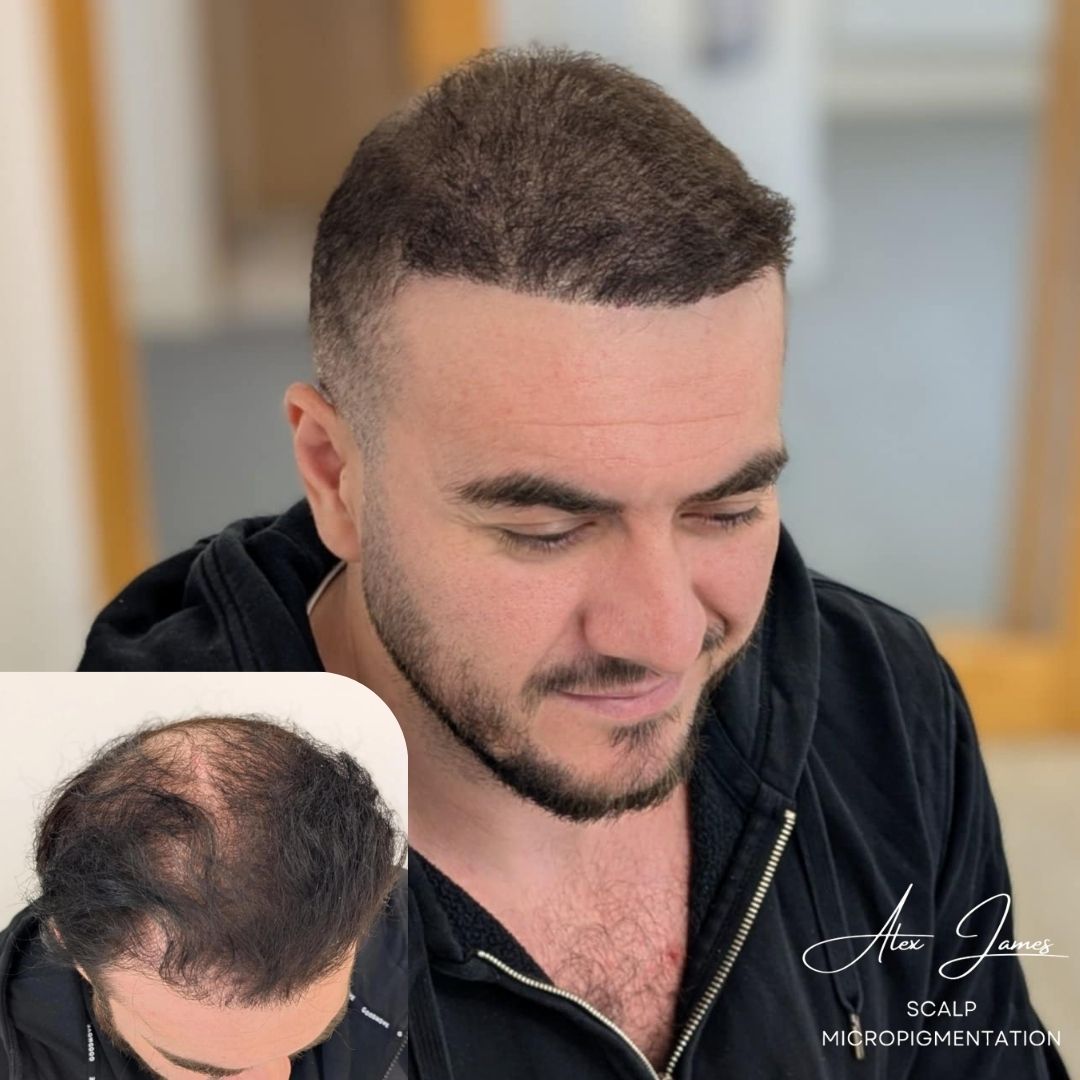
It begins quietly. You catch a glimpse of yourself in a shop-window reflection, and the light hits your crown in a way it never used to.
Maybe you brush your fringe forward before heading out with mates, or you keep a baseball cap in the car ‘just in case’. These little adjustments aren’t vanity; they’re protection—tiny ways of hiding something you don’t yet want to face. That’s why more men are comparing SMP vs Hair Transplant to find something that truly works.
Hair loss is universal, but the moment you first notice it feels incredibly personal. It’s not only about appearance; it’s about identity. The NHS estimates that more than half of British men will experience noticeable thinning or baldness by age 50, and for many it starts long before that.
The truth is, the shelves full of miracle shampoos and the adverts promising “permanent regrowth” rarely tell the full story. Most options treat symptoms, not confidence.
That’s where Scalp Micropigmentation (SMP) changes everything.
SMP doesn’t claim to regrow hair—it restores control. It creates the look of a clean, modern, shaved style that can make a man look sharper, younger, and more self-assured without surgery, medication, or endless maintenance.
This article—the first edition to include a three-part series—lays the groundwork. We’ll explore what actually causes hair loss, why it affects confidence so deeply, and how SMP rose from a niche cosmetic procedure to the most reliable alternative to hair transplants in Manchester, Lancashire, and the wider North West UK.
By the end of this section, you’ll understand not just the science of hair loss but the psychology behind taking action.
Before comparing SMP and hair transplants, we need a shared understanding of the problem itself. This guide will walk through:
– The biology behind male and female hair loss.
– The emotional impact it has on self-image and relationships.
– How Scalp Micropigmentation works and why it’s different from tattooing or shading.
– Why men across Manchester, Bolton, and Preston are turning to SMP for confidence that lasts.
– How to decide whether you’re ready to explore treatment.
You won’t find exaggerated promises here—just honest, research-based information and stories from real clients who’ve been where you are now.
Hair loss isn’t a failure of grooming; it’s biology.
According to NHS data, roughly one in three men under 30 shows visible thinning. By the age of 40, that rises to two out of three. Women experience it too—around 40 % will notice reduced density by midlife—but for men, pattern baldness follows a predictable route described by dermatologists as androgenetic alopecia.
The British Association of Dermatologists explains that this type of hair loss occurs when hair follicles shrink under the influence of dihydrotestosterone (DHT), a natural derivative of testosterone. Over time, the growing phase of each hair shortens, the resting phase lengthens, and eventually follicles stop producing visible strands.
In cities such as Manchester, environmental factors can accelerate the process. Air pollution and stress have both been linked to increased inflammation at the follicle level, which may worsen shedding. Lifestyle plays a role, but genetics determine the odds or underlying risk.
Genetic Predisposition
If your father or grandfather thinned early, chances are you share the same DHT sensitivity. Scientists have identified several genes connected to hair-follicle miniaturisation, particularly on the X-chromosome—which men inherit from their mothers.
Hormonal Influence
DHT binds to receptors in the scalp, shortening the anagen (growth) phase of the hair cycle. Areas most affected—the temples and crown—contain higher concentrations of these receptors, which is why recession usually begins there.
Lifestyle and Health
Poor sleep, nutritional deficiencies, smoking, and heavy alcohol use can all limit the nutrients reaching hair follicles. Chronic stress elevates cortisol, which in turn disrupts hormone balance. Even intense physical training without adequate recovery can temporarily trigger shedding.
Medical Conditions and Medications
Certain medications for blood pressure, depression, or acne list hair loss as a side effect. Auto-immune conditions like alopecia areata attack follicles directly, while thyroid imbalance slows regrowth. A GP or trichologist can diagnose these issues before any cosmetic treatment begins.
Age and Scalp Health
As we age, cell turnover slows and the scalp becomes less efficient at producing healthy keratin. Dryness, buildup of sebum, and lack of exfoliation can all create an unhealthy environment for existing follicles.
Ask any group of men in their twenties or thirties what they notice first when they look older, and most will say hairline or eyes. Hair frames the face; losing it can change how people perceive your energy, confidence, even professionalism.
A 2022 study published through the Royal Society of Public Health found that visible hair loss correlates with lower self-esteem and increased social avoidance. Many men compensate with humour—“I’m just saving money on shampoo”—but privately, they feel disconnected from the person in the mirror.
Clients often describe subtle shifts: sitting further back in photos, avoiding bright light, or choosing seats where others can’t see the crown. Over time those micro-decisions reinforce the sense that something has been lost beyond the follicles.
The encouraging truth is that confidence can be rebuilt faster than hair can grow—and sometimes without it needing to grow at all.
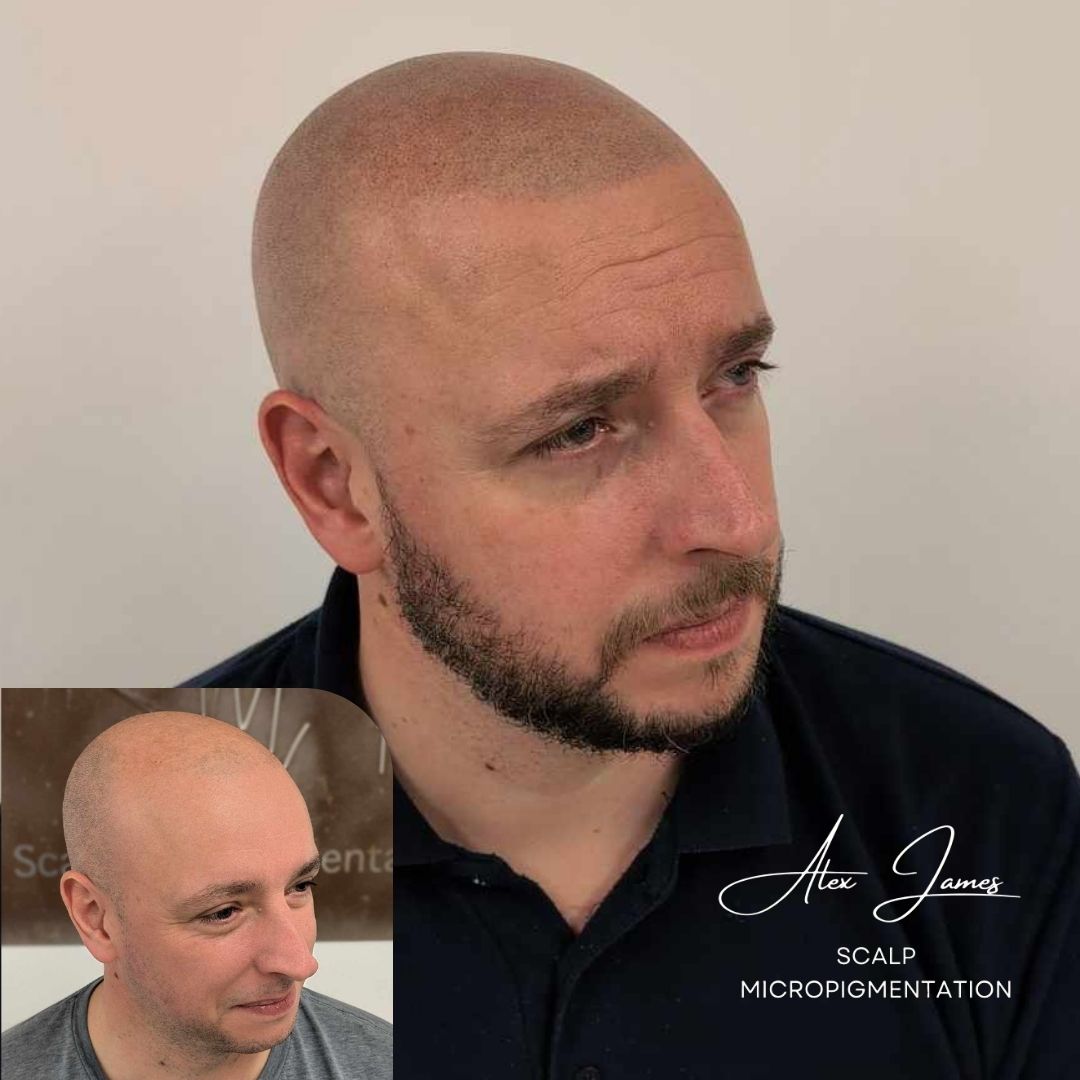
Scalp Micropigmentation is a precision technique that uses micro-needles to deposit tiny dots of organic carbon black pigment into the upper layers of the scalp. Each impression replicates the look of a natural hair follicle at its shortest length.
Unlike tattoos, SMP sits shallowly—about 0.25 mm into the dermis—so the pigment doesn’t blur or turn blue. The result is a realistic illusion of freshly shaved stubble, tailored to your hairline shape, head structure, and skin tone.
A full treatment typically involves two to three sessions spaced a week apart. After the first appointment, most clients already see a visible frame returning to their face. After the second, density and depth make the look indistinguishable from real hair under almost any lighting.
Clinics such as Alex James SMP in Greater Manchester operate under local-authority licensing and follow strict hygiene protocols recommended by the National Hair & Beauty Federation (NHBF).
Every cartridge and needle is single-use and sterile; pigments are carbon-based and hypoallergenic. There’s no cutting, anaesthetic, or downtime—most clients return to work the next day.
At its core, SMP is a combination of three sciences: dermatology, colour theory, and optical illusion.
Under bright daylight, poorly executed SMP can appear flat or too dark; precision in spacing and dilution separates professional work from amateur results. Alex James emphasises patience over speed, building density gradually over multiple sessions.
Over the last decade, SMP has moved from a niche solution to a mainstream choice for men across the UK. Google search data shows year-on-year increases in queries for “SMP Manchester” and “hair tattoo UK,” reflecting a cultural shift.
Social media has also demystified the process. Videos showing healed results under normal light have built trust among men who once feared the “tattooed head” stereotype.
In Manchester, style has always balanced practicality and personality. The city’s weather alone—wind, rain, and everything in between—makes complicated hair systems a nightmare.
Clients from Bolton, Wigan, and Preston often mention the same motivation: they’re tired of treatments that don’t fit real northern lifestyles.
SMP provides a look that holds up through gym sessions, football matches, nights out and holidays. It’s maintenance that matches your pace of life —reliable, unfussy, low-maintenance.
Alex James SMP’s local reputation comes from transparency: no filters, no inflated promises, just honest artistry. Word-of-mouth referrals across the region account for much of the studio’s growth.
Zimny, a client who delayed treatment for years, finally booked his sessions after extensive research. “It was the perfect decision,” he said. “Professional workmanship, great communication, and I feel happier and more confident. The effect is natural.”
Muhd echoed that sentiment: “The results exceeded my expectations and made a big difference to my confidence.”
Keiron, who had four sessions to achieve a balanced fade, described Alex as “a perfectionist who takes his time to build realism.”
These experiences illustrate what statistics can’t: the emotional lift that comes from recognising yourself again.
If you’ve read this far, you’re already considering change.
The first step isn’t commitment; it’s conversation. A consultation at Alex James SMP is free, private, and purely informational. You’ll see healed results, discuss design options, and understand costs before making any decision.
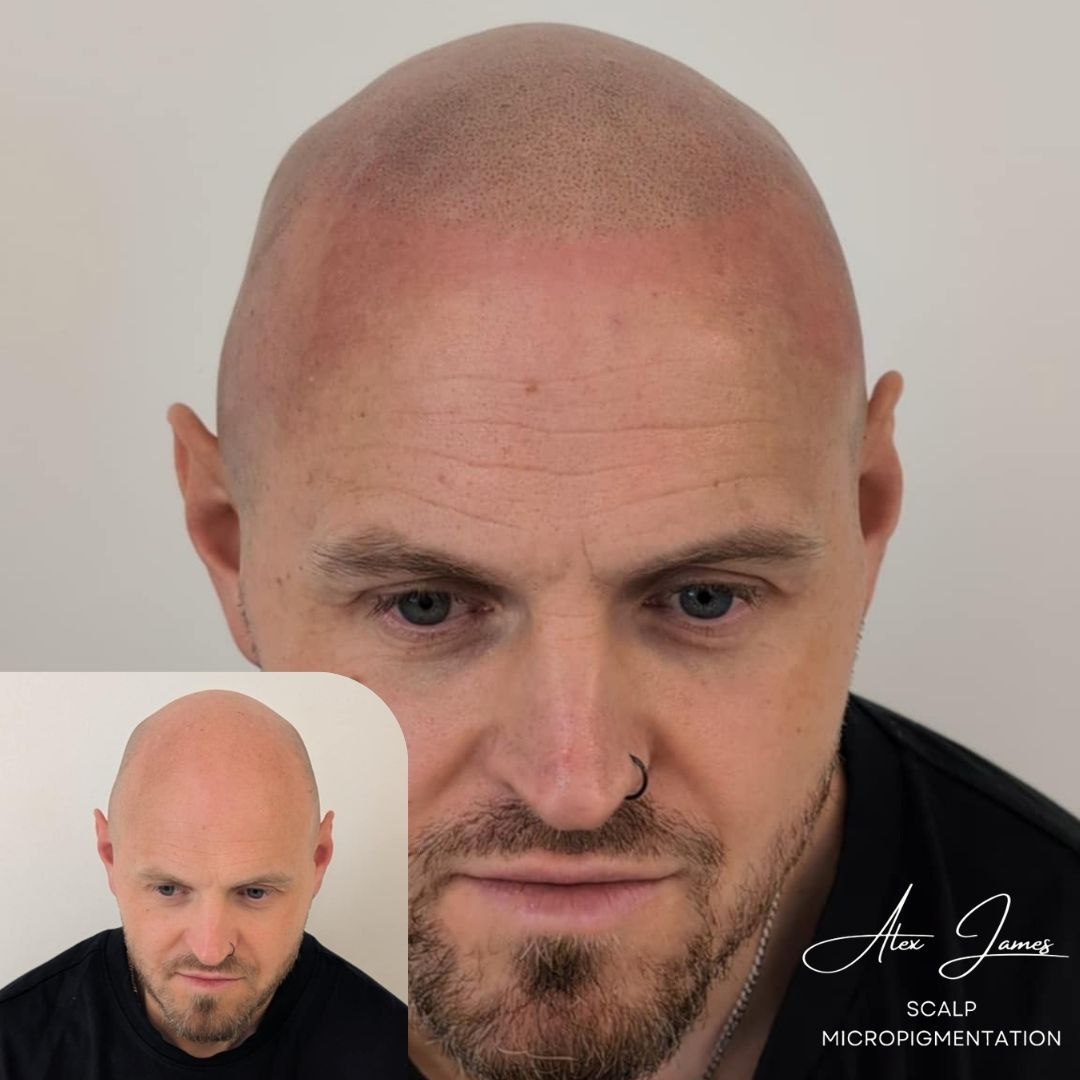
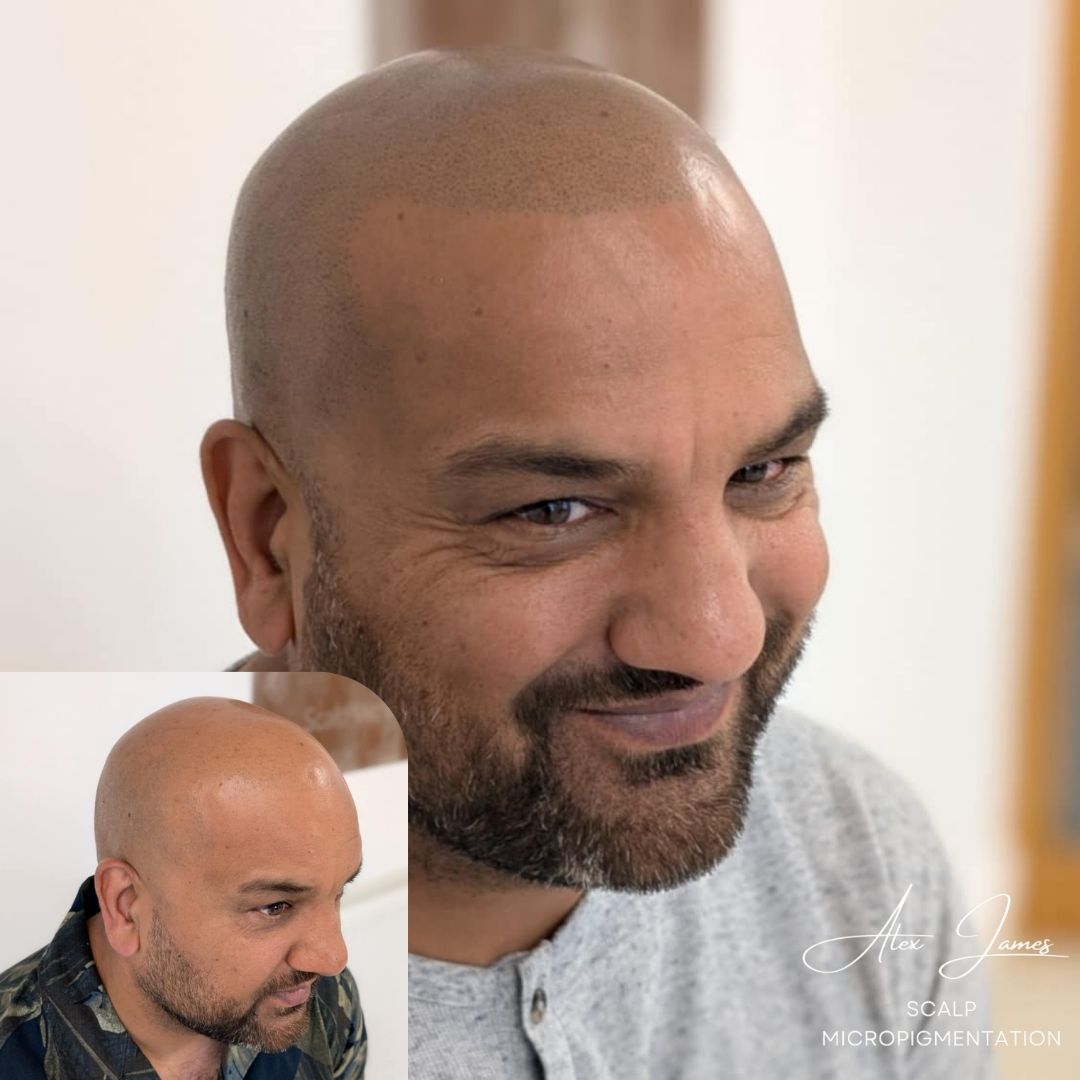
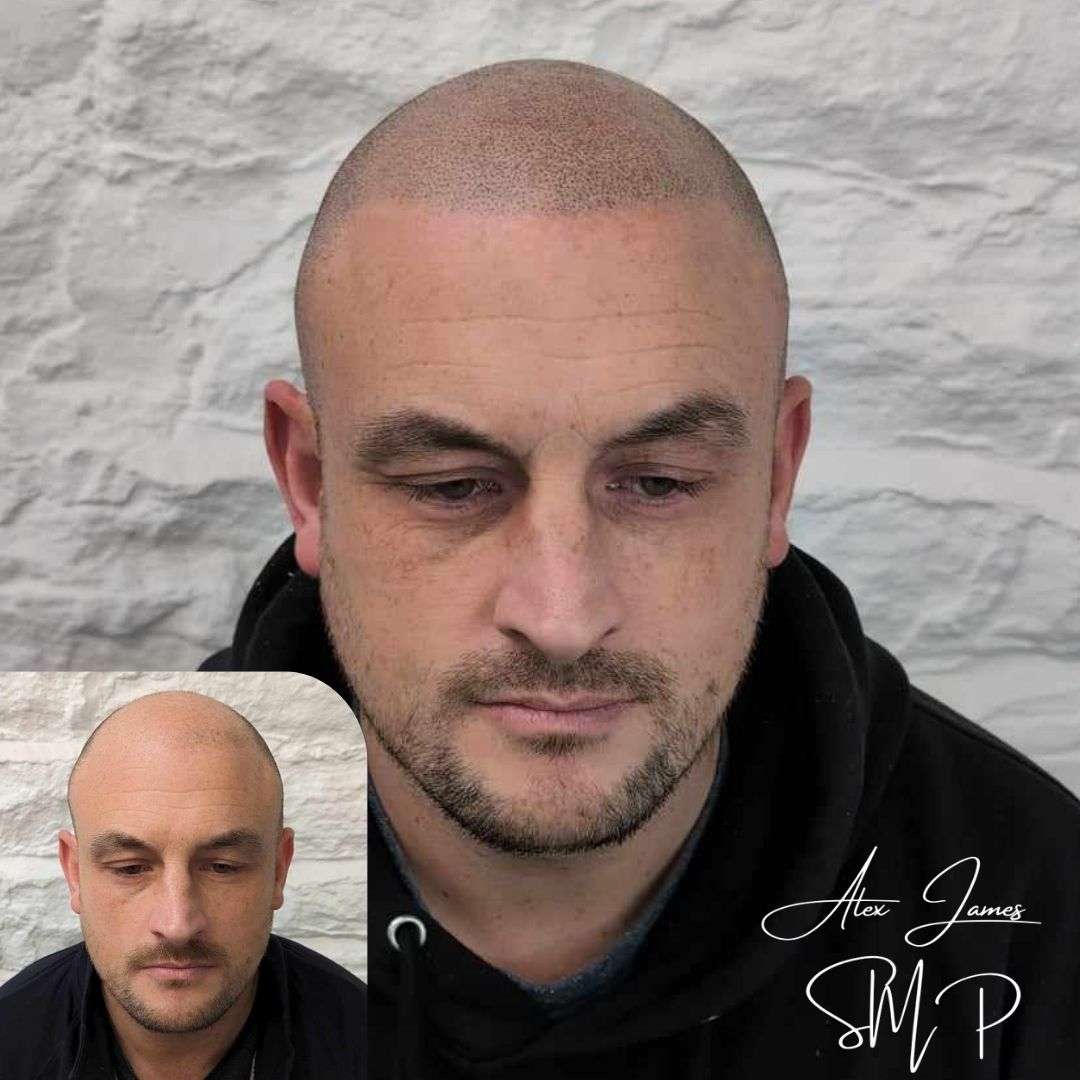
Understanding why hair loss happens is the foundation; discovering what you can do about it is empowerment. SMP doesn’t replace biology—it replaces uncertainty with design. It’s about taking control of your image on your own terms.
Next, we’ll move deeper into comparison: SMP vs Hair Transplants, medications, and hair systems, plus a full breakdown of long-term cost and maintenance.
To understand why SMP looks so real, imagine the scalp as a canvas made of thousands of tiny cells. Beneath the outer epidermis lies a network of capillaries, collagen fibres, and oil glands. When light hits the skin, it scatters differently depending on tone and texture.
A skilled SMP artist works with this natural reflectivity. The goal isn’t simply to “dot pigment,” but to create a matte surface that absorbs and diffuses light like a freshly shaven scalp.
Each dot of pigment is placed at a depth calculated to heal within the upper dermis. Too shallow and it may fade quickly; too deep and it can blur. Artists use micro-cartridges that deposit less than a microlitre of pigment per impression—just enough to mimic a single follicle.
Modern SMP pigments are carbon-based and suspended in purified water. Unlike tattoo inks that contain heavy metals, these formulations are inert and stable.
Colour-matching matters: Manchester’s cooler light tends to reveal undertones, so local practitioners favour slightly warmer pigment mixes to offset the city’s natural grey overcast. The outcome is a consistent, natural shade whether you’re under LED lights or in broad daylight.
Within 24 hours, mild redness fades. Tiny scabs form and fall away naturally within a week. Clients are advised to avoid heavy sweating or shaving for three to five days.
By the second week, the pigment settles and blends with surrounding follicles. Most men describe it as “effortless”—a one-off treatment that keeps paying confidence dividends for years.
Confidence isn’t a switch; it’s a daily feedback loop. The Royal Society for Public Health links improved appearance satisfaction with lower stress hormones and higher productivity at work. When clients talk about life after SMP, they rarely mention just their scalp. They talk about promotion interviews, dating again, or simply leaving the house without a hat.
Alex often says, “The treatment ends when you stop thinking about it.” That’s the point—SMP fades into the background of your life, allowing personality to take centre stage again.
Culturally, the buzz-cut aesthetic carries strength and minimalism. From footballers in Manchester clubs to business leaders, a well-groomed shaved style communicates control. SMP amplifies that: symmetry, even tone, and crisp edges that look deliberate rather than defensive.
Although this guide focuses on men, SMP’s psychological benefits apply equally to women experiencing diffuse thinning. Reducing scalp contrast behind the parting often restores the freedom to style hair without anxiety. Confidence doesn’t have a gender; it has a feeling—calm assurance when facing the mirror.
The North West has quietly become one of the UK’s busiest regions for scalp micropigmentation. Manchester’s mix of creative industries and practical northern realism makes it ideal ground for treatments that combine artistry and reliability.
From Preston to Stockport, transport links make it easy for clients to travel for sessions. Many choose local studios rather than London clinics because they value direct communication and aftercare without the capital-city markup.
In northern culture, reputation travels faster than adverts. The success of studios such as Alex James SMP has come primarily from referrals. When someone at the gym or the pub looks noticeably fresher, friends ask how and where—and the answer spreads.
SMP suits the North West lifestyle. Weather changes quickly; people work hard, train outdoors, and don’t want fragile cosmetic solutions. A low-maintenance, weather-proof finish simply makes sense here.
Industry data from the British Association of Hair Restoration Surgery (BAHRS) shows a 23% rise in non-surgical treatments between 2020 and 2024. Of those, SMP accounted for nearly half. Analysts attribute the growth to improved realism, cost transparency, and social-media visibility. Importantly, satisfaction rates for SMP remain among the highest in the aesthetic field—above 95% in UK follow-up surveys.
This isn’t a fad; it’s a maturing craft. The technology has plateaued in the best way possible—meaning the results you see today will still look relevant ten years from now.
If you catch yourself checking mirrors or avoiding certain angles in photographs, you’ve already identified a problem worth solving. Readiness isn’t about desperation; it’s about curiosity. Most clients say their only regret is waiting.
If those statements resonate, a consultation with Alex James is worth your time.
We’ve covered the groundwork: the science of hair loss, the emotional toll, and the fundamentals of SMP. Next comes the practical question every man asks: How does it stack up against everything else?
A treatment isn’t truly life-changing unless it lasts. One of the biggest advantages of Scalp Micropigmentation is its predictability. Where transplants depend on donor-hair survival and medications depend on continuous use, SMP depends only on physics and craftsmanship. When pigment particles are placed at the correct depth, they remain stable for years.
Most clients enjoy their results for three to five years before a light touch-up. Fading is slow and even; there’s never a sudden change. Because the pigment sits beneath the skin’s surface, everyday activities—swimming, cycling, gym workouts, even Manchester drizzle—don’t disturb it. UV light will gradually lighten tone, but a good SPF 30+ keeps the colour true for longer.
As you age, your skin tone and style preferences can change. The beauty of SMP is that it evolves with you. A practitioner can soften the hairline or adjust shade intensity during refresh sessions, keeping the appearance age-appropriate and natural. Some men who begin SMP at 25 still look effortlessly sharp at 40—only scheduling brief refreshes every few years. The financial and emotional peace of mind that comes from knowing your look won’t collapse overnight is priceless.
Clients often describe post-SMP life as “liberating.” There’s no panic about humidity, no fragile hairpieces to rebond, and no bottles cluttering the bathroom shelf. Maintenance involves nothing more than cleansing the scalp, moisturising, and an occasional trim with clippers or a foil shaver.
Compared with a decade of medication, salon visits, and system replacements—often exceeding £10,000—SMP’s simplicity becomes a lifestyle choice rather than just a cosmetic one.
Numbers explain success, but stories make it real. Here are a few journeys from men across the North West UK who turned uncertainty into confidence.
For twenty years Scott wore caps, joking they were “his trademark.” In truth, they were armour. After months of research he chose Alex James SMP.
“From the first message to the final session, it was professional and relaxed,” he recalls. “Now I walk into meetings without thinking about lighting. People just say I look younger.”
His wife, he laughs, “still reaches for my old caps out of habit.”
Keiron’s journey involved four sessions. “I wanted a gradual build-up, not an overnight change,” he says. Alex designed a soft hairline that matched his face shape.
Friends noticed something different but couldn’t pinpoint what. “That’s how you know it’s natural,” Keiron adds.
Suhail almost cancelled his first appointment. “I was terrified it would look fake.”
After seeing the outline take shape, his nerves turned into excitement. “By the second session, I couldn’t stop checking mirrors—in a good way. I looked like me again.”
After years of indecision, Zimny finally booked his treatment. “It was the perfect decision,” he says simply. “Professional workmanship, great communication, and a natural effect.”
These stories share a theme: relief. Relief from constant worry, from styling tricks, from the sense of ageing before your time.
Every client walked in hoping to look better and left feeling lighter. That emotional shift is why SMP continues to outpace every other solution in client satisfaction surveys across the UK.
Financially, SMP is one of the few aesthetic treatments that pays for itself in peace of mind. A typical full treatment costs between £1000 and £3000, roughly equal to a single hair-transplant deposit or one year of medication and topical products. Yet its visible impact begins after the very first session.
Emotionally, the return is even clearer. Clients report renewed motivation at work, improved social confidence, and reduced anxiety about ageing. The confidence dividend compounds daily—every time they catch their reflection without hesitation.
Manchester’s weather isn’t kind to elaborate hair systems. Wind lifts adhesives; humidity weakens bonds. SMP sidesteps all that. No glue, no mesh, no chemicals—just pigment and precision. It’s environmentally lighter too: fewer disposable adhesives and zero synthetic hair production. Even sustainability-minded clients appreciate that SMP involves no animal products and minimal waste. The entire process uses less material than a single month of hair-system maintenance.
Because SMP shares tools with tattooing, myths persist. Let’s address the big ones:
“It turns blue.”
Not when done correctly. Professional SMP uses carbon pigments formulated to fade neutrally to lighter grey, never blue or green.
“It’s painful.”
Most rate discomfort at 2–3 out of 10. Sessions are broken into manageable intervals.
“It’s permanent; you can’t change it.”
Pigments sit shallow enough that they can be lightened or adjusted easily during refresh sessions.
“It looks fake.”
Only poor technique causes that. When spacing, tone, and hairline design match your natural pattern, even close friends can’t tell.
Dispelling these myths has helped shift SMP from curiosity to mainstream confidence.
Manchester is a city that respects authenticity. People appreciate straight talk and visible results more than glossy marketing. Alex James SMP embodies that ethos. The studio is council-licensed, immaculate, and intentionally small—prioritising individual attention over volume.
Clients describe sessions as conversational and unhurried. Alex takes time to discuss lifestyle, wardrobe, and grooming habits to ensure the finished result fits seamlessly into each client’s life. That personalisation explains the studio’s five-star reviews across Google and social platforms.
The ripple effect is visible: men from Lancashire, Cheshire, and even Yorkshire travel in because they’ve seen healed results on friends. That’s real-world reputation—the kind advertising can’t buy.
You don’t have to decide today, but you do have to start thinking differently.
Hair loss is common, but acceptance doesn’t have to mean surrender. There’s a middle ground between hiding and hoping—a practical, proven path that thousands of northern men have already taken.
Book a free consultation at Alex James SMP. Bring your questions, your concerns, even your scepticism. See healed results under natural light, discuss hairline options, and learn the exact process. No sales pitch—just information that could change how you feel every morning when you look in the mirror.
We have laid the groundwork: the biology of hair loss, its psychological weight, and the science that makes SMP reliable. Comparing Your Options, we’ll dive into the details: SMP vs Hair Transplants, medications, wigs, and fibres, with honest cost-of-ownership comparisons and realistic expectations.
Knowledge is confidence. The next step is action.

Density vs Illusion
Transplants rely on actual follicle growth—limited by donor supply. SMP relies on illusion—thousands of perfectly placed micro-dots creating uniform density. Under daylight, the visual effect is almost identical to natural buzz-cut hair. Even barbers struggle to tell the difference unless examining under magnification.
Customisation
SMP allows total design freedom: soft or defined hairline, faded temples, or density blending into existing hair. With transplants, design is restricted by available grafts and hair-direction constraints.
Treatment | Longevity | Maintenance |
Transplant | Lifelong (when successful) | Regular check-ups, possible second surgery |
Medication | Only while taking it | Daily application or pills |
Hair System | 6–12 months per unit | Re-bond and clean bi-weekly |
SMP | 3–4 years before refresh | SPF + moisturise daily |
SMP’s refresh sessions keep colour vibrant without re-doing the procedure, whereas other methods lock you into ongoing cycles of maintenance or risk regression.
For many men balancing work, family, and fitness, the risk-reward equation leans heavily toward SMP.
Once you understand what Scalp Micropigmentation is and how it restores confidence, the next logical question is:
How does it actually stack up against everything else?
Across Manchester, Lancashire, and the North West UK, men face a confusing mix of promises—transplants offering “permanent regrowth,” pills claiming to “stop loss in its tracks,” and hair systems promising “instant density.” This part of the guide cuts through the noise. You’ll learn what each option really involves, what it costs, how long it lasts, and how it fits into a normal northern lifestyle.
By the end, you’ll have a clear sense of which solution aligns with your goals, your budget, and your confidence.
Hair transplants physically move follicles from the sides or back of the head—the “donor area”—to thinning zones. Two surgical techniques dominate UK clinics:
Manchester’s weather alone tests patience after surgery—rain, sweat, and the need to keep grafts sterile make recovery awkward. Most men can’t take weeks off work or training, so convenience quickly becomes a deciding factor.
Some choose a hybrid approach: a small frontal transplant for texture and SMP behind it for density. SMP also hides donor scars, letting men wear shorter cuts. It’s a practical balance of biology and artistry.
Finasteride (Propecia): Finasteride reduces DHT levels to slow follicle shrinkage.
It can maintain existing hair but rarely restores lost density.
Considerations:
– Must be taken daily indefinitely.
– Side effects may include lowered libido or mood changes.
– Stop taking it and any regrowth fades within months.
Minoxidil (Regaine): A topical vasodilator that stimulates follicles into a longer growth phase. Needs twice-daily application and consistent use.
Considerations:
– Works best on mild thinning.
– Can cause itching or irritation.
– Miss a few weeks and progress reverses.
At roughly £30–£40 per month, medication costs add up to £4000–£5000 over ten years—and you never actually finish paying.
SMP is a one-off investment. No pills, no prescriptions, and no anxiety over side effects. It restores the look of fullness immediately and stays consistent through years of Manchester rain and gym sessions.
Today’s systems use lace or polyurethane bases bonded with adhesive. When fitted well, they can look convincing—but maintenance is relentless.
Challenges:
– Re-bonding every 2–3 weeks.
– Professional cleaning and trimming.
– Adhesive reaction risk on sensitive scalps.
– Cost: £1500–£3000 per year.
Hot northern summers or damp winters both undermine adhesives, leading to embarrassing lift or slippage.
Keratin fibres cling electrostatically to remaining hair. They disguise contrast between scalp and hair—until wind, sweat, or rain intervene. They’re quick, cheap, and strictly temporary.
SMP requires no glue, no re-bonding, and no morning mirror routine. Once complete, it’s always there: through workouts, commutes, and weekends away.
Treatment | Up-Front Cost | Ongoing Cost (10 Years) | Downtime | Result Reliability |
Hair Transplant | £5000–£15,000 | £0–£2000 (maintenance) | Weeks | Variable |
Medication | £30–£40 / month | £4000–£5000 | None | Limited |
Hair System | £1500–£3000 / year | £15,000–£30,000 | Frequent re-fits | Moderate |
SMP | £1000–£3000 | Minimal (top-ups £300–£500 every few years) | 24 hours | Highly predictable |
The numbers speak for themselves. Over a decade, SMP costs less than one transplant or half the price of long-term systems—while demanding almost no upkeep.
The contrast couldn’t be clearer. SMP fits around your life; transplants demand your life adjust around them.
Tom underwent an FUE transplant at 27. By 31, thinning returned.
He chose SMP to rebuild density. “It finally looks consistent. People assume I just keep my hair short now,” he says.
Darren tried Minoxidil for years. “I spent a fortune and hated the greasy feel.” After SMP: “I wish I’d done this first—it’s stress-free.”
Luke wore a bonded system for four years. Gym sessions and summer heat made it exhausting. “SMP was freedom. I don’t think about my hair anymore.”
Each story highlights the same result: simplicity, certainty, and restored self-belief.
The best solution sometimes mixes techniques:
Alex James SMP often collaborates with local clinics for integrated plans—an honest, cooperative approach rather than competition.
Avoidance carries its own price. Psychologists call it appearance anxiety: a low-grade stress that drains focus. Studies through the Royal Society for Public Health show that unresolved appearance concerns reduce workplace performance and social confidence.
Every month spent hesitating is another month of self-doubt.
Taking informed action—whatever route you choose—breaks that loop.
Rain, humidity, gym sessions, late-night taxis—life demands practicality. SMP thrives here because it requires no sheltering, no hiding. The matte finish stays stable in both bright summer light and the grey drizzle the region is known for. For northern men, that reliability feels revolutionary.
Follow-up data from UK SMP clinics show client-satisfaction scores above 95% after one year and 90% after five. The minor fading over time is predictable and manageable—no shocks, no regrets.
Transplant satisfaction sits nearer 70%, largely because expectations clash with biology.
With SMP, what you see is what you get—immediately.
Alex James summarises it simply:
“SMP gives men control back. It’s not pretending to grow hair—it’s giving them the power to decide how they present themselves every single day.”
That philosophy underpins why his Manchester studio attracts clients from across the North West. Straightforward honesty sells itself.
Q: How long does SMP last?
A: Four to eight years before a light refresh; results fade evenly and naturally.
Q: Does it hurt?
A: Most describe it as mild discomfort—less than a tattoo, more like light scratching.
Q: Can I still have a hair transplant later?
A: Yes. SMP doesn’t affect follicles; it can even camouflage transplant scars.
Q: Will people notice?
A: They’ll notice you look sharper, not what changed.
Q: How do I start?
A: Book a free consultation with a licensed SMP specialist to discuss design and pricing.
If you’re comparing options, do it with facts—not fear. SMP delivers immediate, low-maintenance confidence at a fair price point. Alex James SMP offers free consultations where you can see healed results, discuss design, and receive a transparent quote—no pressure, just information.
You’ve seen the comparisons, the costs, and the realities.
Next – Real World Impact and Maintenance, we’ll explore how SMP fits long-term into everyday life, detailed aftercare, myth-busting, and more client transformations from across Manchester and the North West.
A successful treatment doesn’t end when you leave the studio; it begins there. For most men who choose Scalp Micropigmentation (SMP), the real transformation unfolds over the weeks and months that follow. You wake up, catch your reflection in the mirror, and realise you’ve stopped adjusting hats or worrying about lighting. That’s when SMP becomes more than a procedure—it becomes part of your identity.
In this section, we’ll explore how SMP fits into everyday life, how to maintain the look, what myths still circulate, and how real clients across Manchester and the North West UK describe the change it brought. We’ll also look at the future of SMP technology and close with a strong call-to-action to help readers decide whether it’s time to start their own journey.
Opt for alcohol-free moisturisers and fragrance-free sunscreen. Alex often recommends simple brands such as Aveeno—no need for luxury price tags.
Physical maintenance is easy; emotional maintenance is about mindset. Many clients describe the first month after SMP as a period of rediscovery. You start dressing differently, maybe shave your beard to match the sharper look, or finally want photos taken at events. The change is subtle but cumulative. Confidence becomes habit.
“SMP fades quickly.” High-quality pigment and proper depth ensure even fading over years, not months.
“It looks shiny.” Natural skin produces some shine; matte moisturisers reduce reflection if desired.
“You can’t go back.” If preferences change, pigments can be lightened or fully removed with modern laser technology.
“It only suits certain head shapes.” Hairline design adapts to each face—soft, rounded, or angular—so anyone can wear it confidently.
Dispelling myths keeps expectations realistic and outcomes positive.
Fitness and Sport
Northern gym culture thrives on routine; SMP slots in perfectly. Sweat doesn’t affect healed pigment, and you can train hard without worrying about adhesives or fibres. Footballers, boxers, and personal trainers increasingly choose SMP for its practicality.
Weather-Proof Style
Manchester’s weather demands resilience. SMP doesn’t wilt in drizzle or require touch-ups after a windy walk. The look stays consistent through every forecast.
Travel and Leisure
No airport-security liquids, no risk of product spills, no maintenance kits. Holidays become simpler; swimming and sunlight are manageable with basic sun protection.
Confidence isn’t vanity—it’s energy returned to the parts of life that matter. Clients report improved posture, better first impressions, and greater willingness to try new things. A 2023 survey by the British Association of Dermatologists found that men who resolved appearance concerns reported a 25 % reduction in self-conscious behaviours.
Before treatment, Sean rotated between hats and hair fibres. “I’d check mirrors constantly,” he says. “Now I walk out of the house and don’t think twice.”
Friends assumed he’d started shaving his head by choice—exactly the reaction he wanted.
Arshad says: “The kindness and professionalism stood out. The results exceeded expectations and changed how I see myself.”
His only regret: not booking sooner.
After a patchy transplant, James felt stuck. SMP covered scars and balanced his hairline. “It’s closure,” he explains. “The anxiety’s gone.”
These testimonials echo across the region: renewed confidence, simple upkeep, genuine relief.
Innovation hasn’t stopped. Developments shaping the next decade include:
The UK aesthetics industry continues to regulate for safety, with councils tightening licensing standards. Manchester studios like Alex James SMP often exceed these requirements voluntarily.
Over ten years, SMP’s financial outlay remains low. Even with a refresh at year 3, total spend averages £1500–£3500—less than one-third the cost of transplant follow-ups or system maintenance. But value isn’t just currency. It’s freedom from anxiety, reclaimed mornings, and consistent self-presentation.
Consumers increasingly ask about eco-impact. SMP produces minimal waste: single-use sterile cartridges, biodegradable wipes, and tiny pigment quantities. No animal testing, no synthetic hair, no chemical adhesives. In environmental terms, it’s one of the cleanest aesthetic procedures available.
A great outcome starts with the right artist. In the UK, SMP practitioners should:
Alex James’s Manchester studio ticks every box, with transparent pricing and ongoing support long after the final session.
Avoiding these pitfalls ensures results that last and look authentic.
Q 1. Will SMP damage my existing hair?
No. Pigment is placed between follicles; hair continues to grow normally.
Q 2. Can women have SMP?
Absolutely. It’s effective for diffuse thinning and part-line visibility.
Q 3. Is it suitable for all skin tones?
Yes. Pigments are customised for every complexion, from fair to dark.
Q 4. How soon can I return to work?
Most clients resume normal activities within 24 hours.
Q 5. How do I maintain it long-term?
Moisturise, use SPF, and schedule refresh sessions every few years.
Modern masculinity in Britain is evolving. Conversations about self-care and confidence are more open than ever. Hair loss used to be a quiet struggle; now it’s a shared experience. SMP fits this evolution: a practical, stigma-free solution that acknowledges both aesthetics and emotional wellbeing. For many men, the choice represents not vanity but self-respect—a decision to look like themselves again.
At Alex James SMP, consultations are free and informal. Expect a private discussion about your goals, a scalp assessment, and a discussion around potential outcomes. You’ll leave with clear pricing, preparation advice, and space to think—no obligation, no rush.
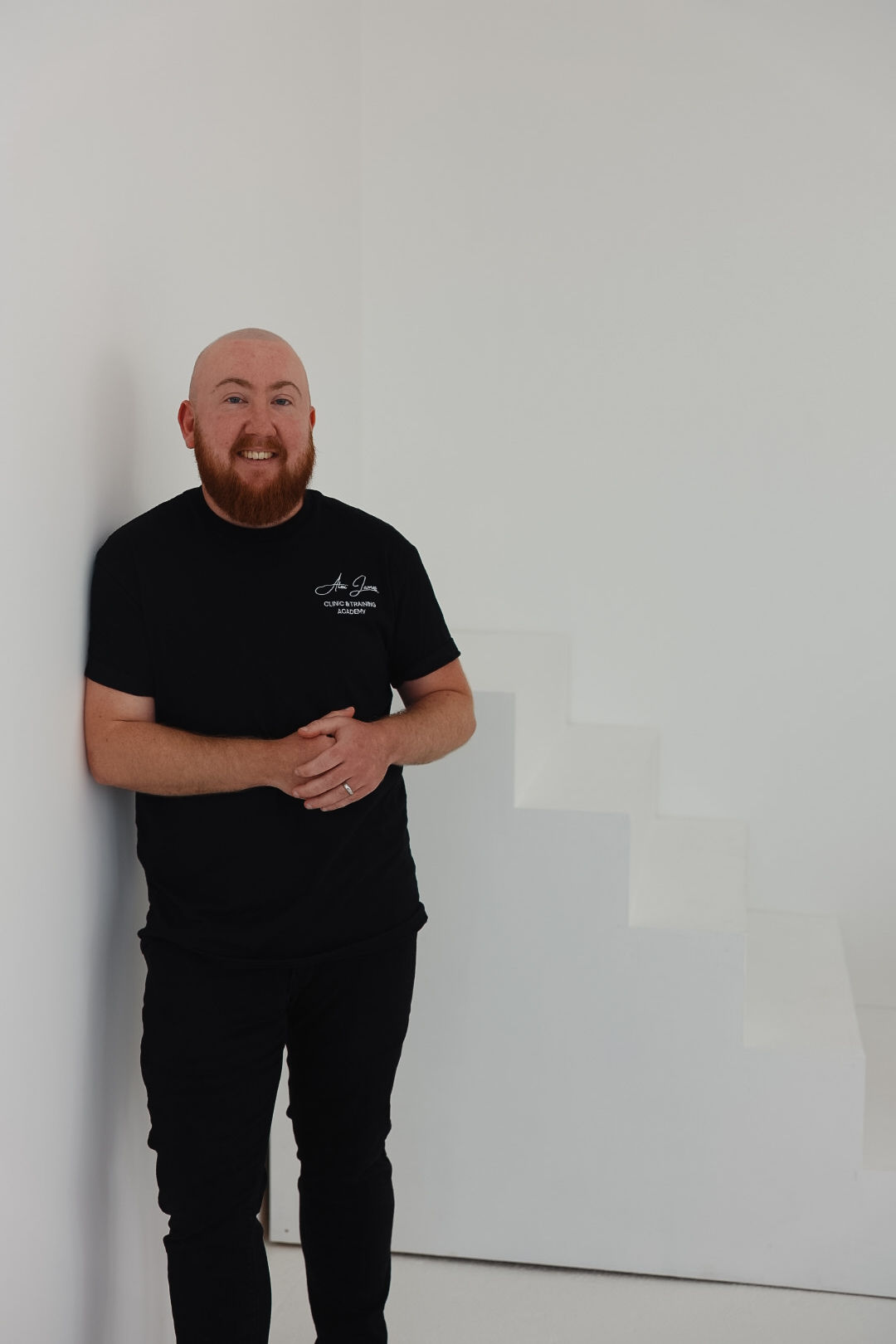
Alex began his career within the care industry before training in scalp micropigmentation. After noticing how his own mood and confidence changed after his own treatment, he pursued a career that could deliver that feeling to others permanently. Based in Crawshawbooth, Rossendale, Alex has performed hundreds of treatments for men across the North West UK and beyond. His philosophy is simple: results should look natural in daylight and boost confidence instantly.
Alex also mentors new artists through workshops, ensuring future practitioners maintain industry standards and ethical integrity.
If you’ve read through all three parts of this guide, you already know the facts. The next step is about feeling ready. Hair loss doesn’t define you—but taking control of it can redefine how you see yourself.
Book your free consultation at Alex James SMP, Manchester, today. Step into the clinic, ask every question, and leave with the clarity and confidence to move forward.