
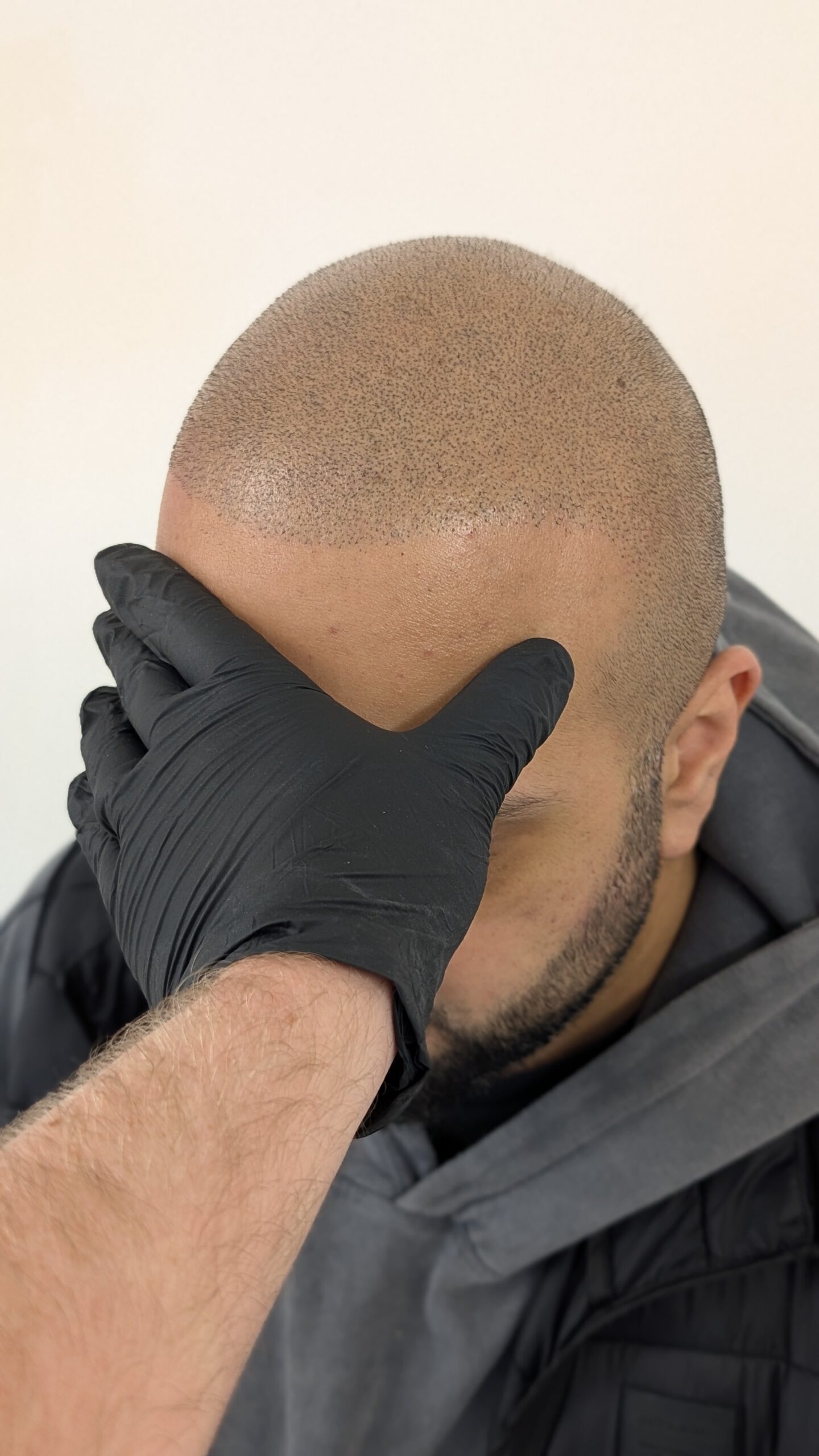
Scalp micropigmentation has grown rapidly in popularity over the last decade, offering a non-surgical solution for people experiencing hair loss, thinning, scarring or visible density issues. As awareness increases, so too do questions around safety, pain, long-term outcomes and the risk of getting it wrong.
Searches such as “is scalp micropigmentation safe”, “does scalp micropigmentation hurt” and “can scalp micropigmentation go wrong” are increasingly common — and understandably so. Scalp micropigmentation is a procedure performed on the scalp, an area that is highly visible and deeply linked to personal identity and confidence. People want to be certain they are making an informed, safe decision.
This article exists to answer those questions honestly.
Rather than presenting scalp micropigmentation as a quick cosmetic fix, this guide takes a clear, professional look at how SMP works, where it originated, what the real risks are, what causes bad or botched results, and how those risks can be avoided. It also explores the emotional impact of SMP when performed correctly, particularly in relation to confidence and self-image.
The aim is not to persuade, but to inform — so that anyone considering scalp micropigmentation can move forward with clarity rather than uncertainty.
Scalp micropigmentation, often shortened to SMP, is a cosmetic procedure that uses specialised pigments to create the appearance of hair follicles on the scalp. These micro-impressions are applied in a carefully controlled pattern to replicate the look of closely shaved hair or to increase the appearance of density in thinning areas.
Although often compared to tattooing, scalp micropigmentation is a distinct procedure with different techniques, tools and pigments. The goal is not to create bold lines or solid shapes, but to produce soft, subtle impressions that sit naturally within the scalp and mimic real hair follicles.
The roots of scalp micropigmentation can be traced back to early medical and cosmetic tattooing techniques used to camouflage scars. Over time, practitioners recognised that similar methods could be adapted to address hair loss, particularly for individuals who were not candidates for hair transplant surgery or who wanted a non-surgical alternative.
As techniques evolved, SMP became more refined, moving away from traditional tattoo equipment and inks. Modern scalp micropigmentation uses specialised pigments designed to fade gradually rather than permanently discolour, and application depths are far shallower than traditional tattooing. This evolution is central to understanding both the safety of SMP and the risks associated with poorly performed work.
Scalp micropigmentation has not always looked or behaved the way it does today. Understanding how SMP evolved helps explain both its current safety profile and why early results were often unpredictable or unnatural.
In its earliest form, scalp micropigmentation borrowed heavily from cosmetic tattooing. At the time, practitioners relied on traditional tattoo inks, deeper needle penetration and techniques designed for permanence rather than subtlety. While these early methods could provide coverage, they often aged poorly. Pigment spread, colour shift and overly bold impressions were common issues.
As demand for SMP increased, so did scrutiny. Practitioners began to recognise that the scalp behaves differently from other areas of the body and that long-term realism required a different approach. This led to the development of specialised SMP pigments designed to remain neutral over time and to fade gradually rather than permanently darken.
Modern scalp micropigmentation is the result of this evolution. Techniques are more conservative, pigment placement is more controlled, and long-term appearance is prioritised over immediate impact. This progression is one of the key reasons scalp micropigmentation safety today is significantly higher than in its early years.
Understanding this history helps explain why choosing an experienced practitioner matters so much. Modern SMP is not simply “better tattooing” — it is a refined cosmetic discipline built on lessons learned from early mistakes.
One of the most common misconceptions surrounding scalp micropigmentation is that it is simply a scalp tattoo. While both involve pigment being placed into the skin, the similarities largely end there.
Traditional tattooing deposits ink deeper into the skin and is designed to be permanent. Scalp micropigmentation, when performed correctly, places pigment at a much more superficial level. This allows the impressions to soften naturally over time and reduces the risk of colour migration or long-term distortion.
The pigments used in SMP are also formulated differently. Rather than vibrant inks intended to remain bold, SMP pigments are designed to remain neutral, reduce the risk of colour shifting and age in a more predictable way.
This distinction is crucial when discussing scalp micropigmentation safety. Many of the issues associated with bad or botched SMP stem from practitioners treating the procedure as a tattoo rather than a specialised cosmetic treatment.
Scalp micropigmentation is built around precision, restraint and planning. Each impression is placed individually, with careful consideration given to spacing, density, colour selection and overall design.
Before any pigment is applied, a professional assessment should take place. This includes evaluating the scalp condition, existing hair, skin tone and long-term hair loss pattern. Hairline design is a particularly important part of this process, as an unrealistic or poorly planned hairline is one of the most common causes of dissatisfaction.
Treatment is typically delivered over multiple sessions rather than a single appointment. This allows the pigment to be layered gradually, creating depth and realism while allowing adjustments to be made as the scalp heals and settles.
Understanding this process helps explain why scalp micropigmentation safety is closely tied to practitioner experience, patience and technique. When SMP is rushed or treated as a one-session procedure, the risk of poor outcomes increases significantly.
The scalp is a sensitive and highly visible area. Any cosmetic procedure carried out here demands a higher level of care than treatments performed on less noticeable areas of the body.
Concerns around scalp micropigmentation safety often relate to pain, infection risk, long-term appearance and the possibility of irreversible mistakes. These concerns are valid, and addressing them openly is an essential part of responsible practice.
When performed correctly, scalp micropigmentation is widely regarded as a low-risk cosmetic procedure. However, like any treatment, risks increase when it is performed by untrained individuals, with inappropriate equipment or without adequate aftercare guidance.
This is why understanding what can go wrong — and how to avoid it — is just as important as understanding the benefits.
Yes, scalp micropigmentation is considered safe when performed by a trained practitioner using appropriate pigments and conservative technique.
Most people describe SMP as mildly uncomfortable rather than painful, with sensation varying by individual and treatment area.
SMP can go wrong if carried out by untrained practitioners, with poor pigment choice or unrealistic hairline design.
No. When performed correctly, SMP does not damage hair follicles or interfere with natural hair growth.
Yes. Controlled fading over time is expected and helps results remain natural-looking.
Safety is often the first concern for anyone researching scalp micropigmentation, and rightly so. The scalp is a visible, sensitive area, and the idea of pigment being placed into the skin naturally raises questions around health, long-term effects and the possibility of complications.
When performed correctly, scalp micropigmentation is widely regarded as a safe, non-surgical cosmetic procedure. The key phrase here is when performed correctly. Safety in SMP is not just about the procedure itself, but about the standards, training and decision-making behind it.
Modern scalp micropigmentation is designed to be minimally invasive. Pigment is placed superficially within the upper layers of the skin, avoiding the deeper layers where long-term complications are more likely to occur. This shallow placement is intentional and is one of the main reasons SMP differs from traditional tattooing.
Professional practitioners also work gradually, building density over multiple sessions rather than attempting to achieve full coverage in one appointment. This allows the scalp to heal properly between sessions and reduces unnecessary trauma to the skin.
In a safe SMP procedure, hygiene protocols, sterile equipment and appropriate pigment selection all play a role. These are not optional extras — they are fundamental to reducing the risk of infection, irritation or adverse reactions. Where safety concerns typically arise is not from scalp micropigmentation as a concept, but from how it is delivered.
Scalp micropigmentation risks increase when the procedure is carried out by individuals who lack proper training or who treat SMP as a shortcut cosmetic service rather than a skilled craft.
Common risk factors include incorrect needle depth, inappropriate pigment choice and poor understanding of scalp anatomy. When pigment is placed too deeply, it can spread or blur over time, leading to an unnatural appearance. When unsuitable pigments are used, colour changes or long-term discolouration may occur.
Another overlooked risk factor is poor consultation. Without a proper assessment of skin type, scalp condition and hair loss pattern, treatments are more likely to result in outcomes that do not age well. Safety in SMP is therefore inseparable from practitioner competence. A safe procedure is one that is carefully planned, conservatively executed and adjusted over time rather than rushed.
Pain is one of the most searched questions relating to scalp micropigmentation. For many people, uncertainty around discomfort is a major barrier to moving forward. The experience of pain during SMP varies from person to person, but most clients describe the sensation as mild to moderate rather than severe. It is often compared to light scratching or a vibrating sensation on the scalp rather than sharp pain.
Several factors influence how SMP feels, including individual pain tolerance, scalp sensitivity and the area being treated. Areas with thinner skin or previous scarring may feel slightly more sensitive, while areas with thicker skin are often less noticeable.
It’s also worth noting that scalp micropigmentation sessions are typically broken into manageable time frames. Practitioners monitor comfort levels throughout the procedure and adjust as needed. The gradual, session-based approach used in professional SMP also helps minimise discomfort compared to attempting too much work in a single sitting.
For most people, anxiety around pain is greater than the reality of the experience itself.
Discomfort during scalp micropigmentation is usually short-lived. Mild redness or sensitivity can occur immediately after treatment, but this typically settles quickly. SMP does not involve deep wounds or significant trauma to the skin, which is why downtime is minimal compared to surgical procedures. The scalp is generally able to return to normal activity within a short period, provided aftercare guidance is followed.
Understanding the difference between procedural sensation and post-treatment healing helps set realistic expectations and reduces unnecessary worry.
While scalp micropigmentation is considered safe when performed properly, it is important to acknowledge that no cosmetic procedure is entirely without risk.
Potential risks associated with SMP include uneven pigment retention, premature fading, colour changes over time or an unnatural appearance if the work is poorly executed. In rare cases, infection or prolonged irritation can occur, usually as a result of inadequate hygiene or aftercare.
It is also possible for SMP to look less natural if hairline design is unrealistic or if density is built too aggressively. These issues are often the result of aesthetic judgement rather than technical failure, but they can still have a significant impact on satisfaction.
Discussing scalp micropigmentation risks openly allows individuals to make informed decisions rather than relying on overly optimistic marketing claims.
The majority of negative SMP experiences share a common thread: practitioner error. This might include poor training, limited experience or prioritising speed and cost over quality. Scalp micropigmentation is not a treatment that benefits from shortcuts. Conservative application, realistic planning and a long-term perspective are essential to achieving safe, natural-looking results.
Choosing a practitioner who understands not just how to perform SMP, but when not to push density or redesign hairlines, is one of the most effective ways to reduce risk.
Safety in scalp micropigmentation is not limited to the day of treatment. It begins with consultation and continues through treatment planning, application, aftercare and long-term expectations. A safe SMP journey involves clear communication, conservative decision-making and respect for how the scalp and pigment behave over time.
When safety is approached as a process rather than a box to tick, scalp micropigmentation becomes a far more predictable and reassuring option.
Safety in scalp micropigmentation is not limited to the day of treatment. It begins with consultation and continues through treatment planning, application, aftercare and long-term expectations.
A safe SMP journey involves clear communication, conservative decision-making and respect for how the scalp and pigment behave over time. When safety is approached as a process rather than a box to tick, scalp micropigmentation becomes a far more predictable and reassuring option.
One of the most misunderstood aspects of scalp micropigmentation safety is how pigment interacts with the skin over time. Many concerns — including fears about follicle damage, pigment spread or blurred results — stem from not understanding how the scalp is structured.
The scalp consists of multiple layers, with hair follicles anchored deeper beneath the surface. The scalp heals in stages, with pigment settling gradually as the skin renews itself, a process well documented in dermatological research. Proper SMP placement occurs in the upper layers of the skin, well above the follicle base. When applied correctly, pigment does not interfere with hair growth or damage follicles.
Problems arise when pigment is placed too deeply. Deeper placement increases the likelihood of pigment migration, where impressions lose their sharp edges and begin to blur. This is one of the most common causes of bad scalp micropigmentation.
Pigment behaviour is also influenced by skin type, oil production and lifestyle factors such as sun exposure. Modern SMP techniques account for these variables, adjusting pigment choice and application density accordingly.
This is why scalp micropigmentation safety is closely tied to depth control and restraint. Conservative application protects both the appearance of the work and the health of the scalp.
One of the most significant risk factors in scalp micropigmentation is inadequate training. SMP is a specialised skill that sits at the intersection of technical precision and aesthetic judgement. It cannot be mastered quickly, nor should it be treated as an add-on service without proper expertise.
Untrained practitioners may lack understanding of correct needle depth, pigment behaviour or scalp anatomy. This can lead to impressions being placed too deeply, causing pigment to spread or blur over time. Once this happens, the result can look unnatural and be difficult to correct.
Training quality matters just as much as training duration. Practitioners who have only practised on artificial skin or a limited number of models may not yet understand how SMP behaves on real scalps over time.
Pigment selection plays a critical role in both the safety and longevity of scalp micropigmentation. Pigments designed for SMP are formulated to fade gradually and remain neutral as they age. Problems arise when inappropriate pigments are used. These may include tattoo inks or poorly formulated products that can change colour over time, turning blue, green or grey. Once colour shift occurs, correcting it can be complex and may require laser removal.
Poor pigment choice is often linked to cost-cutting or lack of knowledge rather than intent. However, the long-term consequences are the same regardless of the reason.
Hairline design is one of the most visible aspects of scalp micropigmentation and one of the most common causes of dissatisfaction. An unrealistic hairline can instantly draw attention and make SMP look artificial. This may include hairlines that are too straight, too low, too sharp or not appropriate for the individual’s age or facial structure.
A safe, professional approach to SMP prioritises subtlety and longevity. Conservative hairline design allows results to age naturally and remain believable over time. When practitioners prioritise immediate visual impact over realism, the risk of regret increases.
Another common mistake in scalp micropigmentation is building density too quickly. While clients often want strong coverage, pushing too much pigment into the scalp in early sessions increases the risk of blotchy results and poor healing.
Professional SMP is built gradually. Layering pigment across multiple sessions allows the practitioner to assess how the scalp responds and make adjustments accordingly. Rushing this process can compromise both safety and aesthetics. Over-saturation is difficult to reverse and is a frequent reason people seek SMP removal or correction later on.
Aftercare plays a significant role in how scalp micropigmentation heals and settles. Without clear aftercare instructions, even well-executed SMP can heal unevenly or fade unpredictably. Common aftercare mistakes include excessive sweating, sun exposure, early washing or using unsuitable products on the scalp. These issues are often preventable with proper guidance and follow-up. Practitioners who fail to provide detailed aftercare instructions — or who downplay their importance — increase the likelihood of avoidable complications.
Pricing alone does not determine quality, but extremely low prices can be a warning sign. SMP requires time, skill, professional-grade equipment and quality pigments. When pricing seems unusually low, it is worth questioning what corners may be being cut. Another red flag is unrealistic promises. Claims of instant results, one-session treatments or “permanent” outcomes should be approached with caution. Scalp micropigmentation is a gradual process that relies on careful layering and long-term planning.
A professional approach to SMP focuses on education and expectation management rather than guarantees.
In many cases, bad scalp micropigmentation is not the result of SMP being unsafe, but of poor decision-making at the outset. Rushed consultations, inadequate training and unrealistic expectations all contribute to negative outcomes. Understanding these common causes empowers individuals to ask better questions, choose practitioners more carefully and approach SMP with realistic expectations.
In cases where SMP has been poorly performed, scalp micropigmentation removal or lightening may be required before correction can take place. For further information on our Laser SMP removal, please click the link below.
Avoiding poor outcomes with scalp micropigmentation is largely about preparation, education and decision-making. While the technical execution of SMP rests with the practitioner, the choices made beforehand play a significant role in determining the final result. People who experience positive, natural-looking outcomes with SMP tend to share one thing in common: they approached the process thoughtfully rather than impulsively.
Scalp micropigmentation is not a treatment that benefits from quick decisions. Spending time researching how SMP works, what realistic results look like and how pigment behaves over time creates a stronger foundation for making informed choices. This includes looking beyond marketing images and understanding the process itself. Knowing that SMP is built gradually, fades naturally and requires long-term thinking helps prevent disappointment later on. A well-informed client is far less likely to be dissatisfied, regardless of the treatment outcome.
Location and availability are often factors when choosing a practitioner, but they should not outweigh experience and competence. Scalp micropigmentation is a craft that improves with time and exposure to different scalp types, hair loss patterns and skin behaviours. Practitioners with extensive experience are more likely to recognise when to be conservative, when to pause treatment and when to advise against certain design choices altogether. Choosing experience over convenience is one of the most effective ways to reduce the risk of botched SMP.
A consultation should feel like a conversation, not a sales pitch. This is the opportunity to ask questions about technique, pigments, session structure and aftercare. Practitioners who welcome questions and explain their approach clearly demonstrate confidence in their work. Hesitation, vague answers or reluctance to discuss potential risks should be treated as warning signs. A professional consultation should leave you feeling informed, not pressured.
Before-and-after images can be useful, but they should be interpreted carefully. Lighting, camera angles and freshly applied pigment can make results appear more dramatic than they will look once healed. A realistic assessment focuses on healed results and long-term appearance rather than immediate impact. Practitioners who are transparent about how SMP settles over time are more likely to deliver outcomes that age well.
Conservative hairline design and gradual density building are often signs of a practitioner prioritising safety and realism. While subtle results may feel underwhelming initially, they are far more likely to remain natural-looking over time. Understanding that SMP is designed to blend, not dominate, helps set realistic expectations and reduces the likelihood of regret.
People researching scalp micropigmentation safety are often comparing it to other hair loss solutions, whether consciously or subconsciously. Understanding how SMP fits into the wider hair restoration landscape helps clarify whether it is the right option.
Hair transplant surgery offers biological hair regrowth but involves surgery, recovery time and varying success depending on donor supply. SMP, by contrast, is non-surgical and does not rely on existing hair growth.
Medications may slow hair loss for some individuals but often require long-term use and can produce inconsistent results. SMP does not alter hair growth but provides a visual solution that remains stable regardless of future loss.
Cosmetic fibres and concealers can offer temporary improvement but require daily maintenance and may not hold up in active or wet conditions. SMP provides a more permanent visual consistency.
Understanding these distinctions reinforces realistic expectations and reduces dissatisfaction. Scalp micropigmentation works best when chosen for what it is — a visual solution rather than a biological one.
Healing plays an important role in scalp micropigmentation safety and satisfaction. Immediately after treatment, the scalp may appear darker or more pronounced than the final healed result. This is normal and temporary.
In the first few days, mild redness or sensitivity may occur. As the scalp heals, pigment begins to soften and settle into the skin. This settling phase is why SMP is performed over multiple sessions — it allows density to be adjusted gradually rather than guessed.
Over the following weeks, impressions become lighter and more natural in appearance. This controlled fading is intentional and allows for refinement in subsequent sessions.
Understanding this timeline helps reduce anxiety and prevents unnecessary concern that results are “too light” or “fading too fast.” When expectations align with reality, satisfaction increases significantly.
While much of the discussion around scalp micropigmentation focuses on technical execution, its psychological impact is equally important. Hair loss can subtly influence confidence, social behaviour and self-perception over time.
When SMP is performed conservatively and safely, it often restores a sense of normality rather than drawing attention. Clients frequently report feeling less preoccupied with their appearance and more comfortable in social settings.
This psychological benefit is closely linked to realism. Overly bold or unnatural SMP can have the opposite effect, increasing self-consciousness rather than reducing it. This is why safety, restraint and long-term thinking are essential components of good SMP practice.
Scalp micropigmentation is most successful when it enhances confidence quietly rather than demanding attention.
Beyond technical considerations, scalp micropigmentation has a profound emotional impact when performed correctly. Hair loss can affect self-image, confidence and how people present themselves in social and professional settings.
For many, SMP offers a sense of control and normality. By restoring the appearance of hair density or a defined hairline, SMP can help reduce self-consciousness and allow individuals to engage more comfortably in everyday life. Confidence restoration is not about perfection. It is about feeling more like yourself again.
The most positive confidence outcomes occur when expectations are aligned with reality. SMP does not recreate hair, but it can effectively replicate the appearance of hair follicles and density when viewed at normal social distances. When clients understand what SMP can and cannot do, satisfaction tends to be higher. This clarity allows people to appreciate the improvement without fixating on limitations. Confidence gained through SMP is often subtle but meaningful, influencing posture, social engagement and personal comfort.
When scalp micropigmentation is performed thoughtfully and safely, its benefits often extend beyond appearance. Reduced anxiety around hair loss, improved self-esteem and greater ease in social situations are commonly reported. This long-term psychological benefit reinforces why safety, planning and realistic design matter so much. SMP is not just about how it looks on day one, but how it makes someone feel over time.
Scalp micropigmentation works best when approached as a considered, informed decision rather than a last-minute solution. Understanding the process, acknowledging the risks and choosing the right practitioner all contribute to a safer, more satisfying outcome. When SMP is treated with the respect it deserves, it can be a powerful tool for restoring confidence without compromising safety.
Scalp micropigmentation at Alex James Clinic is carried out by experienced practitioners with specialist training in SMP techniques, pigment behaviour and scalp anatomy. Treatments are performed in a professional clinical environment with a strong focus on safety, conservative design and long-term results.
The clinic takes a measured, education-led approach to scalp micropigmentation, ensuring each client receives realistic guidance, thorough consultation and ongoing support throughout their SMP journey.
Scalp micropigmentation is considered safe when performed by a trained, experienced practitioner using appropriate pigments and correct technique. Most safety concerns arise from poor training, incorrect pigment depth or inadequate aftercare rather than the procedure itself.
Most people describe scalp micropigmentation as mildly uncomfortable rather than painful. Sensation varies depending on individual sensitivity and the area treated, but discomfort is typically short-lived and manageable.
Scalp micropigmentation risks can include uneven pigment retention, premature fading or an unnatural appearance if the procedure is poorly executed. These risks are significantly reduced with proper consultation, conservative design and professional application.
When performed correctly, scalp micropigmentation does not damage hair follicles or cause hair loss. Pigment is placed superficially in the skin and does not interfere with natural hair growth.
No, scalp micropigmentation does not stimulate or regrow hair. SMP is a cosmetic procedure that creates the appearance of hair follicles on the scalp, helping improve the look of density and coverage rather than affecting hair growth itself. This clear distinction is important, as scalp micropigmentation works visually rather than biologically.
Yes, scalp micropigmentation can go wrong if carried out by an untrained practitioner or if unrealistic expectations are encouraged. Common causes include poor pigment choice, incorrect depth and unnatural hairline design.
Bad scalp micropigmentation may appear overly dark, blurry, patchy or unnatural. Sharp, straight hairlines or colour changes over time are also common indicators of poorly performed SMP.
Yes, scalp micropigmentation is designed to fade gradually. Controlled fading allows the appearance to remain soft and natural, with optional maintenance sessions available if required.
In many cases, poorly performed scalp micropigmentation can be corrected or lightened, often using laser removal techniques. The success of correction depends on pigment depth, colour and the condition of the scalp.
Avoiding bad SMP starts with choosing an experienced practitioner, attending a thorough consultation and accepting conservative, realistic design choices. Proper aftercare and patience throughout the process also play a key role.
Results vary depending on skin type, lifestyle and pigment choice, but SMP typically lasts several years before gradual softening occurs. This predictable fading is considered a safety feature rather than a flaw.