Alex James SMP

tattoo-removal-training-course

Tattoo Removal Training Course: Complete Guide Before You Train

If you’re thinking about offering laser tattoo removal, you’re probably juggling a lot of questions at once:

What exactly happens on a tattoo removal training course?

Do I need previous experience or qualifications?

Is there real demand, or is this just another over-hyped treatment?

Will I feel confident actually using a laser on real clients afterwards?

This guide is designed to answer all of these. It focuses on a CPD-accredited Laser Tattoo Removal Training Course based in a real working clinic in the North West, with:

  • Online Level 3 Anatomy & Physiology included
  • Laser Core of Knowledge included
  • Hands-on training with live models
  • Small group sizes for maximum support
  • Machine-included and training-only options
  • Ongoing WhatsApp and Facebook group support
  • Transparent, competitive pricing and finance options

Throughout this section, we’ll use the language people actually type into Google – terms like tattoo removal training course, laser tattoo removal course, tattoo removal classes, tattoo removal certification, and train to do laser tattoo removal – but we’ll keep things natural, human and easy to follow.

Table of Contents

What a Tattoo Removal Training Course Actually Involves


A lot of courses throw around phrases like “fully comprehensive” and “industry leading” without ever explaining what you’ll actually do during the training. A good, modern tattoo removal training course should cover three core areas:

  1. Theory – understanding skin, lasers, and safety
  2. Practical skills – actually using the laser on real tattoos
  3. Business readiness – how to turn your training into a real service

Let’s break those down.

Theory – more than just “reading a manual”

The theory side isn’t there to bore you. It’s there to keep you and your clients safe, and to make sure you know why you’re doing what you’re doing.

You should expect theory modules on:

  • Basic skin anatomy and physiology
  • Pigmentation and how ink behaves in the skin
  • Laser physics – wavelength, fluence, spot size, pulse duration (in plain English)
  • Different types of tattoos (professional, amateur, cosmetic, SMP, traumatic)
  • Fitzpatrick skin types and what that means for treatment
  • Contraindications – when you shouldn’t treat
  • Potential side effects and how to minimise risks

With a course that includes Level 3 Anatomy & Physiology and Core of Knowledge online, you’re not just getting a “nice to have” certificate. You’re building the theoretical foundation that insurers and councils increasingly expect practitioners to have.

Practical skills – where confidence is really built

The theory is what gets you insured and compliant. The practical training is what makes you feel confident to pick up the handpiece and actually start treating clients.

On a quality laser tattoo removal course, you should expect:

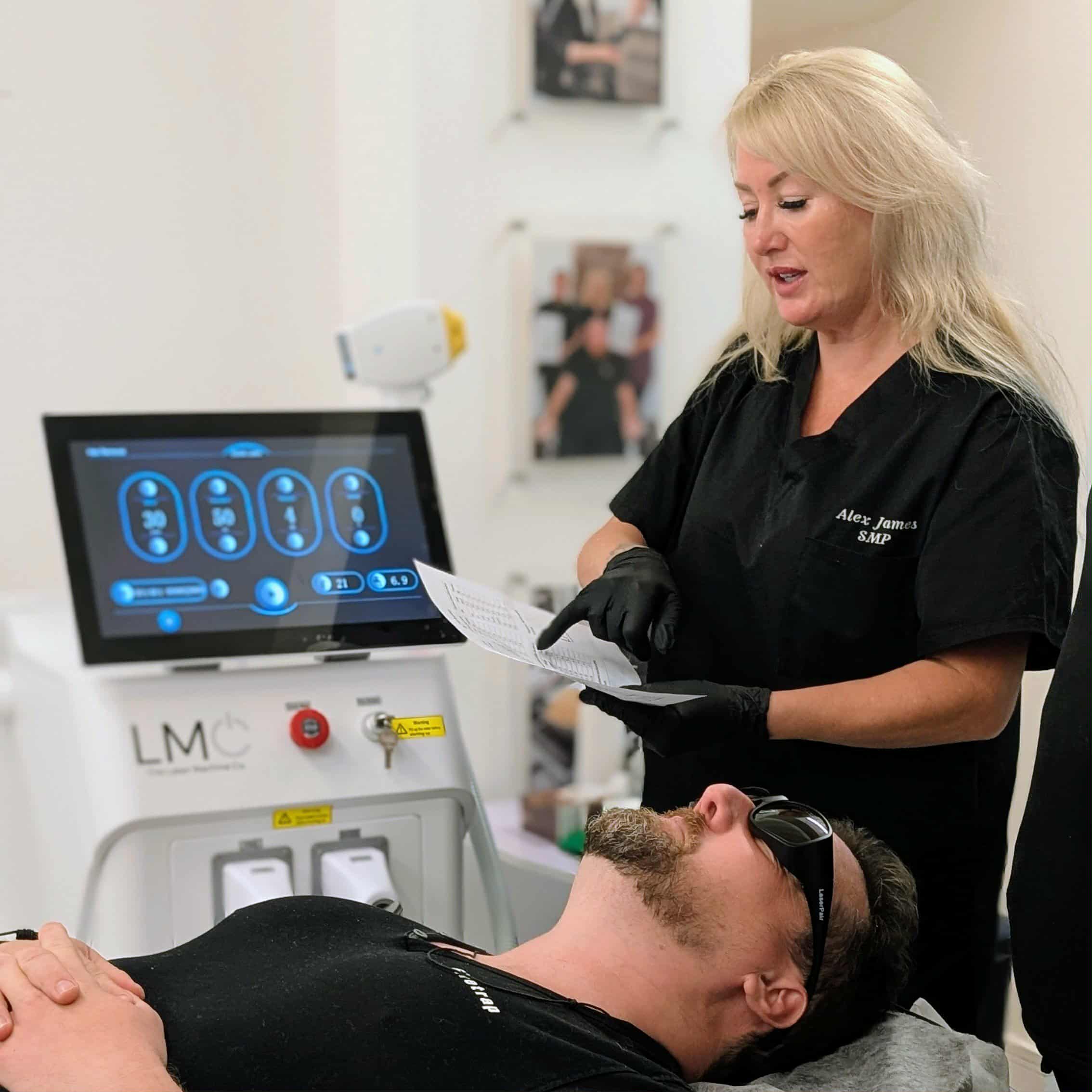
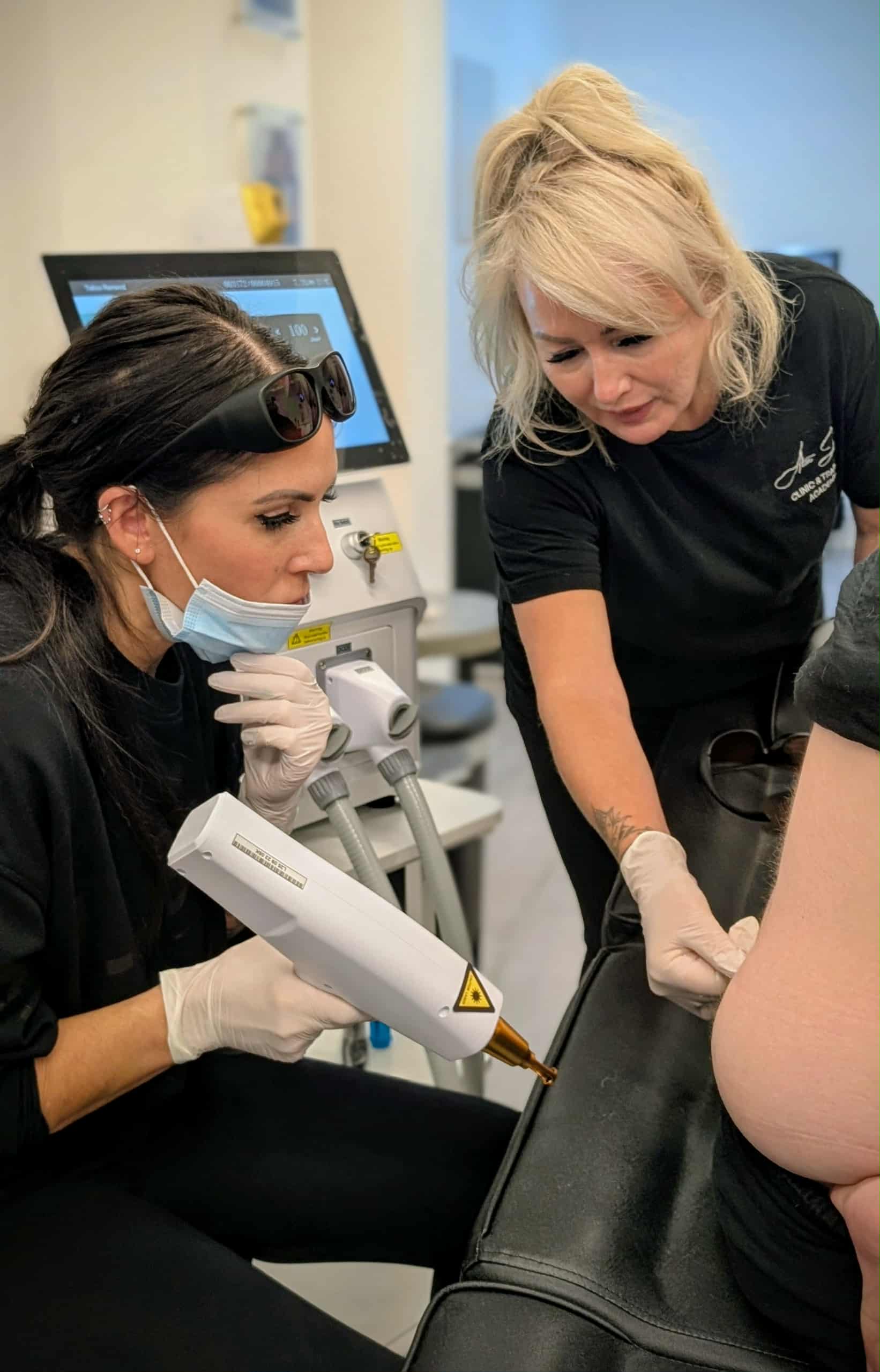
  • Training in a real working clinic, not a purely classroom environment
  • Small groups so you’re not fighting for laser time
  • Live models, not just demo treatments you watch from the corner
  • Time to practice full consultations, including medical history and consent
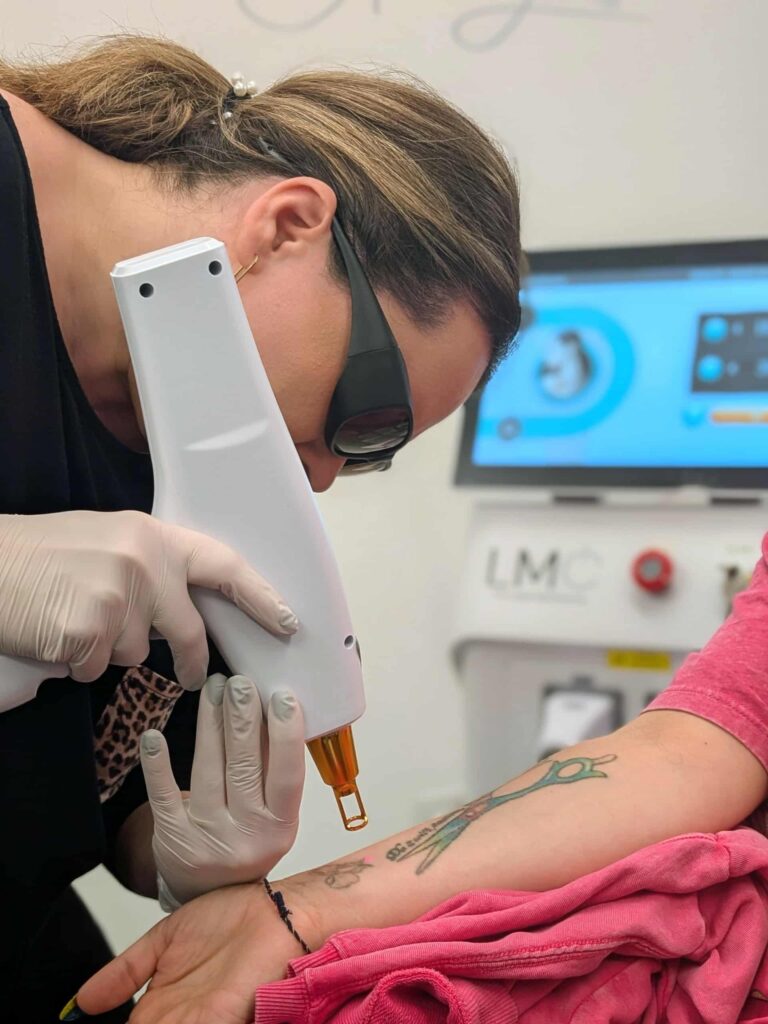
  • Hands-on experience adjusting laser settings under supervision
  • Practice on different body areas and tattoos of different ages/colours
  • Feedback on your body position, technique and communication style

This is where small groups really matter. It’s hard to build genuine confidence if you’re one of 8–10 people and only get a couple of short turns on the laser.

Business readiness – often overlooked, but essential

Most people don’t train just to collect certificates – they train to offer a service and earn from it. A strong tattoo removal training course doesn’t stop at “here’s how a laser works”. It also prepares you for:

  • The consent forms and aftercare information you’ll need
  • Insurance recommendations
  • A consumables list with links (goggles, dressings, gels, etc.)
  • Basic pricing structures and how to think about profitability
  • How to talk about tattoo removal with your existing clients
  • Simple, beginner-friendly marketing using tools like Canva

You don’t need a full marketing degree. But you do need to know how to present your new laser tattoo removal service clearly and professionally, both in person and online.

Why Laser Tattoo Removal Is One of the Fastest-Growing Aesthetic Careers


Every tattoo tells a story. The reality is: not all those stories age well. People change careers, relationships, tastes, lifestyles, and confidence levels. Old tattoos, ex-partner names, heavy blackwork, faded ink or poorly done cosmetic tattoos can all start to feel like a burden.

That’s where laser tattoo removal comes in. A treatment that fits both correction and aesthetics. Laser tattoo removal isn’t just about erasing ink. It supports:

  • People who regret old tattoos
  • Clients who want to lighten a tattoo for a cover-up
  • Those who want to remove parts of a design, not the whole thing
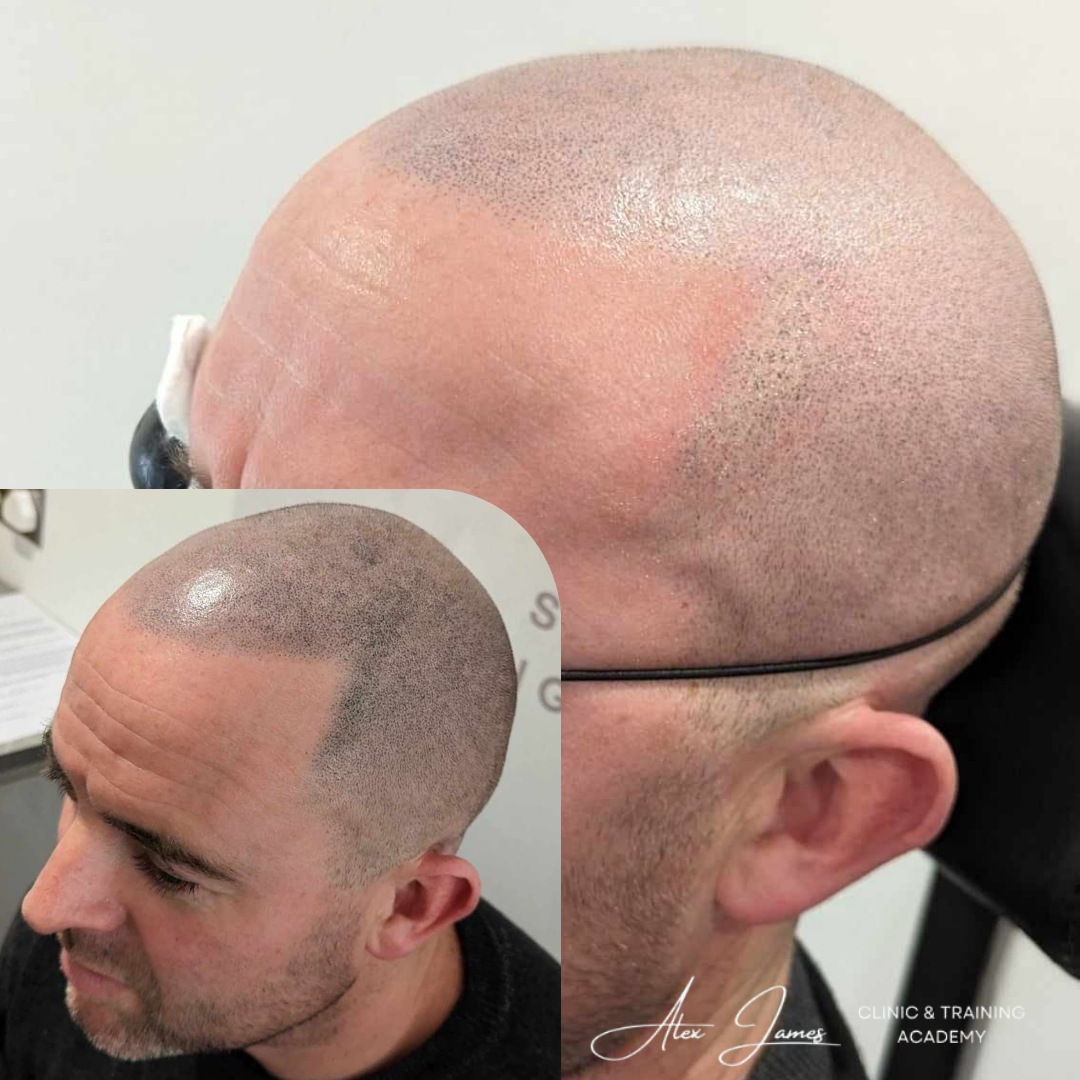
  • Correction of poor SMP or cosmetic tattoos
  • People who want to make their appearance match who they are now

For clinics already offering:

  • Brows, lips or permanent makeup
  • SMP (scalp micropigmentation)
  • Skin or aesthetic treatments
  • Laser hair removal
  • Body contouring or beauty services

…a laser tattoo removal course adds a service that naturally fits client demand.

Why it’s attractive for practitioners

From a practitioner’s point of view, tattoo removal is appealing because:

  • You can integrate it into an existing clinic or beauty business
  • You can build a client base around your current services
  • Many clients need multiple sessions, bringing repeat business
  • It doesn’t require a huge number of products or consumables
  • It can be combined with other aesthetic services for higher-value packages

When you’ve trained in a real working clinic, seen live client journeys, and understood how tattoo removal fits into the full service offering, it stops feeling like an abstract “add-on” and starts feeling like a solid, long-term income stream.

Who a Tattoo Removal Training Course Is For

One of the biggest questions people ask before enrolling is: “Is this course actually for someone like me?” It’s a fair question. Let’s make it simple.

  1. Existing beauty therapists

If you’re already in the beauty or aesthetics world, a tattoo removal training course can:

  • Add a high-value, technical service to your clinic
  • Help you stand out from other local therapists
  • Give you a way to help clients who regret certain procedures or tattoos
  • Provide an income stream that doesn’t rely on daily product costs

You also have the advantage of experience in client care, which carries over beautifully into laser work.

  1. Clinic owners expanding into laser

If you own or manage a clinic and want to expand your treatment list, laser tattoo removal is an obvious fit, especially if you already offer:

  • Laser hair removal
  • Skin rejuvenation
  • SMP or cosmetic tattooing
  • Advanced skin or body treatments

A comprehensive laser tattoo removal course equips you (or your team) with; practical laser skills, the documentation and protocols you need, a path to implement the treatment safely and profitably.

  1. New practitioners and career changers

Thanks to the included online Level 3 Anatomy & Physiology and Core of Knowledge, a good course can also support those who:

  • Are new to aesthetics but serious about building a career
  • Want to train to do laser tattoo removal as a new income stream
  • Are prepared to study, practice, and follow protocols carefully

You don’t need to have years of experience in beauty to get started. You do need a genuine interest in skin and safety, the ability to communicate clearly with clients, and a willingness to keep learning and updating your knowledge.

If that sounds like you, tattoo removal can be a realistic, structured way into the world of laser and aesthetics. For further information or to register your interest use the link below.

Understanding Laser Tattoo Removal in Simple Terms

You don’t need to become a physicist to become a laser tattoo removal practitioner. But you do need to understand the basics. A good laser tattoo removal training course should explain the technical bits in a way that feels logical, not overwhelming.


How laser tattoo removal actually works


In simple terms:

  1. The laser produces a very controlled, very fast beam of light.
  2. That light is attracted to the tattoo pigment in the skin.
  3. The pigment absorbs the energy and shatters into much smaller particles.
  4. The body’s lymphatic system gradually carries those particles away.
  5. With each session, more pigment is broken down, and the tattoo fades.

Different colours respond better to different wavelengths, which is why you’ll hear about:


  • Q-switched Nd:YAG lasers
  • Wavelengths like 1064nm (for darker pigments and deeper ink)
  • 532nm (for reds and some brighter colours)

Advanced courses may also cover pico technology and how it compares, but the fundamentals are the same: controlled light, absorbed by pigment, broken down safely.


Why skin type matters

On your course, you’ll learn to assess Fitzpatrick skin type – a scale from I to VI based on how someone’s skin reacts to sun exposure.


This matters because:

  • Darker skin types contain more melanin, which also absorbs laser light.
  • The higher the melanin, the more carefully you need to select settings.
  • Used correctly, a laser can treat a wide range of skin types safely – but knowledge is key.

This is where the combination of:

  • Level 3 Anatomy & Physiology
  • Core of Knowledge
  • Supervised practice on live models

…all come together to keep your treatments safe and effective.

What Qualifications You Really Need to Start

A common concern is: “Am I even allowed to offer laser tattoo removal?”

The exact regulations can vary by area, but there are some consistent expectations across insurers and councils.

Typical expectations include:

A relevant theory qualification – such as Level 3 Anatomy & Physiology

Laser Core of Knowledge – covering laser safety, physics and hazards

A practical tattoo removal training course where you have used the laser under supervision

Evidence of competency, not just attendance

That’s why a structured CPD-accredited tattoo removal certification that includes; Online Level 3 Anatomy & Physiology, Core of Knowledge, practical, hands-on laser tattoo removal training – puts you in a much stronger position than a course offering only a single in-person day with minimal theory.

Accreditation and CPD

When your tattoo removal training course is CPD accredited, it signals; the content has been reviewed and structured to a clear standard, there is an expectation of quality and consistency, the training hours and learning outcomes can be recognised professionally.

While no single accreditation is a magic key to everything, CPD accreditation, plus solid theory and practical training, is exactly the sort of combination insurers look for.

Online Theory: Level 3 A&P and Core of Knowledge Explained

One of the advantages of a modern laser tattoo removal course is being able to complete part of your learning online before you even step into the clinic.

This is where Level 3 Anatomy & Physiology and Core of Knowledge come in.

Level 3 Anatomy & Physiology

This online module will walk you through:

  • The structure of the skin and deeper tissues
  • How the circulatory and lymphatic systems work
  • How the body responds to injury and healing
  • The basics of infection control and client safety

Even if you’ve worked in beauty for years, Level 3 A&P often fills in the gaps and strengthens your understanding. If you’re new to the industry, it gives you the theoretical backbone you’ll lean on in every treatment.

Core of Knowledge

The Core of Knowledge is laser-specific and typically covers:

  • Laser and IPL physics
  • Beam characteristics and how they interact with tissue
  • Hazards and risks (to skin, eyes, and environment)
  • Safety controls, warning signs, PPE and safe working practices
  • Legal responsibilities and local requirements

When this is included with your tattoo removal training course, you’re not left scrambling to find separate theory modules. You get a complete learning journey from first principles to confident practice.

Tattoo Removal Training Course vs Tattoo Removal Classes

You’ll see lots of different wording online:

  • Tattoo removal training course
  • Laser tattoo removal course
  • Tattoo removal classes
  • Workshops or intro sessions

They sound similar, but they don’t always offer the same depth.

What “classes” often mean

“Tattoo removal classes” can sometimes mean:

  • Short, introductory sessions
  • Taster days with heavy demonstration and limited hands-on time
  • Non-accredited learning
  • Minimal support after the day is over

These might suit someone who just wants to see what tattoo removal looks like, but not someone who wants to legitimately offer it as a professional service.

What a full course provides

A structured tattoo removal training course, especially one that:

  • Is CPD accredited
  • Includes online Level 3 A&P
  • Includes Core of Knowledge
  • Uses live models
  • Has small group sizes
  • Offers ongoing support via WhatsApp and a dedicated Facebook group

This gives you a recognised tattoo removal certification, a clear path to insurance, the confidence to actually treat paying clients, a foundation to build a real service and business.

For most serious practitioners and clinic owners, a full course makes far more sense than a one-off class.

How to Train to Do Laser Tattoo Removal With No Experience


If you’ve never worked with lasers – or even never worked in beauty – the idea of using a powerful piece of equipment on a client’s skin can feel daunting. That’s normal. A well-designed laser tattoo removal course expects some students to be beginners and builds the journey accordingly.

Step 1: Complete your online theory

You’ll first work through: Level 3 Anatomy & Physiology / Core of Knowledge

You can usually do this at your own pace, from home, fitting it around work or family commitments. This step makes sure that when you arrive at the clinic, you already understand the basics of skin structure, how lasers interact with tissue and safety protocols.

Step 2: Attend the in-clinic training days

On your in-person training day, you’ll:

  • Recap the most important theory in a live setting
  • Watch demonstrations performed by experienced trainers
  • Begin with guided hands-on practice
  • Progress to more independent treatments under supervision

Because the groups are small, there’s space to ask the “silly” questions (they’re never silly), repeat techniques until they feel natural, and build step-by-step confidence rather than being thrown in at the deep end.

Step 3: Use the ongoing support

Once you’ve completed your tattoo removal training course, you’re not left alone. Ongoing support channels such as: WhatsApp, private Facebook communities for trainees, or optional refresher days, with or without models for an extra cost – mean you can:

  • Ask about unusual tattoos or tricky cases
  • Get another professional opinion on settings or aftercare
  • Share results and learn from other practitioners
  • Keep your skills sharp months and years after training

This is especially valuable if you’re starting from scratch. You’re not expected to know everything on day one – you’re given the tools, guidance and community to grow into the role.

Safety, Contraindications and Client Suitability

Tattoo removal can produce impressive transformations, but it must always be approached with safety first.

A serious tattoo removal training course spends a significant amount of time on:

  • Client screening
  • Medical history
  • Contraindications
  • Informed consent

Common contraindications you’ll learn about

You’ll cover situations where treatment may be:

  • Not recommended at all, or
  • Delayed / modified until it’s safe

This can include:

  • Certain skin conditions or infections in the area
  • Uncontrolled medical conditions
  • Pregnancy in many protocols
  • Recent sun exposure or fake tan on the area
  • Use of specific medications that affect healing or photosensitivity

You’ll learn how to:

  • Ask the right questions during consultation
  • Spot red flags in medical history
  • Explain clearly to a client why a treatment isn’t suitable yet

Saying “no” or “not now” is a sign of a responsible practitioner, not a failing.

Patch testing and expectations

You’ll also be trained in:

  • Performing patch tests with appropriate settings
  • Observing the skin’s immediate and short-term response
  • Explaining realistic expectations (number of sessions, possible outcomes)

Many clients come with unrealistic hopes: complete removal in one or two sessions, no change in skin texture at all, or expecting old, deep, multi-layered tattoos to vanish as if they were never there. Your training will prepare you to set clear, honest expectations, so your clients feel informed rather than misled.

How Long Does a Tattoo Removal Training Course Take?


Course structures can vary between providers, but for this Laser Tattoo Removal Training Course the journey looks like:

  1. Pre-course online learning (Level 3 Anatomy & Physiology and Core of Knowledge)
  2. One in-clinic practical training day
  3. Post-course support and optional half-day or full-day refresher sessions for an additional fee

Online portion

The Level 3 Anatomy & Physiology and Core of Knowledge are usually completed online before you attend. This may take anywhere from a few days to a few weeks, depending on your pace.

The benefit is that you can:

  • Study in your own time
  • Revisit modules as often as you like
  • Arrive at the clinic ready to focus on practical work

In-clinic training

For this particular laser tattoo removal course, the in-person training is delivered over one focused day, with optional half-day and full-day refresher sessions available if you’d like additional supervised practice later. During that time, you’ll typically move through:

  • Recap of key theory (skin, lasers, safety)
  • Demonstration treatments on live models
  • Guided practice, where the trainer is right beside you
  • More independent practice, as your confidence grows
  • Discussions about real-case scenarios, pricing, and clinic workflow

Because the groups are small, these days are intense but focused – you’re hands-on, not just sitting in a classroom.

Ongoing and refresher options

After completing your one-day Laser Tattoo Removal Training Course, you’ll have the option to book additional half-day or full-day refresher sessions. These refresher sessions are offered at an extra cost and are ideal for students who want additional supervised practice, model treatments, or support with more advanced cases.

These options are especially helpful if:

  • You’ve had a break in treating and want to feel sharp again
  • You encounter more complex tattoos and want guidance
  • You’re about to invest in a new machine and want extra support

How Much Does Laser Tattoo Removal Training Cost & What You’re Paying For

Prices for a tattoo removal training course can vary widely, and that can be confusing. Some providers charge very high fees for branding alone. Others keep prices low but cut corners on:

  • Time on the laser
  • Support after the course
  • Class sizes
  • Real clinic exposure

A transparent training provider will be clear about:

  • What’s included in the price
  • Whether a machine is included or optional
  • Whether online theory modules are bundled in
  • The length of the in-clinic training
  • The level of support you’ll get afterwards

What you’re actually paying for

When you invest in a quality laser tattoo removal course, your fee goes towards:

  • Comprehensive online theory (Level 3 A&P + Core of Knowledge)
  • Time in a real working clinic
  • Use of professional-grade lasers and equipment
  • Small group teaching, so you’re genuinely supported
  • The time and expertise of experienced trainers (laser and SMP/aesthetic specialists)
  • Live models for realistic, supervised practice
  • Written documentation (consent forms, aftercare templates, etc.)
  • Access to ongoing support channels after you qualify
  • Options for finance, making training accessible without huge upfront costs

While it can be tempting to chase the cheapest option, training is the part you want to get right the first time. A slightly higher investment in the right course often saves you money later in:

  • Avoided mistakes
  • Reduced refund / complaint risk
  • Less need to retrain elsewhere

Travelling to Training: Manchester, Lancashire and the North West


Location matters more than people often realise, especially if you’re travelling in for a tattoo removal training course from other parts of the UK. A clinic based in Lancashire, close to Manchester and serving the wider North West, offers a practical middle ground:

  • Accessible from many parts of the UK
  • Easier travel links than very rural locations
  • Less overwhelming than city-centre hotspots like Deansgate, which may not match the true base of the clinic

This gives you options whether you’re:

  • Driving in and needing straightforward parking
  • Travelling by train and hopping across from Manchester
  • Coming from other regions for a trusted, hands-on laser tattoo removal course

The goal is for your training days to feel focused and manageable, not like a logistical nightmare.

Common Fears & Myths About Training – Honest Answers

Almost everyone considering a tattoo removal training course shares at least one of these worries:


“What if I’m not technical enough?”

“What if I hurt someone?”

“What if I spend all this money and can’t get clients?”

“What if I freeze when I pick up the laser?”


These are normal. A responsible training provider expects these fears and addresses them directly.


Myth 1: “You need to be naturally technical to use a laser”

You don’t need to be an engineer. You do need; a willingness to learn how settings relate to outcomes, respect for protocols and safety guidelines, the patience to follow structured training, and not improvise. A good laser tattoo removal course translates the technical side into practical, repeatable steps you can follow.


Myth 2: “Tattoo removal is too dangerous”

Like any advanced treatment, tattoo removal can be dangerous if done by untrained hands with no understanding of safety. That’s exactly why you train properly. With:


Core of Knowledge

Solid understanding of skin and healing

Clear contraindication screening

Supervised hands-on practice with live models

Ongoing access to trainer support

…you minimise risks and handle complications correctly if they ever arise.


Myth 3: “There are already too many practitioners doing this”

The aesthetics industry is crowded in places, but tattoo removal remains a very practical, problem-solving treatment: Tattoos aren’t going away. Regrets aren’t going away. Poor work by inexperienced artists isn’t going away.


Clients don’t just search for “tattoo removal”. They search for: Someone they trust, a clinic that looks professional, practitioners with clear training and certification, places that show genuine before and after results.


A strong tattoo removal certification, good before-and-after work, and clear, honest communication set you apart from day-one “have-a-go” operators.

Bringing It All Together

By now, you should have a much clearer picture of what a tattoo removal training course actually involves:

  • Theory that keeps you safe (Level 3 A&P + Core of Knowledge)
  • Hands-on practice in a real working clinic using professional lasers
  • Live models, small group sizes and genuine trainer support
  • A CPD-accredited tattoo removal certification that insurers recognise
  • Ongoing support via WhatsApp, Facebook groups and optional refresher tiers at an extra cost.
  • Realistic guidance on client suitability, pricing, and running the treatment in your own business

In the next section of this guide, you can go even deeper into:

  • The day-by-day breakdown of the laser tattoo removal course
  • The specific machine options and how to choose them
  • Advanced techniques, case studies and practitioner stories
  • How to take your training and turn it into a busy, profitable service

For now, this first section has one main purpose:

To help you decide, with calm confidence, whether training in laser tattoo removal is the right next step for you and your clinic – and what you should expect from any course claiming to prepare you for it.


Laser Tattoo Removal Course Training: Hands-On Skills, Machine Knowledge & Real Clinic Experience

The real value of a laser tattoo removal course isn’t just in the certificate you receive at the end — it’s in how confidently you can walk into your own clinic, switch on your machine, and treat real clients safely. This section focuses on what actually happens during a one-day Laser Tattoo Removal Training Course in a real working clinic, and how optional half-day and full-day refreshers help you keep building confidence over time.


We’ll cover:

  • What your one training day looks like
  • How much genuine hands-on laser time you get
  • How you’ll learn to use your machine properly
  • How optional (paid) refresher sessions fit into your long-term development
  • How this differs from shorter “tattoo removal classes” that offer only surface-level experience

Training in a Real Working Clinic (Not Just a Classroom)

Your Laser Tattoo Removal Training Course is delivered inside a real, working laser and aesthetics clinic, not a generic classroom or hired meeting room.

That matters because you don’t just learn theory — you experience the full environment:

  • Where the machine sits and how it’s set up
  • How the room is prepared before each client
  • How clients are greeted, consulted and reassured
  • How the practitioner moves around the couch and manages space
  • How PPE, goggles, signage and safety procedures work in real life

When you see and feel all of that in one intense training day, it becomes much easier to imagine how tattoo removal will fit into your own clinic or business.

What Happens on Your One-Day Laser Tattoo Removal Course

Although it’s only one day in-clinic, it’s a full, focused, structured day – and remember, the heavy theory (Level 3 Anatomy & Physiology and Core of Knowledge) is completed online beforehand.

That means the in-clinic day is all about applying what you already know.

A typical one-day laser tattoo removal course will include:

  1. Welcome & Theory Recap

You’ll start with a concise recap of the essentials:

  • Skin structure and tattoo ink behaviour
  • How Q-switched lasers and wavelengths work
  • Safety protocols, patch testing and contraindications
  • Fitzpatrick skin typing and why it affects your settings

Because you’ve already completed Level 3 A&P and Core of Knowledge online, this part isn’t about teaching everything from scratch — it’s about cementing the key points and connecting them to what you’re about to do with real clients.

  1. Machine Orientation & Safety Walkthrough

Next, you’ll spend time getting comfortable with the laser itself. This is where a good laser tattoo removal course stands out.

You’ll cover:

  • The main components of the machine
  • How to power on and shut down safely
  • Laser key control and interlocks
  • Changing wavelengths (e.g. 1064nm, 532nm)
  • Adjusting settings like fluence and spot size
  • Safety checks before every treatment

The goal is to make the machine feel like a tool you understand — not something intimidating you’re afraid to touch.

You’ll also revisit:

  • Eye protection for practitioner, client & any observers
  • Warning signage and controlled area requirements
  • How to position your laser and couch safely
  1. Live Demonstration on a Model

Before you start treating clients yourself, you’ll watch a full demonstration treatment carried out by an experienced practitioner.

During the demo, you’ll see:

  • A complete consultation and medical history review
  • Fitzpatrick assessment and tattoo analysis
  • Patch testing and real-time skin response
  • How the practitioner talks to the client during treatment
  • The pace, overlap and pattern of laser passes
  • How frosting should look when it’s ideal
  • Immediate aftercare and dressing

This is where theory becomes real, and you’re encouraged to ask questions throughout:

  • “Why did you choose that setting?”
  • “Would you treat this differently on darker skin?”
  • “How many sessions would you expect for this tattoo?”
  1. Your Hands-On Practice on Live Models

This is where the course becomes truly practical.
The small group size means you’re not standing at the back waiting for a 30-second turn.

You’ll:

  • Perform consultations under guidance
  • Conduct patch tests on your model(s)
  • Set up the laser with supervision
  • Carry out full treatment passes under the trainer’s eye

You’ll receive real-time feedback on:

  • Your handpiece grip
  • Your distance from the skin
  • Your treatment pace
  • The quality of frosting you’re achieving
  • Your communication and reassurance style

Because this is a one-day course, the day is structured so that you spend as much time as possible actually treating, not just watching.

The goal by the end of the day is that:

  • Holding the laser feels comfortable
  • You understand what an ideal pass looks like
  • You can recognise when settings are appropriate
  • You know what safe skin responses look like
  1. Working With Different Tattoo Types (Within the Day)

Even within a single training day, the clinic will typically organise multiple models with varying tattoo types so you’re not just treating one simple piece and going home.

You may encounter:

  • Old, faded black tattoos
  • Fresh or denser black ink
  • Small linework pieces
  • Larger blocks or fill
  • Amateur vs professional tattoos

You’ll see how each responds differently and adjust your technique with trainer support.

Long-term, you’ll build on this experience. But this one day gives you a solid foundation of real, practical exposure.

  1. Documentation, Aftercare & Running the Service

Towards the end of the day, there’s time devoted to the practicalities of running tattoo removal as a service, including:

  • Consent and medical history forms (templates provided)
  • Aftercare instructions you can give to your own clients
  • Session spacing and treatment planning
  • Photographing results professionally
  • Insurance recommendations and what insurers look for
  • Basic pricing structure guidance (without giving fixed numbers)

You’re not just trained as a technician — you’re prepared to offer a complete, professional service from the moment you launch.

How the Combination Course Fits In

For practitioners who want to combine laser tattoo removal with other advanced treatments, extended two-day combination courses are also available — but this guide focuses entirely on the core one-day Laser Tattoo Removal Training Course.

Optional Half-Day & Full-Day Refresher Sessions

While the core laser tattoo removal course is completed in one in-clinic day, not all learning stops there.

Some practitioners like to come back once they’ve:

  • Treated a few clients
  • Encountered more complex tattoos
  • Bought or upgraded their machine
  • Had a break from treating and want to sharpen skills again

That’s where optional half-day and full-day refresher sessions come in.

What a refresher might include:

  • Reviewing cases you’ve treated since qualifying
  • Troubleshooting any tricky scenarios you’ve encountered
  • Additional practice on new models
  • Going deeper into advanced settings and tattoo types
  • Extra confidence-building with your technique
  • Opportunity to ask higher-level questions once you’ve gained experience

These refreshers are ideal if:

  • You had a busy period, then a gap, and want to feel fully confident again
  • You’re seeing more SMP or cosmetic tattoo cases and want extra guidance
  • You’ve invested in a new laser and want to refine your use of it
  • You simply want more supervised treatments under your belt

Because they’re half-day or full-day, they’re flexible around your schedule and focused heavily on your real-world needs. All refresher sessions are optional and booked separately at an additional cost.

How This Differs from Generic “Tattoo Removal Classes”

It’s easy to confuse a structured tattoo removal training course with basic “tattoo removal classes” you might see advertised online.

Often, “classes” are:

  • Short sessions with heavy demonstration, little practice
  • Non-accredited and theory-light
  • Not conducted in fully equipped, real clinics
  • Lacking post-course support

By contrast, your Laser Tattoo Removal Training Course offers:

  • Pre-course Level 3 Anatomy & Physiology
  • Pre-course Core of Knowledge
  • A full in-clinic day of structured, guided, hands-on training
  • Practice on live models, not just observation
  • Small groups to maximise your laser time and support
  • A recognised tattoo removal certification on completion
  • Access to WhatsApp and Facebook group support
  • Optional half-day and full-day refresher options

That’s a very different learning experience — and it’s the kind that sets you up to practise safely and confidently.

Machine Options & Support: Training-Only vs Machine-Included

Within this one-day course framework, you still have flexibility in how you set yourself up afterwards.

You can choose between:

✔ Training-Only

Ideal if you already have a suitable laser or plans to purchase one separately.

Your training focuses on skill, safety, and technique — and you then integrate those skills into your existing equipment set-up.

✔ Machine-Included

Ideal if you want a complete ready-to-go solution, a machine that matches what you trained on, clear support on settings, servicing and usage, a smoother path from training room to treatment room.

When a machine is included and recommended by your trainer, you eliminate a lot of guesswork and reduce the risk of buying unsuitable or unsafe equipment.

Either way, your tattoo removal training course gives you the knowledge you need to use a professional laser properly — and your ongoing support channels help you as you continue to grow.

Ongoing Community & Support After Your One-Day Course

Because the in-person part of the training is one day, what happens after matters just as much. You’re not expected to know everything immediately. That’s why you’re supported through:

  • WhatsApp ongoing support – for quick questions, photos and advice
  • Facebook group for trainees – to share experiences and learn from others
  • Optional refresher sessions – half-day or full-day, with or without models

This structure means your one-day laser tattoo removal course isn’t a “one-and-done” experience — it’s the start of an ongoing, supported journey.

You’ll always have somewhere to bring:

  • Photos of unusual tattoos
  • Questions about settings
  • Healing results to review
  • Business and pricing queries

This is one of the biggest differences between a cheap, generic class and a professional tattoo removal training course designed to create confident, long-term practitioners.

How to Build a Successful Laser Tattoo Removal Career: From Your First Clients to a Fully Booked Clinic

Training is only the beginning.
Once you complete your tattoo removal training course, the real journey starts — turning your new qualification into income, confidence, and a thriving service that your clients trust. This final section focuses on what comes after your training day:

How to use your new tattoo removal certification professionally

How to set up your treatment space

How to attract your first clients

What to charge

How to train to do laser tattoo removal as a new career

How to grow into a fully booked clinic

How to handle challenges, pricing, marketing, and ongoing development

Whether you’re an established beauty / aesthetics professional or new to the industry, this guide will show you how realistic, achievable and profitable tattoo removal can become — especially when you’ve trained in a clinic that gives ongoing support.

The Tattoo Removal Career Path: Where You Fit in the Industry

Laser tattoo removal sits in a sweet spot within the aesthetic industry:

  • High demand
  • Low consumables
  • Repeat clients
  • Clear visual results
  • Predictable treatment plans
  • No need for medical training

After completing a laser tattoo removal course, practitioners generally fall into one of these paths:

  1. Beauty or Aesthetic Therapists Adding a High-Value Service

If you already offer treatments such as:

  • Laser hair removal
  • Skin treatments
  • Cosmetic tattooing
  • PMU (brows/lips)
  • SMP
  • Body contouring

…tattoo removal fits naturally into your business model.

You already understand consultation, skin behaviour, hygiene and client care — tattoo removal simply builds on that foundation.

  1. Clinic Owners Expanding Their Range

Tattoo removal is ideal for studios that already offer:

  • Brows and PMU
  • SMP
  • Microblading
  • Laser hair removal
  • Barbering or male grooming services
  • Piercing or tattoo studios

It brings in a completely new client base that often blends with existing services.

  1. New Practitioners Looking for a Fresh Career Path

Because your course includes:

  • Level 3 Anatomy & Physiology
  • Core of Knowledge
  • A full tattoo removal certification

…it provides the entire foundation a beginner needs to enter the aesthetics industry safely.
People join from backgrounds like:

  • Hospitality
  • Retail
  • Customer care
  • Healthcare
  • Hairdressing
  • Tattooing

As long as you can communicate well and follow protocols, you can train to do laser tattoo removal as a complete beginner.

  1. Tattoo Artists Wanting to Offer Removal or Lightening

Many tattoo artists want to:

  • Lighten tattoos before cover-ups
  • Remove small mistakes
  • Attract more complex cover-up clients
  • Offer a service competitors don’t

Tattoo removal is an increasingly common add-on for studios looking to modernise their offering.

  1. SMP Artists Adding Correction Services

This is a major growth area.

SMP studios often receive:

  • Botched SMP corrections
  • Too-dark previous work
  • Faded or uneven SMP
  • Clients wanting a fresh canvas

Being able to safely fade or remove SMP opens a valuable revenue stream.

Income Potential: What Tattoo Removal Practitioners Really Earn

Prices vary across the UK, so instead of using fixed figures (which can date an evergreen article), we’ll look at how the income structure works, based on typical practitioner patterns.

  1. Tattoo removal generates repeat business

Most tattoos require multiple sessions — often between 3 and 12.

That means a single client can represent:

  • Consistent appointments
  • Predictable income
  • A long-term relationship with your clinic
  1. Small tattoos = frequent mini-appointments

These are quick sessions, and while individually low in cost, they often stack up into excellent repeat income.

  1. Large tattoos = high-value appointments

Bigger areas take longer and are priced accordingly.

  1. Lightening work (PMU, brows, SMP)

Many clients only want partial fading — these sessions are usually shorter and highly profitable.

  1. No expensive consumables

Unlike filler, aesthetics consumables, or skincare, tattoo removal requires very little:

  • Goggles
  • Cooling
  • Dressings
  • Basic PPE

Your biggest cost is your time.

  1. A realistic example

A typical practitioner might treat:

  • 5–15 tattoo removal clients per week
  • Many on repeat cycles
  • Sessions often 10–20 minutes long
  • Majority booked in ongoing courses

Even at conservative pricing, the cumulative income is strong.

Tattoo removal can become:

  • A side income
  • A core service
  • Or the main focus of your clinic

The flexibility is one of the reasons the service is so popular for career changers.

Where to Work: Clinic, Studio, Home Treatment Room or Rented Space?

Your training prepares you to work in different environments depending on your goals.

Here are the common setups.

  1. Professional Clinic or Aesthetic Studio

Perfect if you already run a beauty or laser business.

Your clients:

  • Trust a clinical setting
  • Appreciate privacy
  • Expect professionalism

Tattoo removal fits naturally beside other services.

  1. Tattoo or PMU Studio

Tattoo artists use laser removal to improve their cover-up options. Clients are already tattoo-focused, making this a smart environment for the service.

  1. SMP Clinic

SMP and removal go hand-in-hand for correction work.

  1. Home or Garden Treatment Room

Suitable if:

  • You follow all safety protocols
  • You have a dedicated, professional space
  • You are insured
  • You have proper ventilation and PPE

Many new practitioners start here and move to rented premises later.

  1. Renting a Room in an Existing Business

This is an extremely popular route:

  • Low overheads
  • No long-term commitment
  • Built-in client base
  • Weekly income without the risk of starting solo

What to Charge: How to Structure Your Pricing the Right Way

Tattoo removal can be priced in several ways, such as:

  • By tattoo size
  • By time
  • By appointment length
  • Block-booking discounts
  • Multi-session packages

Your tattoo removal training course gives you guidance on structuring pricing in a way that is:

  • Fair
  • Competitive
  • Realistic
  • Easy for clients to understand

But the most important thing is:

Avoid underpricing yourself.
Tattoo removal is a skilled, technical treatment backed by proper certification and training. Clients pay not just for laser time — but for your expertise, your safety protocols, and your understanding of skin and healing.

Setting Up Your Space: Simple, Accessible and Professional

You don’t need a huge or overly clinical room to offer tattoo removal — but you do need to follow correct setup standards.

During your training and support process, you’ll learn:

✔ Room layout

Where the couch, laser, trolley, PPE and signage should go.

✔ Safety requirements

Such as goggles, controlled area signage, and machine positioning.

✔ Hygiene standards

Including sharps disposal if necessary, cleaning, and equipment care.

✔ Documentation

Keeping records of patch tests, aftercare, treatment notes, photos, consent forms.

✔ Lighting and photography

Good before-and-after photos are critical for marketing and client trust.

How to Attract Your First 10 Clients After Certification

Most practitioners worry about this part more than the technical training. You’re not alone. Here’s a clear, beginner-friendly plan for attracting your first clients after completing your laser tattoo removal course.

  1. Launch your Google Business Profile (GBP)

This is the #1 tool for local discovery. You’ll be found for terms like:

  • “tattoo removal near me”
  • “laser tattoo removal Lancashire”
  • “tattoo removal Manchester”

Your tutor can help guide you on best practices.

  1. Use simple Canva graphics

Your course already introduces you to Canva. With free templates, you can create: Before/after layouts, highlight cards, FAQ visuals, price structure overviews. You don’t need design experience.

  1. Post consistently on social media

Focus on Instagram, Facebook & TikTok. People love transformation content.

  1. Use model offers sensibly

For example: “Discounted first session for new clients” or “Reduced price for those willing to be photographed for training portfolio”. Only at the beginning — you won’t need this forever.

  1. Ask friends and family to share your content

This sounds simple, but it works.

  1. Use local community groups

With professional wording — not spammy advertising.

  1. Cross-promote with other practitioners

Especially tattoo artists and SMP technicians.

Building Trust Through Results, Not Hype

After your tattoo removal certification, your best marketing tool is:

Your results.

Clients care far more about real outcomes than flashy branding.

Your training teaches you how to:

  • Photograph tattoos professionally
  • Capture correct lighting
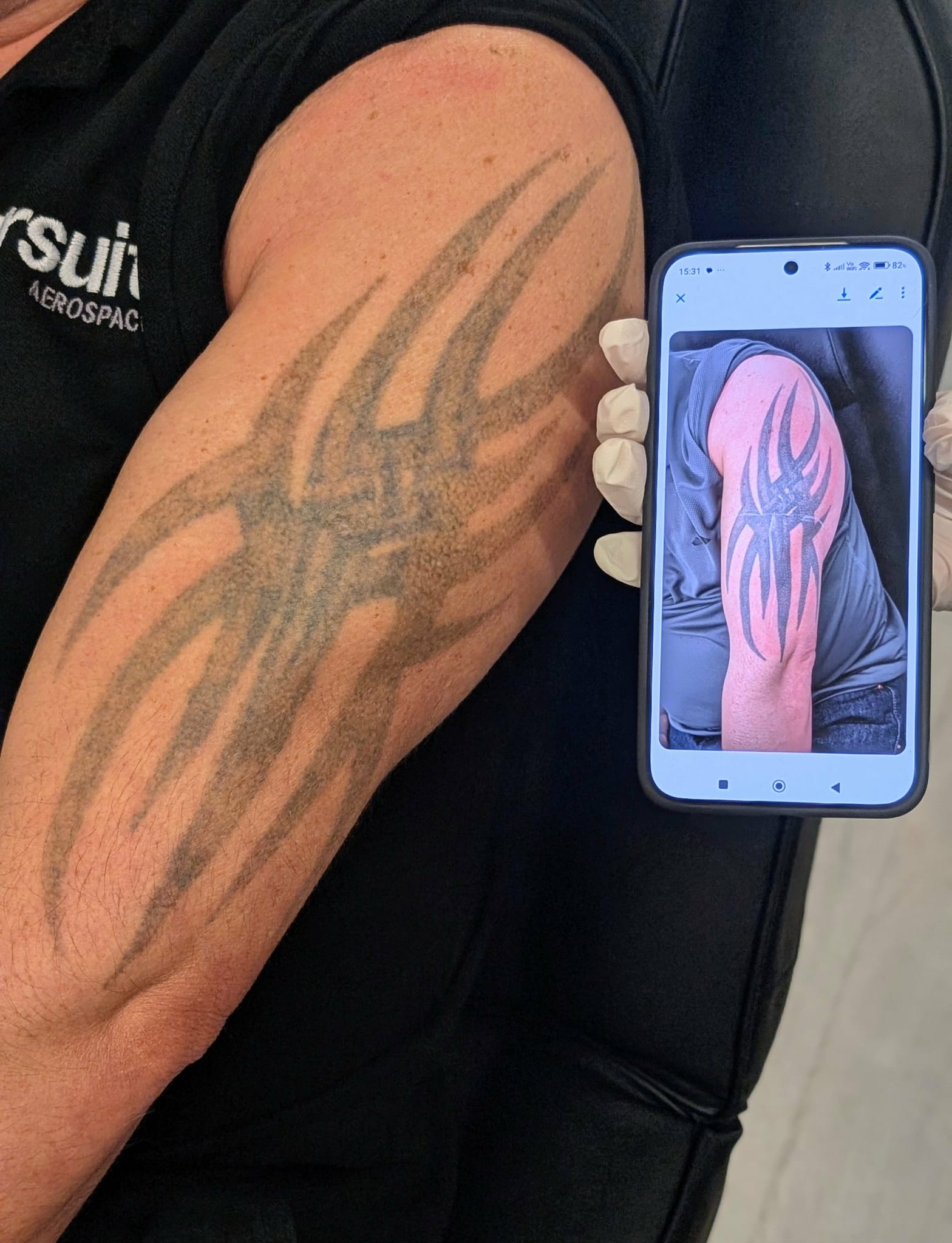
  • Show realistic session-by-session progress
  • Avoid misleading or exaggerated edits

As your portfolio grows, so will your enquiries.

Avoiding Common Beginner Mistakes

Here are errors new practitioners sometimes make (and how your ongoing support prevents them).

❌ Misjudging skin type

This can lead to inappropriate settings.
You were trained to assess Fitzpatrick properly — trust your method.

❌ Treating too aggressively

High fluence doesn’t make results faster.
Patience = safety.

❌ Ignoring aftercare

This can lead to poor healing or complaints.
Always give written and verbal instructions.

❌ Undercharging

Tattoo removal is a skilled technical service.
Clients value safe, competent practitioners.

❌ Not documenting everything

Photos and treatment notes protect you and help build your portfolio.

How Your Ongoing Support Helps You Grow

This is where your training provider truly stands out.

After your training day, you receive:

✔ WhatsApp support

Send photos, ask questions, get guidance in real time.

✔ Facebook community

Learn from other students and share your experiences.

✔ Optional refresher sessions (half-day or full-day, at an additional cost)

Perfect if you want more supervised treatments, support with complex tattoos, a confidence boost, or a skills refresh after a break. This support system is one of the strongest indicators of long-term success.

Most practitioners who stay connected and ask questions regularly grow faster, gain confidence sooner, and avoid the mistakes many self-taught or poorly trained practitioners make.

When to Consider Advanced Training or Future Progression

As you gain experience, you may eventually consider:

  • Combination courses
  • Additional aesthetic lasers
  • Cosmetic tattoo removal
  • SMP correction and blending
  • Scar camouflage
  • Advanced pigmentation treatments

Laser tattoo removal is an excellent starting point because it builds: Technical confidence, Laser handling skills, a strong client base, and a high-value service reputation. The more you grow, the more opportunities open up.

Final Thoughts: Your Path to a Successful Laser Tattoo Removal Career

By the time you’ve completed:

  • Your online Level 3 Anatomy & Physiology
  • Your Core of Knowledge
  • Your one-day practical laser tattoo removal course
  • Your hands-on practice on live models
  • Your ongoing support through WhatsApp and Facebook

…you have everything you need to build a real, sustainable career.

Tattoo removal isn’t a trend. It isn’t a seasonal treatment. It isn’t tied to fashion cycles. It solves a real problem that people will always have: Tattoos they want gone — safely, professionally, and confidently.

With your tattoo removal certification, your practical experience, and your commitment to learning and growing, you’re stepping into a career that can be financially rewarding, personally fulfilling, highly flexible and genuinely life-changing for your clients.

Welcome to Alex James SMP

Check out our Blog Page for more useful and informative SMP articles.