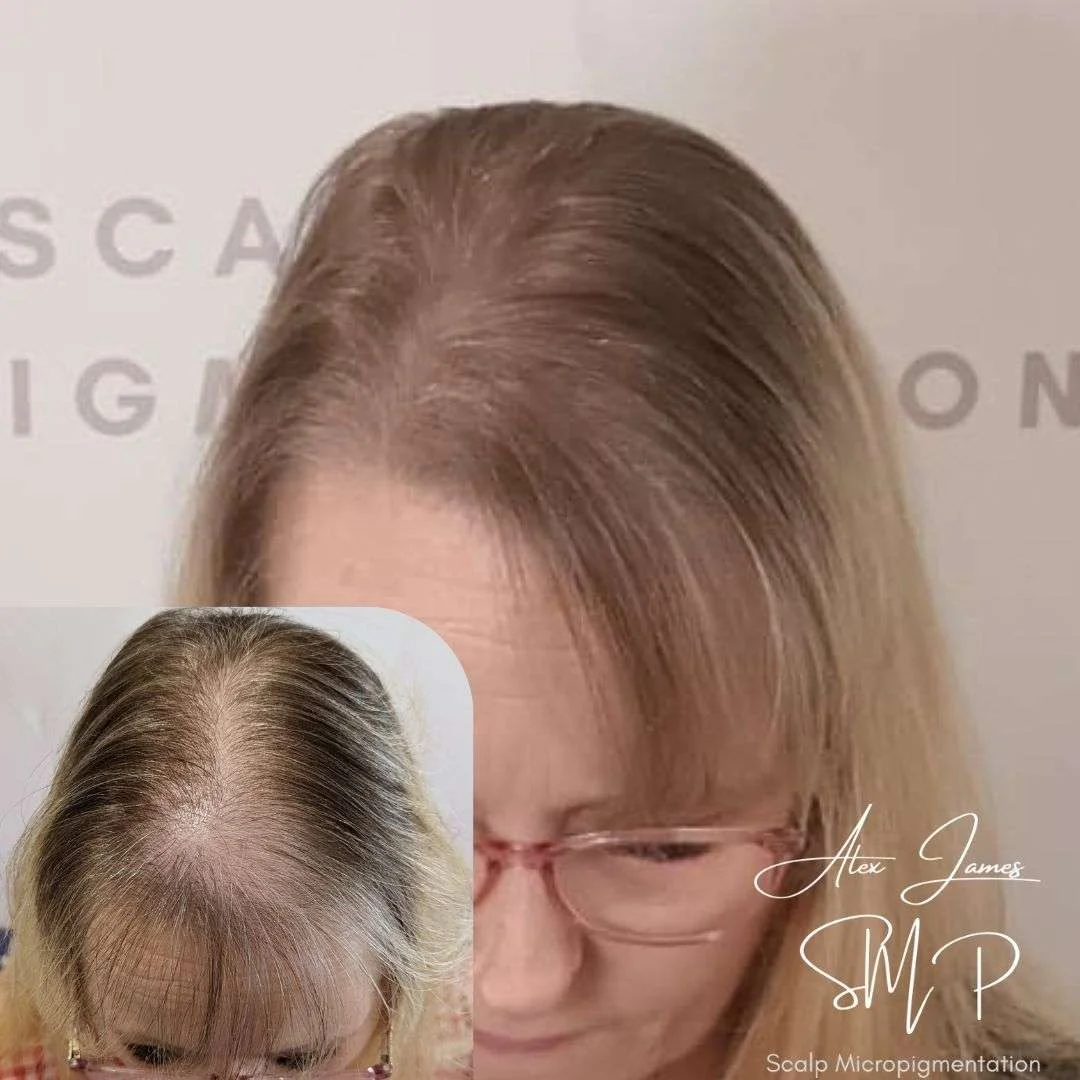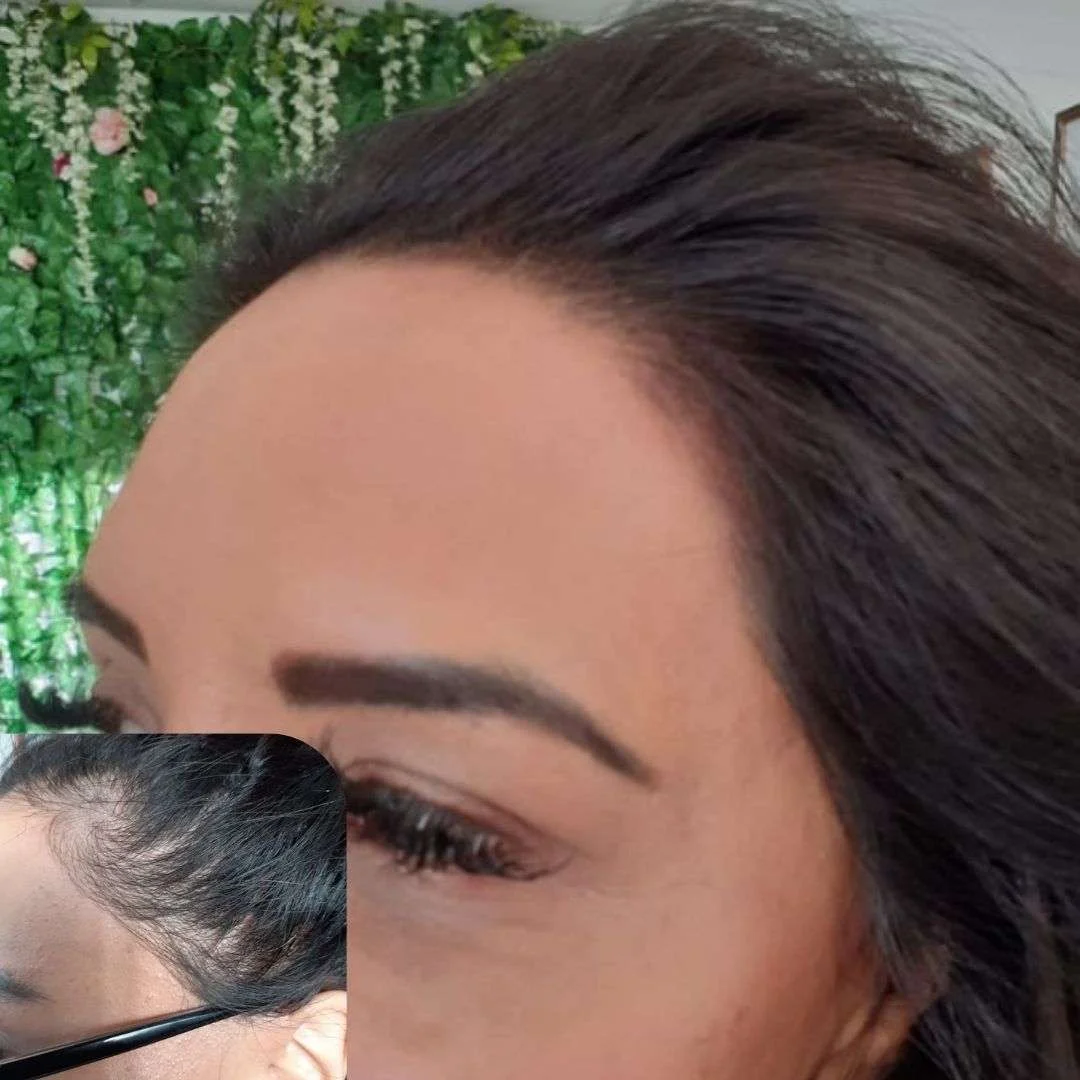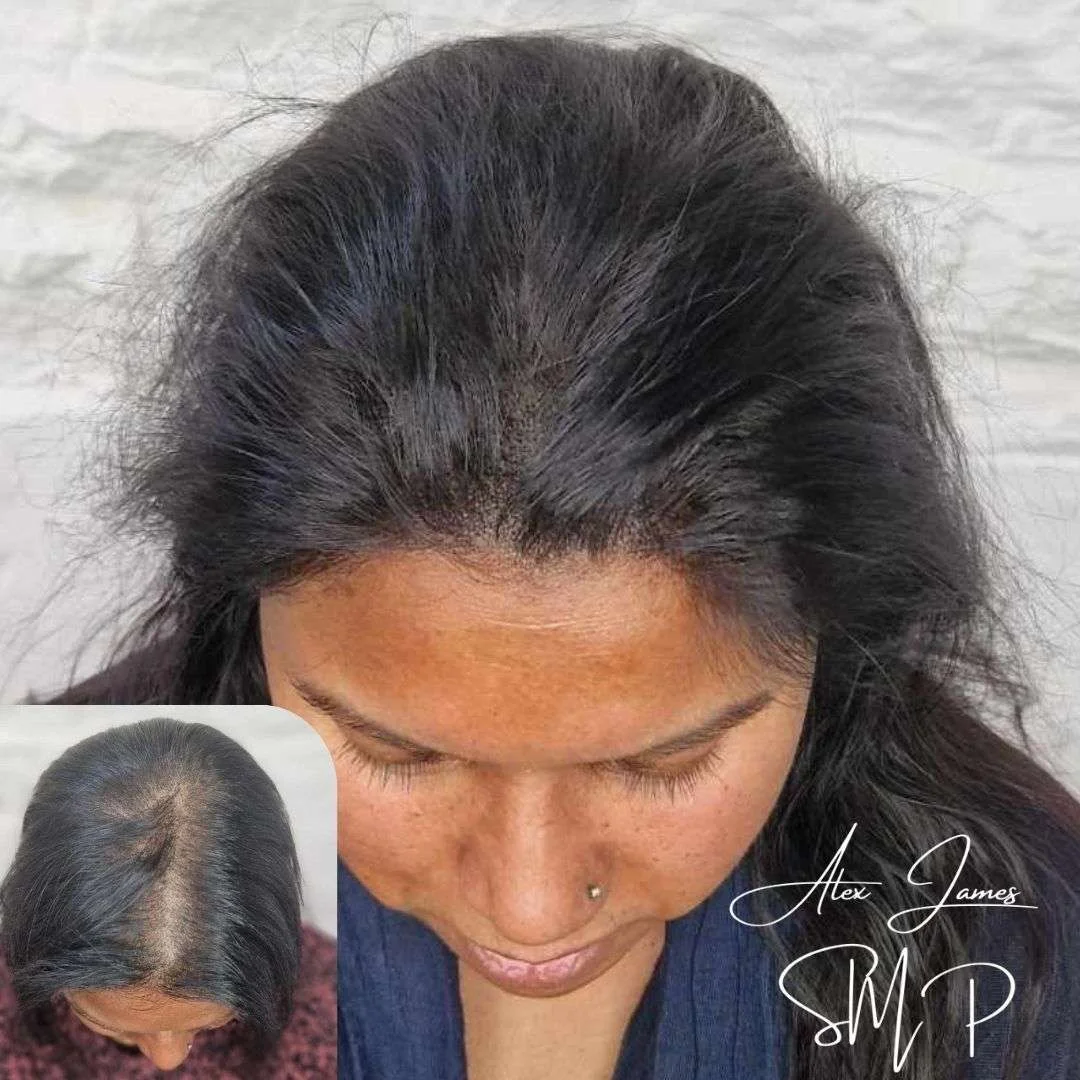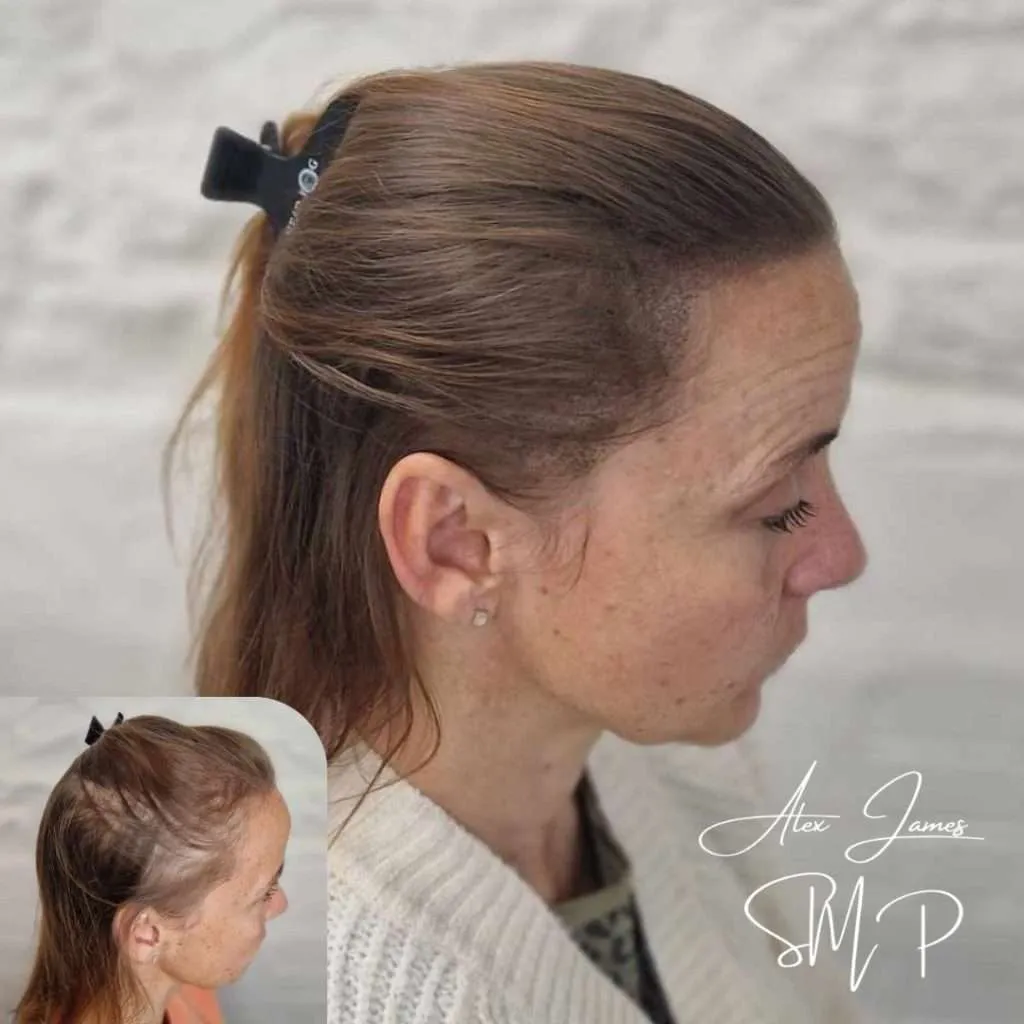
Hair loss in women is far more common than most people realise, yet it remains one of the least openly discussed experiences. Unlike male hair loss, which is widely recognised and socially accepted, female hair thinning often happens quietly. It doesn’t arrive with a clear label or a predictable pattern. Instead, it tends to creep in gradually — a parting that looks a little wider than it used to, a crown that reflects more light, hair that feels flatter, finer, or harder to style than before.
For many women, these changes are noticed long before anyone else does. They’re spotted in mirrors, photographs, and harsh lighting, and they can slowly begin to affect confidence in subtle but meaningful ways. Hairstyles are adjusted. Certain lighting is avoided. Activities that once felt carefree — swimming, windy walks, tying hair up — begin to feel uncomfortable.
Female scalp micropigmentation exists because female hair loss is different. It requires a solution that is discreet, supportive, non-invasive, and capable of restoring the appearance of fuller hair without dramatically altering identity or daily routine. This treatment is not about covering up or masking — it’s about restoring balance and confidence in a way that feels natural, controlled and empowering.
Hair plays a powerful role in how women express identity, femininity and self-image. It frames the face, influences how we feel about our appearance, and is often closely tied to confidence. When hair begins to thin, the emotional impact can be surprisingly intense — even if the physical change seems minor to others.
One of the most challenging aspects of female hair loss is how difficult it can be to explain. Many women feel frustrated because their hair loss doesn’t follow a clear or recognisable pattern. It may not be dramatic, but it’s persistent. Friends and family might say “it looks fine” or “it’s probably just stress,” which can feel invalidating when you know something has changed.
Hormonal shifts, genetics, stress, medical treatment, pregnancy, menopause and lifestyle factors can all play a role. Often, there is no single cause — and that uncertainty can make finding solutions even harder. Many women spend years trying to manage hair thinning through supplements, topical treatments, styling changes or concealment products, often with mixed or short-lived results.
Female scalp micropigmentation acknowledges this complexity. It doesn’t assume one cause or one solution. Instead, it focuses on the visual outcome — how your hair appears — and works with what you have to restore confidence.
Women experiencing hair thinning often become experts at adaptation. Hairstyles change to hide partings. Hair is worn down instead of up. Volume products become essential. Mirrors are avoided under certain lighting. Photos are reviewed carefully before sharing.
These adjustments are rarely dramatic, but over time they can take up emotional energy. Many women describe feeling preoccupied with their hair — constantly checking, adjusting, or worrying about how it looks in different situations.
Female scalp micropigmentation can be transformative not because it drastically changes appearance, but because it removes this constant background concern. When scalp visibility is reduced and hair looks consistently fuller, many women say they stop thinking about their hair altogether — and that relief is significant.
Female scalp micropigmentation is a cosmetic procedure that creates the illusion of increased hair density by placing thousands of tiny pigment impressions into the upper layers of the scalp. These impressions replicate the look of natural hair follicles beneath the skin, reducing the contrast between hair and scalp.
Unlike traditional tattooing, scalp micropigmentation uses specialised equipment and pigments designed specifically for the scalp. The pigment is placed at a controlled, superficial depth so it remains soft, subtle and natural-looking as it heals and fades over time.
For women, the treatment is focused almost entirely on density, not hairline recreation. Pigment is applied between existing hair strands to darken the scalp beneath, making hair appear thicker and more evenly distributed. When done correctly, it does not look like makeup, ink or a tattoo — it simply looks like healthier, fuller hair.
Every woman’s hair loss experience is different, which is why scalp micropigmentation must be tailored. Hair colour, scalp tone, density, styling habits, and the areas affected by thinning all influence how treatment is planned.
Some women experience thinning primarily along the parting. Others notice it most at the crown. Some have overall diffuse thinning across the top of the scalp. The way pigment is applied — spacing, density, tone — is adjusted to suit each scenario.
This level of personalisation is what allows female scalp micropigmentation to remain discreet. Rather than drawing attention to the scalp, the treatment quietly supports your hair, enhancing what’s already there.
Many women arrive at scalp micropigmentation after trying multiple alternatives. Temporary concealment products such as fibres and powders can help in certain situations, but they require daily application and constant awareness. They can be affected by rain, sweat, wind and touch, and often feel unreliable.
Wigs and hair toppers work well for some women, but not everyone feels comfortable wearing them long-term. They can feel restrictive, require regular maintenance, and may not suit all lifestyles. Surgical options may feel too invasive or unsuitable for diffuse thinning.
Female scalp micropigmentation sits in a different category. It doesn’t interfere with your natural hair. It doesn’t require daily effort. It doesn’t restrict how you live. Once healed, it becomes part of your scalp — providing consistent visual support in all situations.
For many women, the appeal lies in its subtlety. There is no dramatic change, no sudden “before and after” moment that feels exposing. Instead, the result is a gradual return to balance.
The success of scalp micropigmentation lies in how the eye perceives hair density. Thinning hair becomes noticeable because light reflects off visible scalp between strands. The greater the contrast between hair and scalp, the more thinning is perceived.
Female scalp micropigmentation works by reducing that contrast. By darkening the scalp beneath the hair, it creates the illusion of increased density. Hair still behaves naturally — it moves, parts and styles as before — but the scalp beneath no longer draws attention.
This makes SMP particularly well suited to women who wear their hair longer or in varied styles. Whether hair is worn down, tied back, or parted differently, the treatment remains subtle and supportive.
Female scalp micropigmentation is especially effective for diffuse thinning, which is the most common form of hair loss in women. It is also well suited to widening partings, crown thinning, and general loss of density across the top of the scalp.
Some women explore SMP after experiencing hair loss linked to hormonal changes, stress, pregnancy or medical treatment. Others have lived with gradual thinning for many years before seeking help. In each case, the treatment is adapted to suit the individual rather than applied generically.
Because SMP is flexible and layered, it can be used subtly for early thinning or more comprehensively where density has reduced significantly.
You may come across phrases like hair tattoo for women or women’s hairline tattoo when researching scalp micropigmentation. While these terms are often used for simplicity, SMP is very different from traditional tattooing.
Scalp micropigmentation uses pigments designed to remain soft and fade gradually. The impressions are intentionally small, irregular and layered, mimicking natural hair follicles rather than solid shapes or lines. Pigment is placed much more superficially than a body tattoo, which helps maintain a natural appearance over time.
This distinction is particularly important for women, where subtlety is key. Properly performed SMP should never look bold or obvious — it should simply restore the appearance of fuller hair.
Female scalp micropigmentation is not about changing who you are. It’s about restoring what hair loss has quietly taken away — balance, confidence and ease. Many women describe feeling more like themselves again once thinning hair no longer dominates their thoughts.
Rather than masking or disguising, SMP works quietly in the background. It allows you to move through daily life without constant hair-related worry, which for many women is where the real value lies.
One of the most frustrating aspects of hair loss for women is that it rarely presents in a simple or predictable way. Unlike male pattern baldness, which often follows a clear and recognisable progression, female hair loss tends to be more complex, more variable and harder to diagnose. This complexity is one of the main reasons so many women struggle to find solutions that genuinely work for them.
Female hair loss is most commonly characterised by a gradual reduction in density rather than complete hair loss. Hair follicles do not disappear entirely, but they become finer, weaker and produce shorter, thinner strands over time. As this happens, the scalp becomes increasingly visible — particularly in areas where hair naturally parts or where light hits from above.
This is why female scalp micropigmentation is so effective. Rather than attempting to stimulate regrowth or replace hair, it works visually, addressing the appearance of thinning by reducing scalp contrast.
Diffuse thinning is the most common form of hair loss in women. Instead of affecting one specific area, density gradually reduces across the top of the scalp. This often becomes noticeable along the parting first, where hair naturally separates and exposes more skin.
Because diffuse thinning is spread evenly, it can be difficult to pinpoint when it begins. Many women feel something has changed long before they can identify exactly what it is. Hair may feel flatter, styles may not hold as well, and volume may disappear more quickly throughout the day.
Diffuse thinning is particularly challenging to treat with traditional hair loss options. Products designed to target specific bald areas often have little effect, and styling tricks may only work temporarily. Female scalp micropigmentation offers a visual solution that works regardless of how evenly thinning is distributed.
By darkening the scalp beneath the hair, SMP creates the illusion of consistent density across the entire area, making thinning far less noticeable.
For many women, the parting becomes the most emotionally challenging area. A widening parting can feel impossible to hide, especially when hair is worn naturally. Over time, women may find themselves constantly adjusting their part, blow-drying strategically, or avoiding certain styles altogether.
Partings are particularly vulnerable because they create a natural line of contrast. As density reduces, that contrast becomes sharper and more noticeable — especially under bright or overhead lighting.
Female scalp micropigmentation is highly effective in this area because it can be applied precisely along the parting without altering the hairline or hairstyle. Pigment softens the contrast between hair and scalp, allowing the parting to appear narrower and more natural without looking filled in or artificial.
Many women describe this as one of the most confidence-restoring aspects of SMP, as it allows them to wear their hair naturally again without constant adjustment.
The crown is another area where thinning often becomes noticeable. Because the crown sits at the highest point of the head, it reflects light more strongly than other areas. Even mild thinning can appear exaggerated when light hits the scalp from above.
Women with crown thinning often feel particularly self-conscious in certain environments, such as under office lighting, in photographs, or when standing beneath bright lights. Hair fibres and powders can help temporarily, but they may not feel reliable or consistent.
Scalp micropigmentation reduces shine and light reflection in the crown by darkening the scalp beneath the hair. This creates depth and shadow, allowing hair to appear more evenly distributed and balanced from all angles.
Hormonal changes play a significant role in female hair loss. Pregnancy, postpartum changes, menopause and certain medical conditions can all affect hair density. In many cases, hair loss linked to hormones is unpredictable and emotionally challenging.
Some women experience shedding that eventually stabilises, while others notice long-term thinning that doesn’t fully recover. In these situations, scalp micropigmentation can provide visual support once hair loss has stabilised, helping to restore confidence without interfering with natural hair processes.
It’s important to note that SMP does not stop hair loss or stimulate regrowth. Instead, it works alongside your natural hair, supporting appearance regardless of the underlying cause.
Stress-related hair loss can be particularly distressing because it often feels sudden and uncontrollable. Whether triggered by illness, emotional stress or major life changes, hair shedding can happen rapidly and leave visible thinning behind.
Even when shedding slows, regrowth can take time and density may not fully return. Female scalp micropigmentation can be considered once hair loss has stabilised, providing a way to visually rebalance areas that remain thin.
For many women, SMP offers reassurance during recovery — a way to feel more like themselves while their hair continues to change.
One of the reasons female scalp micropigmentation has gained popularity is because many traditional hair loss treatments are not designed with women in mind. Medications and topical treatments may work for some, but results vary widely and often require long-term commitment without guaranteed improvement.
Cosmetic solutions may help temporarily, but they often require constant management and can feel unreliable. Surgical options may not be suitable for diffuse thinning, where there is no clear donor area or defined bald patch.
SMP bypasses these limitations by addressing the visual effect of hair loss rather than the cause. It doesn’t rely on regrowth, medication compliance or daily maintenance. Instead, it provides a stable, long-lasting improvement in appearance.
The strength of female scalp micropigmentation lies in its adaptability. It doesn’t matter whether thinning is mild or more advanced, evenly spread or concentrated in certain areas — the treatment can be adjusted accordingly.
By focusing on contrast reduction rather than hair replacement, SMP delivers results that look natural and age well. It works in harmony with your existing hair and remains compatible with other treatments should you choose to explore them.
This adaptability is what makes scalp micropigmentation such a powerful option for women who have struggled to find a solution that truly fits their needs.
Because female hair loss is so varied, individual assessment is essential. No two scalps are the same, and no two hair loss journeys follow the same path. A thorough consultation allows your practitioner to understand your hair loss pattern, scalp condition and goals before recommending treatment.
This personalised approach ensures results remain natural, realistic and supportive rather than generic or overdone.
To truly understand why scalp micropigmentation works so well for women, it helps to understand how the eye perceives hair density. Hair thinning does not become noticeable simply because hair is lost — it becomes noticeable because of contrast. When hair density reduces, more scalp becomes visible, and light reflects off that exposed skin. The brighter and more reflective the scalp appears, the thinner the hair looks.
Female scalp micropigmentation works by reducing this contrast. By carefully darkening the scalp beneath the hair with tiny, precisely placed pigment impressions, the scalp becomes less reflective. This creates depth and shadow, which tricks the eye into perceiving thicker, fuller hair.
This is why SMP can deliver such a dramatic improvement in appearance without altering hair texture, length or growth. Nothing is added to the hair itself — the illusion is created entirely at scalp level.
Although the core principles of scalp micropigmentation are the same, female SMP is technically and artistically different from male SMP. Men’s SMP often focuses on recreating the appearance of shaved follicles or defining a hairline. Female SMP, by contrast, is almost entirely about density.
Women typically wear their hair longer, part it differently from day to day, and expect results to remain invisible in a wide range of lighting conditions. This requires a softer, more layered approach to pigment placement.
In female scalp micropigmentation, impressions are spaced more subtly, density is built gradually, and colour selection is more nuanced. Pigment must blend seamlessly with both hair and scalp without ever appearing solid or uniform. This level of subtlety requires experience and restraint — adding too much pigment too quickly can compromise natural results.
Light plays a crucial role in how thinning hair is perceived. Overhead lighting, natural daylight and camera flash all exaggerate scalp visibility. This is why thinning often appears worse in photographs or under certain lights.
Scalp micropigmentation counteracts this by introducing controlled shadow into the scalp. When pigment absorbs light rather than reflecting it, the scalp appears darker and less prominent. Hair above the scalp then appears denser by comparison.
This principle applies across the entire scalp but is especially important in areas such as the crown and parting, where light reflection is strongest. Female SMP is designed with these lighting dynamics in mind, ensuring results hold up in real-world conditions rather than just in controlled environments.
One of the most important aspects of successful female scalp micropigmentation is pigment selection. Pigment is not matched directly to hair colour — instead, it is chosen to replicate the shadow created by hair follicles beneath the skin.
This distinction is crucial. Hair colour can change over time due to colouring, greying or natural ageing. Pigment that is matched too literally to hair colour may become noticeable as hair changes. Shadow-based pigment selection ensures results remain natural even as hair evolves.
Scalp tone also plays a role. Undertones in the skin affect how pigment appears once healed. An experienced practitioner understands how to adjust pigment choice and saturation to suit individual skin characteristics, ensuring results never look ashy, blue or overly dark.
Depth control is one of the most technical aspects of scalp micropigmentation. Pigment must be placed at a consistent, superficial depth so it remains crisp, soft and well-defined over time. If pigment is placed too deeply, it can blur or migrate, creating a hazy appearance. If placed too shallowly, it may fade too quickly.
Female scalp micropigmentation demands especially precise depth control because results must remain subtle. Over-saturation or inconsistency can become visible when hair is parted or styled differently.
This is why SMP should always be performed by a practitioner who specialises in scalp work rather than traditional tattooing. The scalp behaves differently to other areas of the body, and technique must be adapted accordingly.
Scalp micropigmentation is never completed in a single session, particularly for women. Building natural density requires a gradual, layered approach that allows pigment to heal and settle between sessions.
During the first session, a base layer of pigment is applied to establish initial density and colour balance. This layer may look subtle once healed — and that is intentional. Subsequent sessions build upon this foundation, increasing density where needed and refining the result.
Spacing sessions allows the practitioner to observe how your skin retains pigment and how it blends with your hair. Adjustments can then be made to ensure the final result remains natural and harmonious.
This measured approach protects the scalp and prevents the treatment from looking heavy or artificial.
Immediately after treatment, pigment often appears darker and more defined. As the scalp heals, the pigment softens and lightens slightly, settling into a natural tone that integrates with your hair.
Healing is typically straightforward. Mild redness or sensitivity may be present for a short period, but most women return to daily activities quickly. Because SMP does not involve deep skin trauma, downtime is minimal.
Over the following weeks, pigment continues to stabilise. This settling period is essential for achieving a refined finish and is one of the reasons sessions are spaced several weeks apart.
One of the key advantages of scalp micropigmentation is how well it ages when performed correctly. Pigment is designed to fade gradually rather than remain bold indefinitely. This allows results to soften over time, maintaining a natural appearance.
This gradual fading is particularly beneficial for women, whose hair colour, density and style may change over the years. SMP evolves alongside your hair rather than competing with it.
If desired, subtle refresh sessions can be performed in the future to reinforce density, but many women enjoy their results for several years before considering any maintenance.
Perhaps the most overlooked aspect of female scalp micropigmentation is restraint. More pigment does not necessarily mean better results. In fact, subtlety is what makes SMP successful for women.
A thoughtful, conservative approach ensures results remain invisible and adaptable. Planning for how hair may change in the future is just as important as achieving immediate improvement.
This long-term mindset is what separates high-quality female SMP from rushed or poorly executed treatments.
Click ‘Learn More’ below for further details or to arrange your free consultation.
When researching female scalp micropigmentation, many women understandably want to know one thing above all else: what will this actually look like on me? While before-and-after images can be helpful, they don’t always reflect how SMP behaves in everyday situations — different lighting, movement, styling, and real-life environments.
The most important thing to understand is that female scalp micropigmentation is designed to be subtle. The success of the treatment is often measured not by dramatic transformation, but by how little attention it draws. The best results are the ones that simply look like fuller hair, without anyone being able to identify why.
For many women, the biggest shift is not something others comment on directly. Instead, it’s the quiet confidence that comes from no longer worrying about scalp show-through, harsh lighting, or certain hairstyles.
Lighting plays a major role in how thinning hair is perceived, which is why SMP is designed with real-world conditions in mind. Overhead lighting, natural daylight, camera flash and office lighting can all exaggerate scalp visibility.
After scalp micropigmentation, many women notice that their hair looks more consistent across all lighting environments. The scalp reflects less light, creating a softer, more even appearance. This is particularly noticeable in the crown and along the parting, where thinning often shows most.
In everyday situations — walking outside, sitting under bright lights, or being photographed — hair appears fuller and more balanced. This consistency is one of the most valued aspects of SMP, as it removes the unpredictability that often comes with thinning hair.
One common concern women have is whether scalp micropigmentation will be visible when hair is worn up. Because female SMP is focused on density rather than bold markings, it remains discreet even when hair is pulled back.
When hair is worn down, SMP works underneath to support volume and fullness. When hair is worn up, the softened contrast between hair and scalp makes thinning far less noticeable. The pigment does not create lines or blocks, so it doesn’t draw attention when hair is styled differently.
This versatility allows women to style their hair more freely again, without feeling restricted by thinning areas.
Female scalp micropigmentation is highly adaptable. Some women seek very subtle density enhancement, particularly in early stages of thinning. In these cases, the treatment is light and conservative, designed to gently reduce scalp visibility without changing the overall look of the hair.
Others have more noticeable thinning and require a more comprehensive approach. Even in these cases, the goal remains natural enhancement rather than heavy coverage. Density is built gradually over multiple sessions to avoid overwhelming the scalp.
The key is that results are tailored to your specific situation. There is no “standard” outcome — only what looks right for you.
It’s important to have clear expectations about what scalp micropigmentation can and cannot achieve. SMP does not add physical hair, change hair texture, or stimulate regrowth. It also does not create volume in the traditional sense.
What it does do is dramatically improve the appearance of density by reducing scalp visibility. This visual improvement can make hair look thicker, healthier and more evenly distributed.
Understanding this distinction helps ensure satisfaction with the final result. Women who approach SMP as a supportive enhancement rather than a replacement for hair tend to be the happiest with their outcome.
Scalp micropigmentation is a gradual process. While improvements are noticeable after the first session, final results develop over the course of several weeks as sessions are completed and pigment heals.
Most women require two to three sessions, spaced several weeks apart. This spacing allows pigment to settle and soften before additional layers are added. The final result emerges progressively rather than all at once.
This gradual improvement often feels reassuring rather than overwhelming, allowing you to adjust comfortably as your hair appearance changes.
One of the most common things women say after completing scalp micropigmentation is that they stop thinking about their hair. Activities that once caused anxiety — windy days, swimming, bright lights — become non-issues.
Hair feels easier to style, and there is less reliance on volume products or concealment techniques. For many women, this mental shift is just as important as the physical result.
Female scalp micropigmentation doesn’t demand attention. It works quietly in the background, supporting confidence rather than becoming a focal point.
Natural results don’t look the same for everyone. Some women prefer extremely subtle enhancement, while others want more noticeable density improvement. Both approaches can look natural when executed correctly.
The key is communication and planning. Your treatment is designed around your preferences, lifestyle and comfort level. Whether you want a barely-there enhancement or a more defined improvement, the goal remains the same — results that blend seamlessly with your hair and feel authentic to you.
Hair changes over time, and female scalp micropigmentation is designed to accommodate this. Pigment gradually fades rather than remaining static, which helps results age naturally. This flexibility allows for adjustments in the future if desired.
Many women appreciate knowing they’re not locked into a fixed result. SMP can evolve with you, adapting to changes in hair colour, density or style.
Female scalp micropigmentation is suitable for many women, but like any professional treatment, it is most successful when applied to the right circumstances. Understanding suitability is not about discouraging treatment — it’s about ensuring realistic expectations and long-term satisfaction.
One of the strengths of scalp micropigmentation is its adaptability. Because it works visually rather than biologically, it can support a wide range of hair loss patterns. However, results are always best when hair loss has stabilised and the scalp is healthy.
Women experiencing gradual, long-term thinning are often excellent candidates. This includes diffuse thinning across the top of the scalp, widening partings, reduced density at the crown, and general loss of fullness that no longer responds to styling alone. In these cases, SMP works quietly beneath the hair, restoring balance without altering how the hair behaves.
Women who have experienced hair loss linked to hormonal changes, stress, pregnancy or menopause may also be suitable once shedding has slowed. For many, scalp micropigmentation becomes a way to visually restore confidence while their hair continues to evolve naturally.
One of the most important factors in determining suitability is stability. Scalp micropigmentation is most effective when hair loss patterns are reasonably predictable. If hair loss is actively progressing at a rapid pace, it may be advisable to wait before beginning treatment.
This isn’t because SMP won’t work — it’s because planning results around unstable hair loss can make outcomes harder to maintain. When hair loss is stable, pigment placement can be designed to support existing hair in a way that remains balanced over time.
A thorough consultation allows these factors to be assessed honestly, ensuring treatment is timed appropriately rather than rushed.
Healthy scalp skin is essential for safe and effective scalp micropigmentation. Active skin conditions such as psoriasis, eczema, dermatitis or infection need to be fully resolved before treatment can take place. SMP should only ever be performed on calm, intact skin.
Scarring, sensitivity or previous scalp treatments are also considered during consultation. In many cases, SMP can still be performed safely, but technique and session planning may need to be adapted.
If your scalp requires preparation before treatment, this will be discussed openly. The priority is always long-term skin health rather than short-term results.
Although scalp micropigmentation can help many women, it is not the right solution for everyone. Women with extremely light blonde, white or grey hair may experience more subtle results due to lower contrast between hair and scalp. While SMP can still be effective in these cases, expectations must be carefully managed.
If hair loss is extremely advanced with minimal existing hair, SMP may not provide the level of coverage some women hope for. In such cases, alternative or complementary options may be discussed.
Importantly, a responsible practitioner will always prioritise honesty. Proceeding with treatment that is unlikely to meet expectations does not serve the client or the practitioner in the long term.
Female scalp micropigmentation is not a treatment that should be sold — it should be recommended when appropriate. An honest consultation sets the foundation for successful results by aligning expectations with reality.
During consultation, your hair loss pattern, scalp condition, lifestyle and goals are discussed in detail. You’ll have the opportunity to ask questions, voice concerns and gain a clear understanding of what SMP can realistically achieve for you.
This transparency is one of the reasons many women feel reassured once they’ve had a proper consultation. Even if treatment isn’t the right option at that moment, understanding your situation often brings clarity and relief.
Scalp micropigmentation is considered a safe, non-surgical procedure when performed by a trained specialist. The treatment does not damage hair follicles and does not interfere with natural hair growth. Pigment is placed superficially in the scalp, avoiding deeper skin layers.
Aftercare is simple but important. In the days following treatment, keeping the scalp clean, dry and protected allows pigment to settle properly. Heavy sweating, swimming and excessive heat should be avoided briefly to support healing.
Once healed, most women return to their normal hair care routine without restriction. SMP does not limit styling, colouring or daily activities, which is one of its major advantages.
While scalp micropigmentation is low maintenance, a few simple habits help preserve results long term. Sun protection is particularly important, as UV exposure can cause premature fading. Using gentle shampoos and avoiding aggressive scalp exfoliation also supports longevity.
Pigment is designed to fade gradually, allowing results to age naturally rather than changing abruptly. Many women appreciate this subtle evolution, as it keeps the treatment looking realistic over time.
Optional refresh sessions can be considered in the future if desired, but they are not mandatory. The goal is always to maintain balance rather than chase perfection.
Scalp micropigmentation is both technical and artistic. Choosing a practitioner with specific experience in female SMP is essential for achieving natural results. Female hair loss patterns, styling habits and expectations differ significantly from male SMP, and the approach must reflect this.
An experienced practitioner understands when to add pigment and when to hold back. This restraint is what keeps results soft, discreet and adaptable. It also ensures scalp health is protected throughout the process.
Working with a specialist who prioritises long-term outcomes over quick results makes a noticeable difference — not just in how SMP looks, but in how it feels to live with.
If thinning hair has been affecting your confidence — even quietly — female scalp micropigmentation may offer a supportive, non-invasive solution. The first step is simply learning more about your options through consultation.
There is no pressure to proceed and no obligation to decide immediately. Understanding what’s possible often brings reassurance and clarity, regardless of whether you choose to move forward straight away.
Female scalp micropigmentation is not about dramatic change. It’s about restoring balance, confidence and ease in a way that feels natural and respectful of who you are.
Most women who eventually explore scalp micropigmentation have already tried at least one other approach to managing hair loss. Understanding how SMP compares to these alternatives helps clarify why it works so well for certain women — and why it often feels like the missing piece after years of trial and error.
Hair loss solutions for women tend to fall into a few broad categories: temporary cosmetic cover-ups, wearable hair systems, medical or pharmaceutical options, and surgical intervention. Each has its place, but none address hair loss in quite the same way as scalp micropigmentation.
Temporary products such as fibres, powders and sprays are often the first option women try. These products can provide instant coverage and may work well for specific occasions. However, they require daily application and constant awareness. Humidity, rain, wind, sweat and physical contact can all affect performance. Many women describe feeling anxious about product transfer, smudging, or visibility under bright lighting. Over time, the daily effort involved can become tiring.
Hair toppers and wigs can be life-changing for some women, particularly those with more advanced hair loss. However, they don’t suit everyone. Some women find them uncomfortable, restrictive, or difficult to integrate into daily life. They often require regular maintenance, professional fitting and ongoing cost. For women with mild to moderate thinning, wigs can feel like an overly drastic step.
Medical and pharmaceutical treatments aim to slow hair loss or encourage regrowth, but results vary significantly. Many require long-term commitment without guaranteed improvement, and some women experience side effects or plateauing results. Even when regrowth occurs, density may not return evenly across the scalp.
Surgical options, such as hair transplants, are rarely suitable for diffuse thinning, which is the most common form of hair loss in women. Without a clearly defined donor area, results can be unpredictable, and surgery may not address overall density.
Female scalp micropigmentation works differently. It does not attempt to regrow hair or replace it physically. Instead, it addresses the visual impact of thinning directly by reducing scalp contrast. This makes it uniquely effective for women whose primary concern is visible scalp rather than complete hair loss.
SMP also works independently of hair growth cycles. Whether hair regrows, stabilises, or changes over time, the visual support remains consistent. This makes it compatible with other treatments rather than an either-or choice.
One of the reasons scalp micropigmentation has become increasingly popular among women is how well it fits into modern life. Once healed, it requires no daily effort. There are no products to apply, no attachments to manage, and no restrictions on activities.
Women can swim, exercise, travel, and style their hair without worrying about how their hair loss might appear in different conditions. SMP doesn’t wash away, shift, or require touch-ups throughout the day. It quietly supports hair in the background, allowing life to be lived without constant hair-related decisions.
This sense of ease is often what women value most after treatment. Instead of thinking about hair loss, attention shifts back to daily life.
Female scalp micropigmentation is not a quick fix — and that is precisely why it works so well. It is designed with long-term thinking in mind. Pigment is chosen to age naturally. Density is built gradually. Results evolve subtly rather than remaining static.
This long-term approach ensures the treatment continues to look natural as hair colour changes, greying develops, or density shifts over time. Optional refresh sessions can be performed in the future, but they are never mandatory.
For many women, SMP becomes part of their self-care rather than something they actively think about. It doesn’t demand attention, but it provides reassurance every day.
Scalp micropigmentation is a specialised skill that sits at the intersection of technical precision and aesthetic judgement. For women, this balance is especially important. Results must remain soft, subtle and adaptable — not bold or rigid.
An experienced practitioner understands when to add pigment and when to hold back. They understand how female hair behaves, how light interacts with the scalp, and how results will look not just immediately after treatment, but years down the line.
Choosing a clinic that specialises in scalp micropigmentation — and understands female hair loss specifically — makes a significant difference to both outcome and experience. Safety, transparency and long-term planning should always come before speed or promises.
Exploring female scalp micropigmentation is often about more than hair. It’s about regaining a sense of ease, confidence and control after a period of uncertainty. Hair loss can quietly shape how you feel about yourself, and addressing it in a way that feels respectful and empowering can be transformative.
The first step is always understanding your options. A consultation allows your hair loss pattern, scalp condition and goals to be discussed openly, without pressure or obligation. Even if you choose not to proceed immediately, clarity alone can be reassuring.
Female scalp micropigmentation is not about dramatic change. It is about restoring balance in a way that feels natural and personal. When approached thoughtfully, it can become a long-term solution that supports confidence without demanding attention.
Hair loss does not define who you are, but it can affect how you feel in ways that are difficult to articulate. Female scalp micropigmentation offers a discreet, non-invasive way to restore the appearance of fuller hair while respecting individuality and comfort.
For many women, the most powerful outcome is not what others see, but how they feel — calmer, more confident, and less preoccupied with their hair. When hair loss no longer dominates daily thought, space opens up for confidence to return naturally.
With the right approach and the right specialist, scalp micropigmentation can be a supportive, confidence-restoring step forward — one that fits seamlessly into your life rather than changing it.