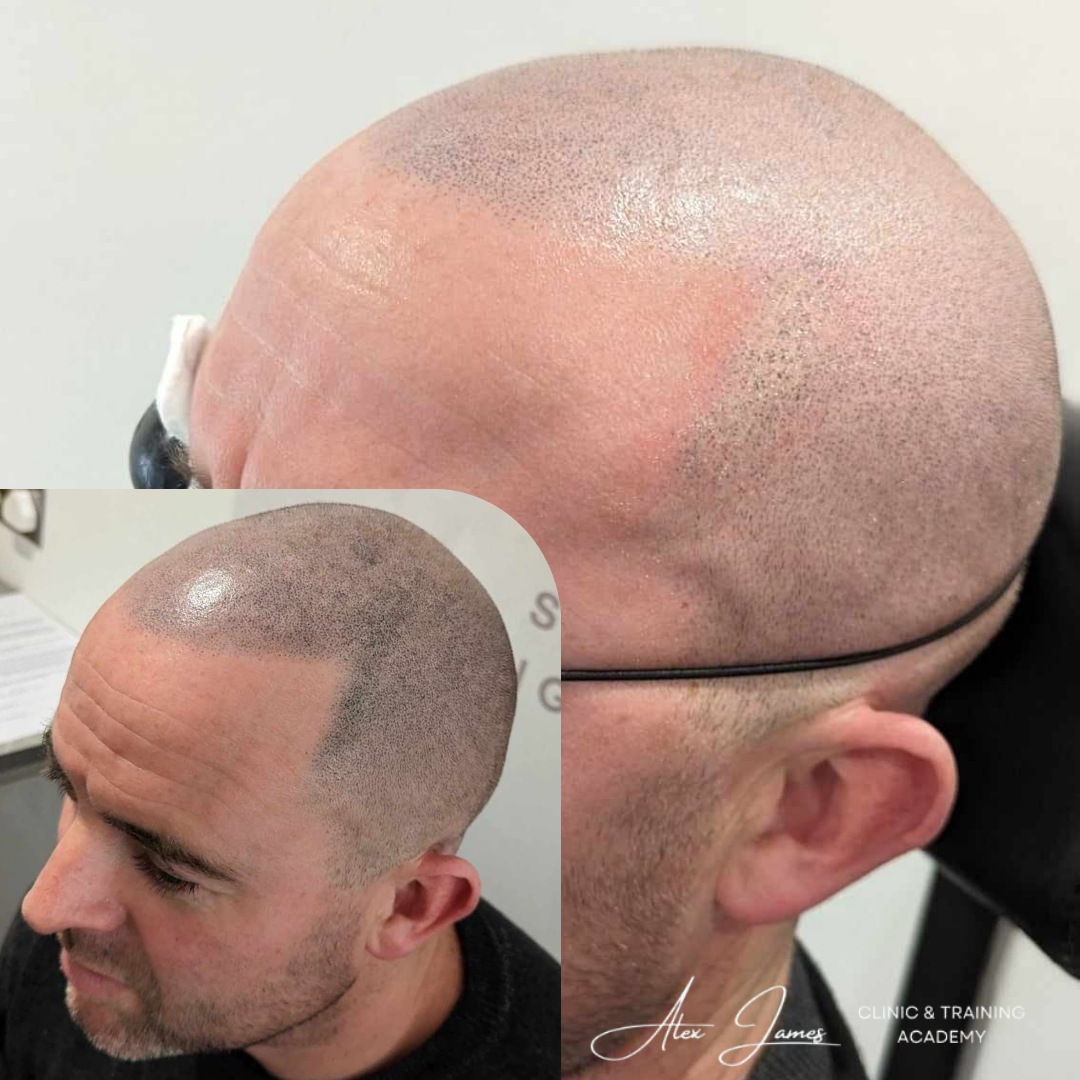
Alex James SMP

SMP removal

Scalp Micropigmentation Removal – Part 1: How It Works, Laser Techniques & What to Expect

Scalp Micropigmentation (SMP) can completely transform how someone feels about their appearance — but what happens when that transformation no longer fits who you are?

In this first part of The Complete Expert Guide, the specialists at Alex James SMP Clinic & Training Academy explain what scalp micropigmentation removal actually involves. You’ll learn why people choose removal, how different methods work, and what to expect before, during, and after laser treatment.

Why Some People Choose Scalp Micropigmentation Removal

There are several reasons a person may explore removal. Sometimes it’s purely aesthetic; in other cases, the motivation is emotional or medical.

  1. Unnatural pigment colour or migration – Over time, pigment can oxidise or migrate slightly under the skin, giving a bluish cast or blurred appearance.
  2. Design correction or shape revision – Hairline styles change. A design that looked perfect five years ago might no longer suit the client’s features or preferences.
  3. Low-quality work – Unfortunately, SMP is occasionally performed by under-trained practitioners. Uneven dot patterns or incorrect pigment depth may require expert correction or removal.
  4. Medical or allergic reasons – Although rare, sensitivity to pigment or long-term dermatological issues can make scalp micropigmentation removal advisable.
  5. Preparation for new SMP application – Sometimes removal is part of a refresh: fading or lightening an existing treatment before re-pigmentation ensures a cleaner canvas.

Each of these situations requires an individualised clinical assessment. At Alex James SMP Clinic & Training Academy, every scalp micropigmentation removal consultation begins with a thorough evaluation of skin type, pigment behaviour and previous technique to determine the safest, most effective approach.

The Art and Science Behind SMP — and Why Removal Requires Expertise

Although SMP sits within the cosmetic tattooing family, it is far more technical than most people realise. The pigments are deposited into the upper dermal layer using ultra-fine needles, following a dot-by-dot technique designed to mimic the density and spacing of natural hair follicles.

Where a traditional tattoo may use heavy, colour-saturated inks that penetrate deeply into the skin, SMP pigments are purpose-made to remain closer to the surface. This gives a realistic appearance but also means that removal demands a delicate balance — deep enough to fragment pigment, but controlled enough to protect the surrounding skin and hair follicles.

Professional clinics like Alex James SMP Clinic & Training Academy understand that the pigment’s behaviour over time is influenced by several factors:

  • Depth of placement: Too deep, and pigment may blur or discolour; too shallow, and it fades unevenly.
  • Pigment composition: Carbon-based SMP pigments respond differently to laser wavelengths than traditional tattoo inks.
  • Skin physiology: Fitzpatrick type, oil production, and previous sun exposure can all alter pigment stability.
  • Aftercare history: Poor healing or unprotected sun exposure often accelerates fading or colour change.

Because of these variables, scalp micropigmentation removal cannot be approached with a “one-size-fits-all” mindset. Each scalp is unique, and removal must respect that individuality.

Table of Contents

Overview of Removal Methods

There are three principal approaches to reducing or removing SMP pigment: laser removal, saline removal, and gradual fading through time or targeted exfoliation. Each has benefits and limitations that depend on pigment type, density, and the desired end result.

  1. Laser Removal

The most widely used and clinically proven method, laser removal works by emitting short bursts of light energy that are selectively absorbed by the pigment particles. This energy breaks the pigment into microscopic fragments, which are then naturally removed by the body’s lymphatic system over several weeks.

Modern laser technology has advanced significantly. Q-switched and picosecond lasers offer precision capable of targeting the superficial depth of SMP pigment while minimising risk to the scalp. Because SMP sits more shallowly than body tattoos, fewer passes are often needed per session, though multiple sessions are still required for complete clearance.

  1. Saline Removal

Saline removal involves introducing a sterile saline solution into the treated area using a micropigmentation needle configuration. The solution draws pigment particles up and out of the skin during the healing process. This technique can be effective for small corrections or lightening, but it tends to require more sessions than laser and carries a higher risk of surface irritation if performed aggressively.

  1. Natural Fading or Exfoliation

For clients who wish only to soften density or prepare for a redesign, gentle chemical exfoliation or controlled micro-needling can encourage gradual fading. While this is not technically scalp micropigmentation removal and wouldn’t be undertaken in our clinic, it is a legitimate corrective pathway when the objective is tonal reduction rather than full clearance.

At Alex James SMP Clinic & Training Academy, every client receives a tailored plan based on pigment behaviour, skin resilience, and the visual goal — complete removal, partial lightening, or correction.

What to Expect During Consultation

The consultation is the cornerstone of safe, effective SMP removal. It is not merely an assessment of the pigment; it is a conversation about history, expectations, and future plans for the scalp.

During consultation, a qualified practitioner will:

  1. Take a full medical history, noting skin conditions, medications, and any prior laser treatments.
  2. Evaluate pigment depth and density using magnification and clinical lighting.
  3. Discuss desired outcome – whether the client wishes for total removal or partial fading in preparation for a new SMP design.
  4. Conduct a patch test if laser removal is being considered, ensuring no adverse response.
  5. Outline a treatment plan, including number of sessions, expected healing stages, and home aftercare.

Clients are often relieved to learn that, in expert hands, scalp tattoo removal is typically a gentle process. Temporary redness or mild flaking may occur, but with modern lasers and medical-grade aftercare products, recovery is straightforward.

The guiding principle is always preserve the integrity of the skin. Unlike body tattoo removal, where deep pigment extraction is required, SMP removal targets the very superficial dermal layer. Over-treatment risks unnecessary trauma; precise technique ensures safe, even clearance.

Safety, Risks, and Emotional Considerations in SMP Removal

One of the most common questions clients ask during consultation is, “Is it safe?” The short answer is yes — when performed by a qualified specialist using the right technology. But understanding why it’s safe, and where the risks lie, helps clients feel reassured and informed before treatment begins.

Laser Removal Safety

Modern laser devices are precisely calibrated for pigment-specific absorption. In scalp micropigmentation removal, the laser wavelength is selected to target carbon-based pigment molecules while minimising absorption by melanin in the surrounding skin.

At Alex James SMP Clinic & Training Academy, we use CE-certified systems with adjustable fluence levels. This allows each session to be tailored to the individual’s Fitzpatrick skin type, pigment saturation, and previous SMP depth.

Proper laser safety involves:

Eye protection: Both practitioner and client wear wavelength-specific goggles to prevent retinal exposure.

Cooling mechanisms: Integrated skin-cooling reduces discomfort and limits epidermal inflammation.

Patch testing: A controlled test area confirms pigment response before proceeding across the scalp.

Post-treatment care: Clients receive medical-grade aftercare to prevent infection and support skin recovery.

When these protocols are followed, laser removal carries a very low risk profile. Temporary redness and minor crusting are normal, resolving within days. Hyper- or hypopigmentation is rare and usually transient when aftercare guidance is observed.

Saline and Non-Laser Techniques: Safety Notes

Saline removal, though less technology-driven, must still be handled with medical precision. Introducing saline too deeply can cause unnecessary trauma or scarring. For this reason, saline methods are generally reserved for small corrections, not full-scale removal.

Clients should be cautious of untrained operators offering saline fading without clinical oversight. The scalp’s vascularity and thin skin demand a delicate approach — ideally under the supervision of a practitioner experienced in both SMP application and removal.

Potential Risks to Consider

While complications are uncommon, transparency about risk is part of ethical practice. The most notable considerations include:

  1. Over-treatment: Excessive laser passes can cause irritation or superficial textural change.
  2. Incomplete removal: Some pigments may resist fragmentation, requiring additional sessions.
  3. Allergic response: Rarely, pigment breakdown releases compounds that irritate sensitive skin.
  4. Temporary hair-shedding: Mild telogen effluvium may occur in the treated zone but resolves naturally.
  5. Post-inflammatory pigment change: More likely in darker skin types, highlighting the importance of practitioner experience with diverse skin tones.

At every stage, informed consent is essential. Clients should understand the procedure’s benefits, limitations, and expected healing timeline before treatment begins.

The Psychological and Emotional Side of Removal

SMP removal isn’t purely a physical process — it’s often an emotional one.
Many clients seek scalp micropigmentation removal because a previous treatment no longer represents how they wish to look or feel. Others may have had disappointing results elsewhere and approach removal with anxiety or self-consciousness.

At Alex James SMP Clinic & Training Academy, empathy forms part of clinical care. Consultations are private and judgement-free, focusing on restoring confidence as much as restoring skin tone.

Common emotional experiences include:

  • Relief: Knowing that poor or outdated SMP can be corrected safely.
  • Frustration: Wishing they’d chosen an experienced practitioner initially.
  • Hope: Looking forward to a clean slate and natural appearance again.

Addressing these feelings helps ensure realistic expectations and smoother recovery. Many clients ultimately describe the removal journey as empowering — a reclaiming of control over their appearance.

Holistic Aftercare and Support

Proper aftercare is fundamental to both physical and emotional recovery.
Post-removal, clients are advised to:

  • Avoid direct sun exposure for two weeks.
  • Keep the scalp clean but dry for the first 24 hours.
  • Apply a recommended soothing serum or barrier cream twice daily.
  • Refrain from scratching or exfoliating as the skin heals.
  • Maintain hydration and a balanced diet to aid cellular repair.

Follow-up check-ins, usually at two-week intervals, allow the practitioner to evaluate progress and adjust the next session’s parameters if necessary. This collaborative approach ensures that clients remain informed, comfortable, and confident at each stage.

For further information around our scalp micropigmentation removal, please click below.

Professional Standards and Regulation

In the United Kingdom, laser and SMP practitioners must adhere to local authority licensing and health-and-safety guidelines. At reputable centres like Alex James SMP Clinic & Training Academy, practitioners hold accredited qualifications in both SMP artistry and advanced laser operation.


Key professional benchmarks include:

Infection-control certification and clinical hygiene compliance.

Insurance covering both SMP and laser removal.

Ongoing CPD training and device-manufacturer accreditation.

Transparent pricing and documented treatment consent forms.

By choosing a clinic that meets these standards, clients minimise risk and maximise outcome consistency.

Trusted Expertise in the North West

Across the North West of England, demand for scalp micropigmentation has grown rapidly — and with it, the need for qualified correction and removal specialists. Rossendale’s proximity to larger cities such as Manchester and Liverpool makes it an ideal hub for professional SMP services without the impersonal feel of city-centre clinics.

Many clients travel specifically to Alex James SMP Clinic & Training Academy in Crawshawbooth, Rossendale, after hearing about its reputation for precise, ethical work. The clinic’s team are not only SMP practitioners but also educators who train future technicians in correct pigment application and safe removal. This dual perspective — artist and clinician — gives them exceptional insight into how pigments behave over time and how to reverse or refine them safely.

Why People Travel from Across Lancashire and Beyond

Clients often describe the short journey to Crawshawbooth as “worth it” because they receive:


Expert evaluation by a team that understands both SMP creation and removal.

Access to medical-grade technology, including advanced laser systems rarely found in smaller studios.

Discreet, one-to-one appointments in a calm, private setting.

Transparent pricing aligned with regional expectations, reflecting the true variables of pigment density and surface area.

A balanced approach that prioritises preserving scalp health while achieving aesthetic goals.

The clinic’s location also allows convenient access from Burnley, Blackburn, Bolton, Bury, Manchester, and the wider Lancashire region, making it a trusted choice for clients seeking SMP laser removal across the North West.

Commitment to Ethical, Evidence-Based Practice

One of the challenges within the SMP industry is the lack of consistent regulation. Some individuals offer scalp micropigmentation removal services after minimal training or without appropriate insurance. At Alex James SMP Clinic & Training Academy, every procedure is governed by medical-grade hygiene protocols and continuous professional development.


The clinic’s ethos emphasises:

Evidence-based protocols: All methods are supported by dermatological research and practical outcomes.

Client education: Every consultation includes a discussion of potential alternatives and realistic results.

Transparency: Costs, timelines, and expectations are clearly explained before treatment.

Aftercare partnership: Clients receive ongoing support long after their final session.

This culture of transparency and professionalism is what separates ethical SMP clinics from the broader cosmetic-tattoo market.

Understanding the True Cost of SMP Removal

While Part 2 will explore pricing in detail, it’s helpful to clarify here that cost is not simply a function of size or density. Each scalp tells a different story. Some removals involve only mild pigment softening; others require complete clearance before a new SMP or natural look can be restored.

At the Alex James Clinic, pricing is always guided by:

  • The extent of the pigment coverage.
  • The pigment’s depth and type.
  • The client’s skin tone and healing history.
  • The technology required (e.g. laser wavelength).
  • The number of sessions forecast for the desired result.

Visitors are encouraged to review the clinic’s SMP cost guide on its official website for an up-to-date overview. However, during in-person consultation, a precise estimate is provided, ensuring clarity from the outset.

Why Local SEO Matters to Clients (and Clinics)

For many readers researching scalp micropigmentation removal cost or scalp tattoo removal near me, geographic relevance plays a role in trust. Knowing that there is an established clinic offering scalp micropigmentation laser removal within driving distance of Manchester or Lancashire reassures potential clients that expertise exists locally — not only in London or major metropolitan centres.

Google visibility, while important for the business, also benefits clients by connecting them quickly to reputable practitioners. That’s why content such as this comprehensive guide exists: to educate, demystify, and help clients identify credible providers within their region.

Summary 

Scalp micropigmentation removal is both a science and an art. It demands clinical precision, ethical practice, and an understanding of the human side of hair restoration. Whether a client’s goal is full pigment removal, tonal correction, or preparation for a new SMP design, success depends on choosing a practitioner who values safety as much as aesthetics.

In the North West of England — from Rossendale and Lancashire to Manchester and beyond — Alex James SMP Clinic & Training Academy continues to set the standard for informed, professional, and compassionate care.

The next section of this comprehensive guide will delve deeper into the specific techniques used in scalp micropigmentation removal, explaining how each works, when they are most appropriate, and what clients can expect throughout the process.

scalp tattoo removal Alex James Clinic Manchester

How Pigment Behaves Beneath the Skin

To appreciate how removal works, it helps first to understand what we’re trying to remove.

Scalp micropigmentation pigments are deposited only fractionally below the epidermis — typically 0.5–1 millimetre into the upper dermis. This shallow placement is deliberate: it allows light to reflect through the pigment particles and create the visual illusion of tiny hair follicles.

However, pigment particles don’t remain static. Over months and years, the body’s immune system gradually encapsulates and breaks down microscopic fragments, while ultraviolet exposure and skin turnover alter colour tone. Because SMP pigments are carbon-based and extremely fine, they often appear softer and greyer over time compared with traditional tattoo inks.

When a laser or other removal technique is applied, energy or chemical action targets these suspended pigment granules. The goal is not to “lift ink out” but to fragment or displace particles enough for the lymphatic system to remove them naturally. The key challenge lies in delivering sufficient energy to break pigment bonds without overheating or traumatising the scalp tissue.

Laser Removal: The Gold Standard

Principle of Selective Photothermolysis: Laser technology functions through selective photothermolysis — a process in which light of a specific wavelength is absorbed by a target chromophore (in this case, carbon pigment) more readily than by surrounding tissue. The pigment briefly heats and shatters into smaller fragments that the body’s macrophages then clear. Because SMP pigment sits near the surface, laser fluence can be kept relatively low compared with body tattoo removal. This minimises discomfort and reduces the likelihood of blistering or hypopigmentation.

Common Laser Types

  1. Q-Switched Nd:YAG Lasers (1064 nm and 532 nm): The workhorse of SMP removal. The 1064 nm wavelength penetrates deeply enough to target carbon pigment efficiently, while 532 nm may address residual reddish tones.
  2. Picosecond Lasers: These deliver ultra-short pulses measured in picoseconds, generating a photo-acoustic rather than thermal effect. Pigment particles are shattered mechanically rather than burned, which can mean faster clearance and less irritation.
  3. Alexandrite (755 nm): Sometimes used for stubborn or multi-tonal pigment, but requires careful calibration for lighter skin tones to avoid hypopigmentation.

Each system demands operator expertise. At Alex James SMP Clinic & Training Academy in Crawshawbooth, laser parameters are customised following patch testing and assessment of pigment density, ensuring safe and even fading.

Treatment Experience

During a session, clients usually describe the sensation as mild warmth or a quick elastic snap. Topical anaesthetic and chilled air are often used for comfort. Immediate frosting (a temporary whitening of the skin surface) indicates pigment reaction; this settles within minutes. Post-treatment, the area may appear slightly pink or raised, subsiding within 24 hours. The body continues clearing pigment for several weeks before the next session is scheduled — typically four to six weeks apart.

Saline and Non-Laser Approaches

While laser technology remains the benchmark for safe and effective SMP removal, some cases call for alternative methods. The saline technique, also known as osmotic pigment lifting, uses a sterile saline solution to draw pigment out of the skin’s surface layers.

How Saline Removal Works

The process involves introducing a controlled amount of saline solution into the scalp via a digital micropigmentation device. The mild salt solution creates a temporary osmotic gradient — in simple terms, it encourages fluid exchange between cells. As the area heals, pigment particles are carried upwards in the natural wound exudate and are expelled with the tiny scabs that form.

Because saline acts more slowly than laser energy, results accumulate over several sessions. It’s best suited for lightening rather than complete removal and for situations where pigment lies very close to the surface or has already faded naturally.

Safety and Clinical Considerations

Saline removal can be gentle when performed by an experienced practitioner, but it demands restraint. Overworking the skin risks superficial scarring or textural change. For this reason, it should only be performed by those familiar with both SMP application depth and scalp healing physiology.

A good candidate for saline removal might be:

  • someone seeking to lift small patches of pigment rather than an entire scalp,
  • a client with contraindications to laser (for example, certain medications or photosensitive disorders), or
  • an individual preparing for partial redesign rather than total pigment clearance.

In the hands of trained clinicians, saline sessions can complement laser protocols — for example, using saline to soften residual pigment that sits too shallow for effective laser targeting.

Chemical Fading and Micro-Exfoliation

Outside clinical settings, clients occasionally read about topical or “home” fading methods such as acid peels or abrasive scrubs. These are not recommended. The scalp’s vascular nature and delicate epidermis make uncontrolled chemical exposure risky, with potential for burns, uneven colour loss or infection.

In contrast, controlled micro-exfoliation under professional supervision can safely promote pigment reduction when used adjunctively with laser or saline treatments. By gently stimulating cell turnover, exfoliation accelerates the natural elimination of fragmented pigment particles between sessions.

Comparing Techniques: Advantages and Limitations

Every removal technique has strengths and boundaries. Understanding these helps set realistic expectations.

Method

Strengths

Limitations

Best suited for

Laser (Q-switched / Pico)

Precise pigment targeting, predictable results, minimal trauma, suitable for most skin types

Requires multiple sessions, mild discomfort

Full or significant pigment clearance

Saline removal

Non-light-based, can be used for small corrections, useful for surface pigment

Slower results, higher irritation risk if overworked

Spot correction or lightening

Natural fading / micro-exfoliation

Gentle, low cost, minimal downtime

Limited effectiveness, unpredictable

Mild pigment softening or maintenance

At Alex James SMP Clinic & Training Academy, these methods are never applied in isolation from context. Practitioners assess pigment chemistry, skin resilience, and aesthetic goals before choosing a combination strategy. It’s common to alternate between laser and saline sessions where appropriate, allowing the skin to rest and recover between each phase.

Technology and Skin Science

Pigment Chemistry

Most modern SMP pigments are carbon-based, meaning they absorb energy efficiently at the 1064 nm laser wavelength. Some older formulas contained iron oxide or mixed organics, which react differently. Carbon’s responsiveness makes laser removal particularly effective — pigment fragmentation occurs quickly, and heat dispersion is minimal.

Skin Type and Melanin Sensitivity

The Fitzpatrick skin scale (Type I–VI) remains essential in planning treatment. Darker skin tones contain more epidermal melanin, which competes with pigment for laser absorption. This doesn’t make removal unsafe but does necessitate lower fluence and longer intervals. A clinic accustomed to multi-ethnic skin, such as Alex James SMP Clinic in Lancashire, adjusts each session’s parameters carefully to avoid unwanted hypopigmentation.

Healing Dynamics

Following laser or saline removal, the scalp undergoes a brief inflammatory phase, then re-epithelialisation within 48–72 hours. Adequate hydration, sun avoidance, and non-comedogenic aftercare ensure even healing. The immune system continues processing pigment fragments for up to six weeks, which is why spacing sessions allows maximum clearance without stressing the skin.

Combination Approaches: Tailoring Techniques for the Best Results

No two scalps are identical. Pigment chemistry, placement depth, and a person’s skin response vary widely, which is why combination removal strategies often yield the most refined outcomes. In expert clinics such as Alex James SMP Clinic & Training Academy in Crawshawbooth, laser and non-laser modalities are blended to take advantage of each method’s strengths.

Laser Followed by Saline or Micro-Exfoliation

A common approach begins with several sessions of low-fluence laser to fragment the bulk of pigment particles. Once the residual pigment sits nearer the surface, a saline session or controlled exfoliation can remove what remains. This reduces the total laser exposure and gives a smoother, more even finish.

Alternating Modalities for Sensitive Skin

For clients with delicate or reactive skin, alternating between gentle laser passes and saline lifting provides rest periods between energy-based treatments. The scalp is allowed to heal fully, reducing cumulative inflammation and maintaining the integrity of the dermis.

Targeted Correction

Combination approaches also shine when treating partial pigment issues — for example, a misaligned hairline or localised colour shift. Here, a practitioner might use laser to lighten the affected zone while blending the surrounding area with micropigmentation adjustment. This hybrid of removal and artistic correction exemplifies the nuanced skill set of advanced SMP professionals.

Session Planning and Timelines

Effective SMP removal is never rushed. The process is governed by both biological and aesthetic timelines.

Initial Assessment and Patch Testing: The practitioner analyses pigment response to a small test pulse. This step establishes energy tolerance and ensures that no unusual pigment oxidation occurs.

First Full Session: The laser or saline treatment covers the entire target area. Immediate frosting or mild erythema is normal and subsides within hours. Clients receive detailed aftercare instructions including moisturising, cleansing, and sun protection.

Healing Interval: The skin must be given adequate time to recover and for the lymphatic system to process pigment fragments. Four to six weeks between sessions is standard. Shorter intervals risk irritation; longer gaps rarely reduce efficacy but may extend total treatment duration.

Subsequent Sessions: Each visit builds upon the last. Typically, clients see 20–40% pigment reduction after the first session and further improvement with each subsequent treatment. The number of sessions required varies — lighter densities may need only two or three, while deeper, older pigments can require five or more.

Final Evaluation and Refinement: Once the desired level of clearance or lightening is achieved, a final review ensures uniform tone and skin smoothness. If new SMP is planned, practitioners recommend waiting at least eight weeks to allow full dermal stabilisation.

Consistency and patience are essential. Rushing treatment or exceeding safe laser fluence in an attempt to speed up progress can jeopardise results. At Alex James SMP Clinic, every plan is personalised around the client’s skin response rather than arbitrary timelines.

Managing Client Expectations: An integral part of ethical practice is ensuring that clients understand both the capabilities and the limitations of scalp micropigmentation removal. Clear communication during consultation prevents disappointment and builds trust.

Setting Realistic Goals: While laser and saline methods can achieve near-complete clearance, residual pigment “ghosting” is occasionally visible under certain lighting conditions, especially on lighter scalps. This is not due to poor technique but to microscopic pigment remnants embedded within the upper dermis. For many, this faint shadow is negligible and often preferred to over-treatment that might alter skin texture.

Pain and Discomfort: Pain thresholds vary, but most clients describe the sensation as tolerable — comparable to light snapping or warmth. Topical anaesthetic creams, chilled air, and post-laser serums reduce irritation significantly. Sessions typically last 20–40 minutes depending on coverage.

Downtime and Recovery: Clients can resume normal activity immediately, though excessive sweating, saunas, or direct sunlight should be avoided for several days. Redness generally resolves within 24 hours, and light flaking may occur as the skin renews.

Visible Results and Patience: One of the most common misconceptions is expecting dramatic fading overnight. True pigment clearance occurs gradually over weeks as the immune system removes debris. Practitioners often photograph each stage to demonstrate progress objectively — a reassuring visual for clients who may not notice slow, incremental change day to day.

Common Myths About SMP Removal

  1. “Laser burns the scalp.”
    Modern laser systems are extremely precise and designed to protect surrounding skin. When operated correctly, there is no burning — only controlled pigment fragmentation.
  2. “It takes only one session.”
    Because pigment resides across multiple dermal levels and densities, gradual treatment is necessary for safety. Expect several sessions for optimal results.
  3. “Removal always damages existing hair.”
    The laser’s energy targets pigment, not hair follicles. When correct wavelength and fluence are used, natural hair growth is unaffected.
  4. “Saline is more natural, so it’s safer.”
    Safety depends on practitioner skill, not just the product. Both saline and laser are safe when performed by qualified specialists, and both can cause irritation if misused.
  5. “Home remedies can fade SMP.”
    DIY methods risk infection, scarring, and unpredictable colour changes. Professional supervision is the only responsible route.

Dispelling these myths forms part of the consultation process at Alex James SMP Clinic & Training Academy, helping clients feel confident and well-informed before committing to treatment.

Realistic Outcomes: What Clients Can Expect

The success of scalp micropigmentation removal depends on multiple biological and procedural factors. While results are often impressive, understanding the nuances of the process ensures realistic expectations and satisfaction with the final outcome.

Pigment Composition and Density

Pigment density is a decisive variable. Clients who have undergone heavier or darker SMP applications, where pigment layers overlap, will typically require more laser sessions than those with lighter, more natural densities. Similarly, the age of the pigment matters — older SMP that has already faded through natural immune clearance tends to respond faster to treatment.

Carbon-based pigments, now the industry standard, react predictably to 1064 nm laser wavelengths. They fragment quickly and evenly, producing uniform fading. In contrast, older iron-oxide formulations may oxidise, requiring careful fluence calibration to prevent colour shift. Experienced clinics like Alex James SMP Clinic & Training Academy identify the pigment type under magnification and lighting before any session to plan the correct settings from the outset.

Skin Type and Healing Behaviour

Every scalp heals differently. Fitzpatrick Type I or II clients (fair skin tones) may show temporary pinkness for longer, whereas higher Fitzpatrick types (darker tones) risk transient hypopigmentation if treated too aggressively. The objective is always gradual, consistent fading, never instant erasure.

Maintaining moisture and avoiding friction or UV exposure accelerates healing and reduces post-inflammatory effects. Most clients notice the skin returning to baseline condition within a few days, with visible fading appearing progressively over four to six weeks.

Number of Sessions

On average, mild SMP designs may reach desired clearance in two to four sessions. Densely pigmented or deeply placed work may require five to seven sessions. Between each appointment, the skin must rest for several weeks so the body can remove fragmented pigment particles. Attempting to shorten this window can compromise outcomes and increase risk of irritation.

Clinics emphasising high turnover sometimes promise faster results, but in reality, long-term skin quality should outweigh short-term convenience. A reputable provider values controlled progression over speed.

Case Insight: From Over-Saturated to Natural Finish

A good illustration of realistic outcomes involves a client who came to the Rossendale clinic with an SMP that was far too dense and dark for his complexion. The original work, done elsewhere, used excessive pigment layering that blurred together, giving an unnatural, block-coloured appearance.

After consultation, the team at Alex James SMP Clinic & Training Academy proposed three low-fluence laser sessions to break up and lighten the pigment, followed by a waiting period and optional redesign. After the first session, the harsh contrast softened; by the third, the scalp tone appeared even and healthy.

The client chose to retain some residual pigment as a shadow effect rather than pursue total removal. This case underscores that removal is not always about erasing — it can also be about refining. The client left with restored confidence and a better appreciation of what high-quality SMP artistry entails.

Maintenance and Long-Term Skin Care

Once pigment is lightened or cleared, the scalp benefits from continued care similar to post-SMP maintenance:

  • Sun protection: Daily use of SPF 30+ reduces risk of uneven pigmentation.
  • Hydration: A non-comedogenic moisturiser keeps the scalp supple and healthy.
  • Avoid harsh exfoliants: Allow the skin’s barrier to rebuild naturally before resuming any active products.
  • Follow-up reviews: Periodic check-ins ensure the pigment continues to fade evenly and the skin maintains uniform tone.

Clients planning to undergo new SMP application should wait at least eight to twelve weeks after the final laser session to allow full dermal recovery. This ensures the new pigment adheres uniformly and achieves optimal colour stability.

Professional Perspective: Why Experience Matters

Laser operation may appear straightforward, but achieving consistent results without complications requires extensive understanding of skin optics, pigment chemistry, and energy calibration. The difference between a satisfactory fade and residual discolouration often comes down to operator expertise.

At Alex James SMP Clinic & Training Academy, practitioners undergo continuous professional development in both SMP artistry and laser technology. Their training arm ensures upcoming technicians across Lancashire and the North West learn evidence-based protocols rather than imitation techniques spread through social media.

Clients benefit from this environment of education and accountability. When a clinic actively trains others, it naturally holds itself to higher clinical standards.

Regional Demand and Accessibility

Lancashire’s central position in the North West makes Crawshawbooth easily reachable from Manchester, Preston, Blackburn, Burnley, Bury, Bolton, and surrounding towns. This accessibility has made Alex James SMP Clinic a regional reference point for those seeking expert correction or scalp micropigmentation removal.

People often prefer to travel a short distance for trustworthy service rather than risk budget options closer to home. Regional accessibility combined with ethical practice creates confidence — an essential factor when dealing with corrective aesthetic work that directly affects appearance and self-esteem.

Outro

You now understand how scalp micropigmentation removal works, what technologies are used, and how the skin heals. In the next part of this expert guide, we’ll look closely at pricing, value, and the exciting advances shaping the future of SMP removal across Lancashire and the wider UK.

➜ Continue to Part 2 – Scalp Micropigmentation Removal Cost & The Future of SMP Technology

Welcome to Alex James SMP

Check out our Blog Page for more useful and informative SMP articles.